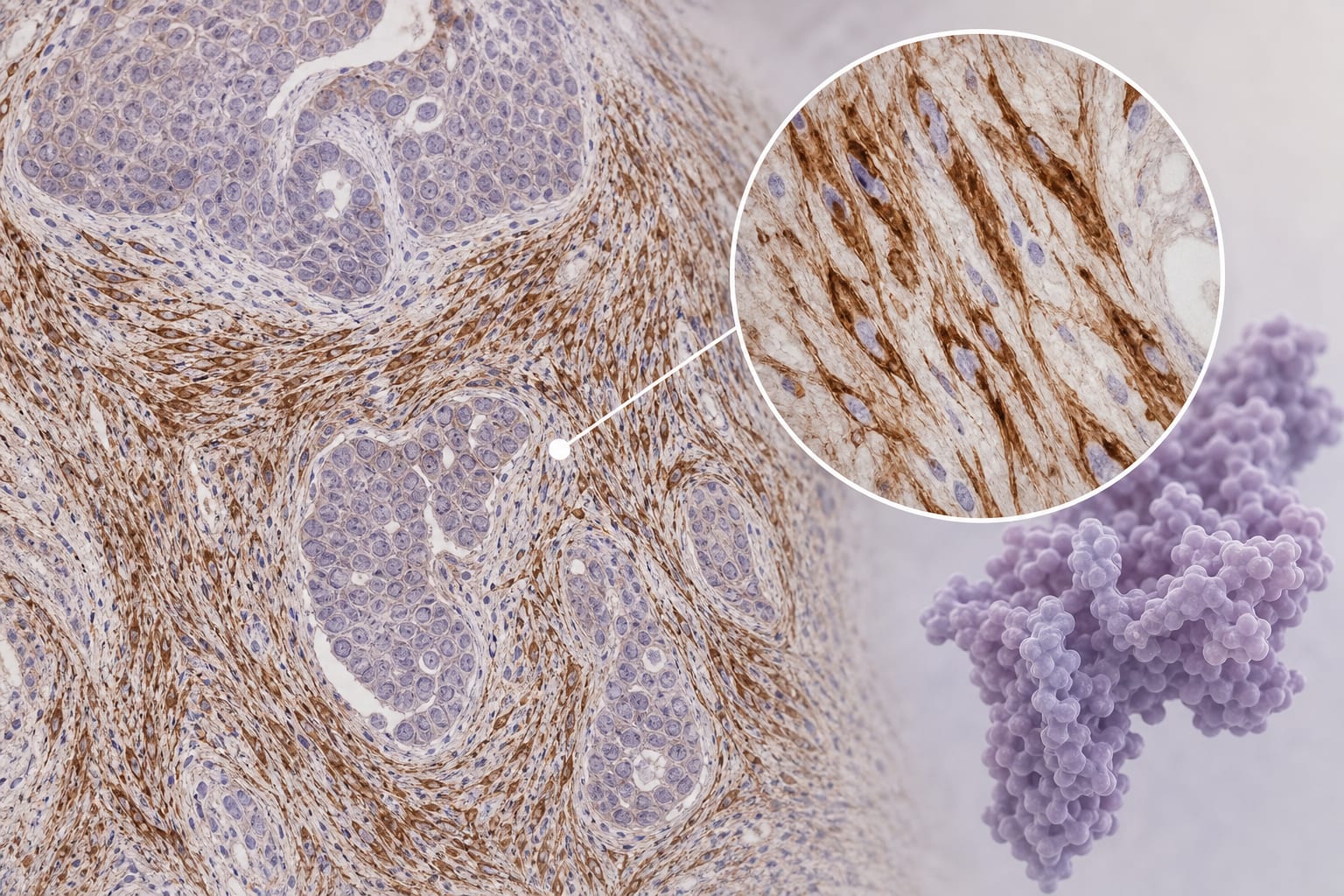
To evaluate the expression of fibroblast activation protein (FAP) in uterine cervix cancer tumors and its potential as a biomarker for the radiopharmaceutical [212Pb]Pb-PSV-359, particularly in relation to treatment outcomes.
Key Findings:
82% of evaluable tumors (28 of 34) had cancer-associated fibroblasts expressing FAP.
59% of tumors scored an IRS of six or higher.
Stage IVB and metastatic tumors showed the highest FAP expression (76%).
Interpretation:
The presence of FAP in a significant proportion of uterine cervix cancer tumors suggests that [212Pb]Pb-PSV-359 may be a viable treatment option for women with advanced disease, warranting further clinical investigation.
Limitations:
The study's sample size is small and primarily descriptive, which may limit the generalizability of the findings.
Assumptions made regarding FAP status in metastases based on primary tumor scores may not hold true, necessitating further validation.
Conclusion:
The findings support further investigation of FAP as a biomarker for targeting therapy in cervical cancer patients, particularly in advanced stages.