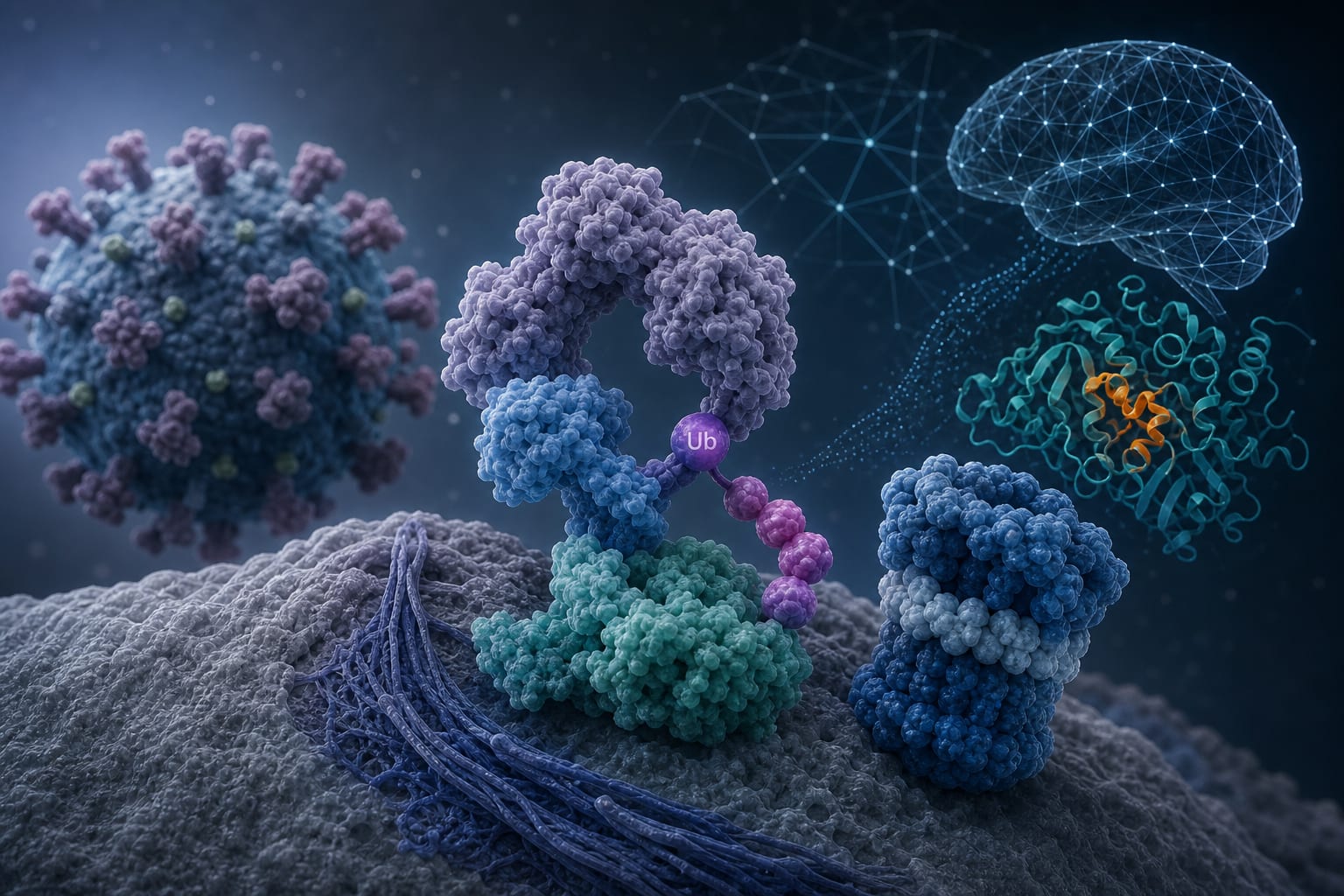
To integrate the study of ubiquitination in antiviral immunity with AI-driven therapeutics, highlighting how AI can enhance the understanding and application of ubiquitin-targeted antivirals.
Approach:
Key Findings:
Ubiquitination is crucial for regulating antiviral responses and is targeted by viruses for evasion, impacting drug design.
AI advancements, such as AlphaFold and generative models, improve drug design but face challenges like the 'Black Box' problem, affecting their practical application.
Existing datasets for training AI models are often small and biased, leading to unreliable predictions that hinder therapeutic development.
Interpretation:
The integration of ubiquitin research and AI technology presents opportunities for developing targeted antiviral therapies, but significant challenges remain in model transparency and data quality, which must be addressed for effective application.
Limitations:
AI models often lack transparency, making biological validation difficult and impacting their reliability.
Small and biased datasets hinder the reliability of AI predictions, affecting the development of effective therapeutics.
Generative AI models risk producing incorrect outputs without proper validation, which can mislead research efforts.
Conclusion:
The review highlights the need for interdisciplinary approaches, such as collaborations between immunologists and AI experts, to leverage ubiquitin's role in antiviral immunity and AI's potential in drug design.