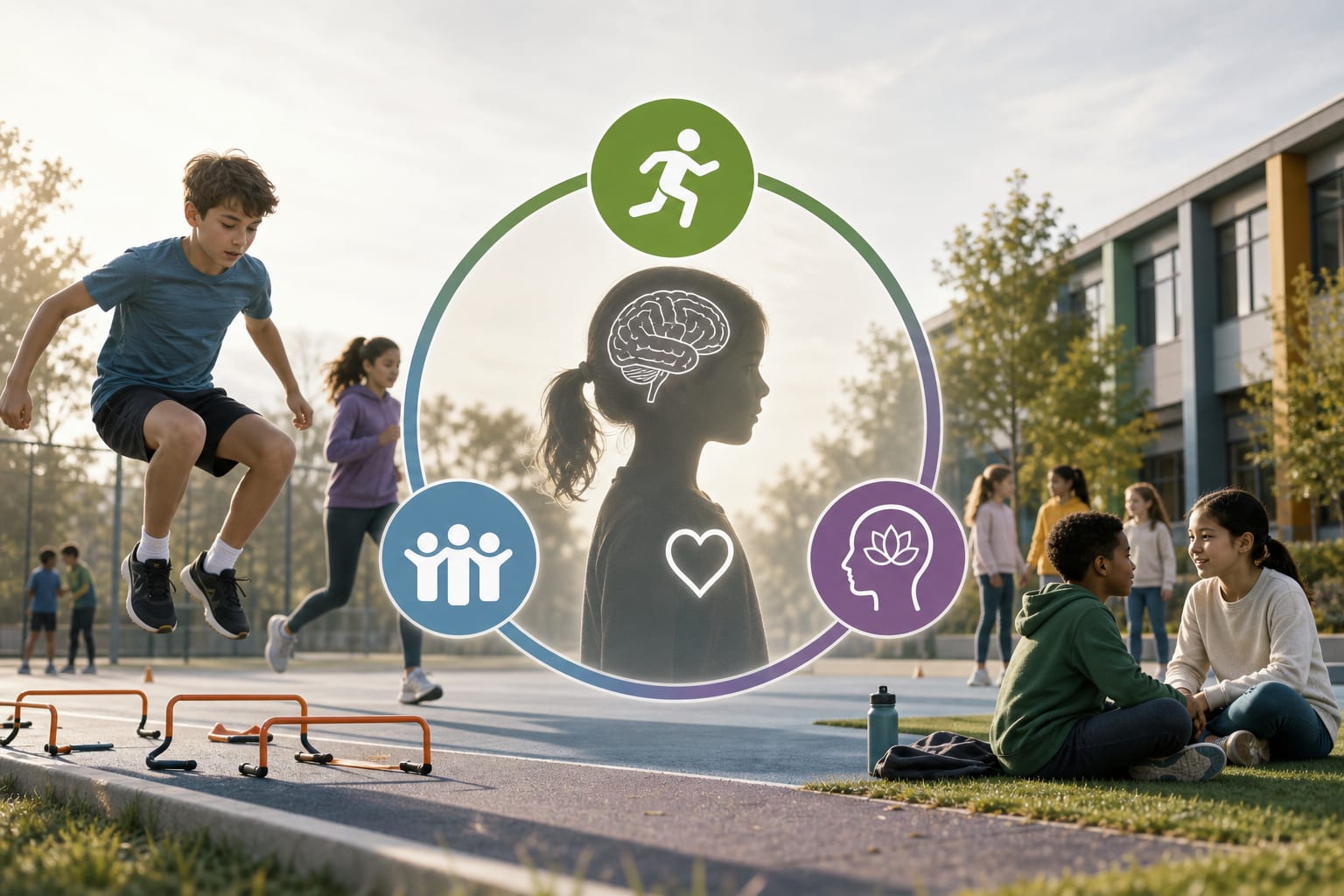
To promote optimal physical growth and mental development in youth through exercise and holistic health strategies that recognize health as a dynamic, multidimensional construct.
Approach:
Holistic Health Promotion: Emphasizes the importance of physical, mental, and social wellbeing as interconnected dimensions of health.
School-Based Interventions: Advocates for physical activity programs in school settings to enhance movement opportunities and support whole-child development.
Transdisciplinary and Systems-Based Approaches: Calls for collaboration among various disciplines and stakeholders to ensure the relevance and sustainability of physical activity programs.
Key Findings:
Physical inactivity is a leading risk factor for mortality and disproportionately affects minority and vulnerable populations, contributing to health inequities.
WHO guidelines recommend at least 60 minutes of moderate-to-vigorous physical activity for children and adolescents, emphasizing the importance of overall movement behaviors.
School-based physical activity interventions can help meet physical activity recommendations and promote holistic health by providing enhanced movement opportunities throughout the school day.
Interpretation:
Physical activity should be viewed as a multidimensional investment in health, requiring integrated approaches to address various developmental domains and promote lifelong healthy behaviors.
Limitations:
Current evidence hierarchy may hinder the implementation of effective physical activity programs, delaying their translation into practice.
Lack of adaptability and transferability of programs can limit their success in real-world settings, particularly if not informed by systems thinking.
Insufficient stakeholder buy-in can reduce the scalability of interventions, as quality partnerships are essential for widespread implementation.
Conclusion:
A comprehensive strategy that includes transdisciplinary collaboration and systems thinking is essential for the successful implementation and sustainability of physical activity programs in schools.
Survey results reveal the long-term socio-economic and psychological impacts of single ventricle congenital heart disease (SVHD) on families. See how cardiologists Deepti Bhat, MD, and Naim Duran, MD, contributors to this research, are using findings to transform Fontan Clinic care at Phoenix Children’s.