The effect of rehabilitation training based on brain-computer interface on limb function in stroke patients: a systematic review and meta-analyses - Summary - MDSpire
Advertisement
The effect of rehabilitation training based on brain-computer interface on limb function in stroke patients: a systematic review and meta-analyses
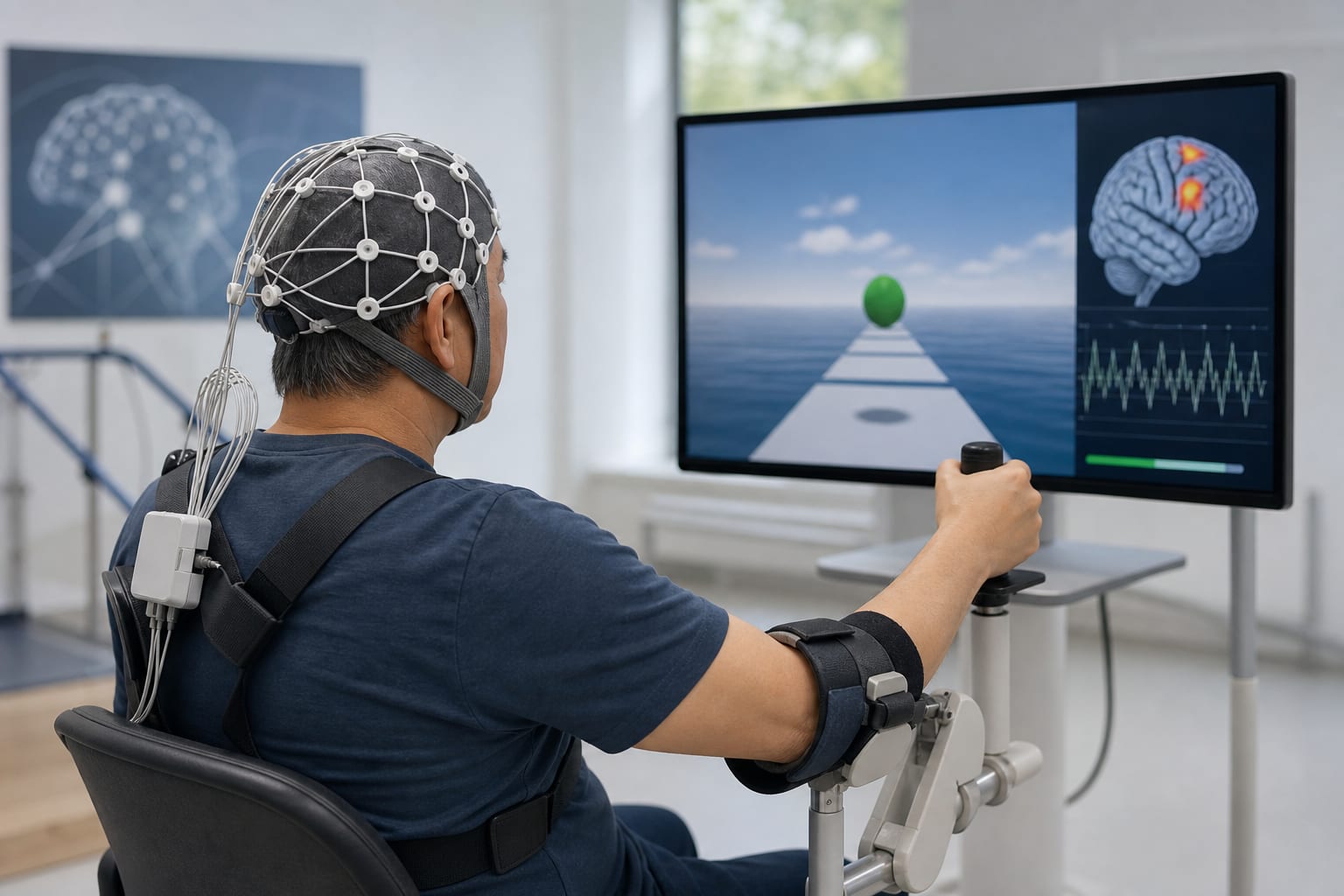
To assess the effect of brain-computer interface-based rehabilitation training on limb function in stroke patients and investigate efficacy differences among various types of brain-computer interfaces and treatment protocols.
Approach:
Search Strategy: Conducted in 5 databases (PubMed, Scopus, Web of Science, Embase, and Cochrane Library) from inception to August 29, 2025, focusing on studies exploring the impact of BCI combined with rehabilitation on limb function in stroke patients.
Meta-Analysis: Performed using a random effects model, with weighted mean difference (WMD) and 95% confidence intervals (CIs) as effect sizes for upper and lower limb function.
Key Findings:
Twenty-seven RCTs included, with 23 reporting changes in upper limb function and 4 in lower limb function.
BCI training significantly improved FMA-UE (WMD = 3.50, 95% CI: (2.09, 4.90), p < 0.001) and FMA-LE (WMD = 2.59, 95% CI: (1.94, 3.23), p < 0.001) compared to control.
Interpretation:
The combined therapy was effective in improving limb function of patients.
Conclusion:
BCI-based rehabilitation training may enhance limb function recovery in stroke patients.