Molecular changes during AT/RT progression associated with epithelial–mesenchymal transition and extracellular matrix changes - Summary - MDSpire

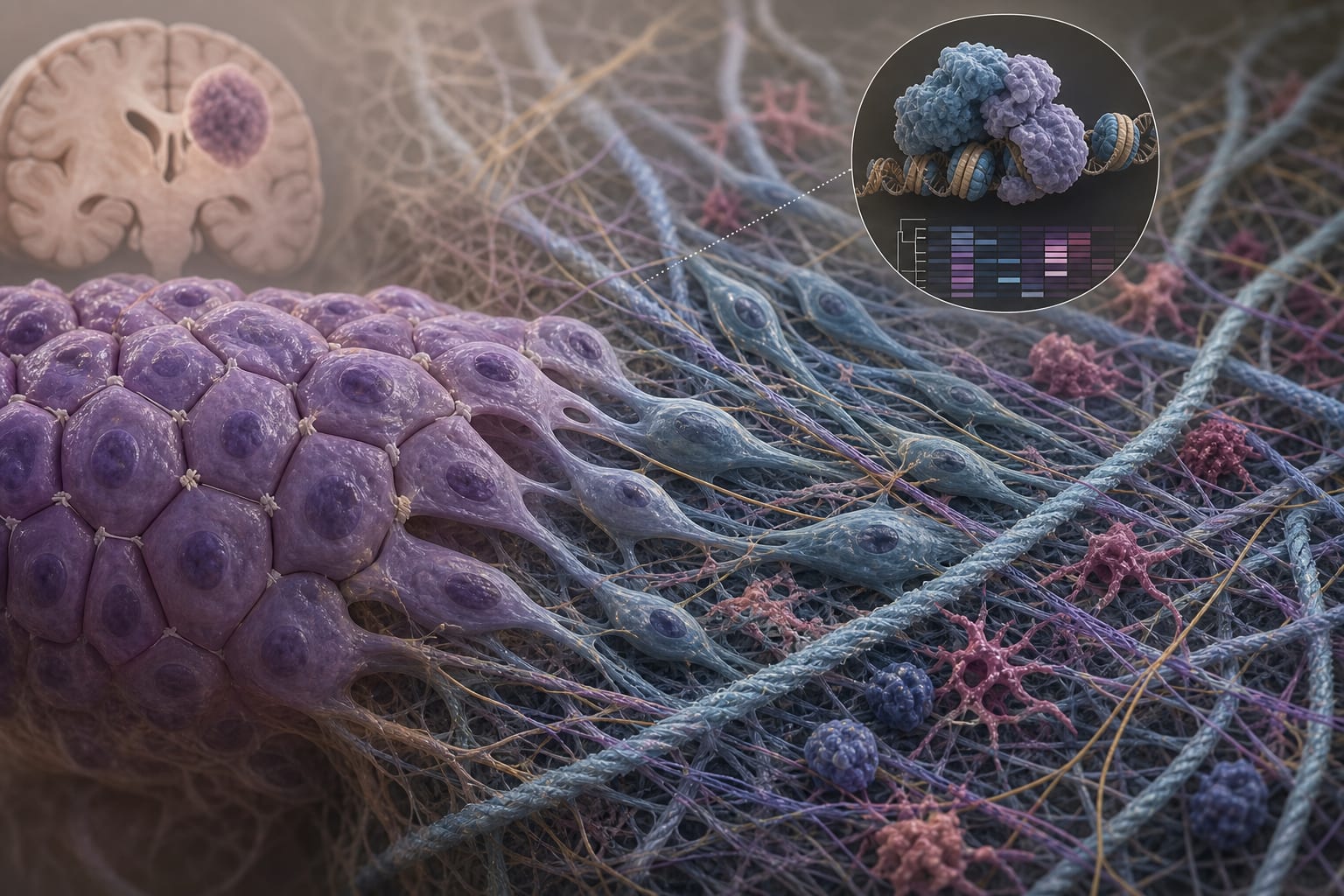
Molecular changes during AT/RT progression associated with epithelial–mesenchymal transition and extracellular matrix changes

  • By

  • Lea Altendorf

  • Anton Althammer

  • Rajanya Roy

  • Karoline Hack

  • Flavia W. de Faria

  • Arend Koch

  • Vanessa Thaden

  • Melanie Schoof

  • Martin U. Schuhmann

  • Peter Hauser

  • Pascal D. Johann

  • Martin Hasselblatt

  • Michael C. Frühwald

  • Kornelius Kerl

  • Ulrich Schüller

  • July 1, 2026

  • 0 min

Share

Objective:

To characterize transcriptomic differences between primary and recurrent AT/RT tumors and identify therapy-resistant tumor cells.

Approach:
  • Data Collection: Patient data were obtained from the EU-RHAB registry, with ethical approval for the study.
  • Cell Isolation and Sequencing: snRNAseq was performed on FFPE tissue using the Chromium Single Cell Flex Gene Expression Assay.
  • Data Processing: Data were processed using 10× Genomics Cell Ranger and analyzed in R Studio with Seurat for normalization, clustering, and integration.
Key Findings:
  • Increased ECM remodeling and pEMT were associated with therapy resistance in AT/RT.
  • Distinct transcriptomic profiles were observed between primary and recurrent AT/RT tumors.
Interpretation:

The study highlights the need for thorough characterization of therapy-resistant tumor cells to identify novel therapeutic targets.

Limitations:
  • The study is limited to a small sample size of eight paired tumors.
  • Findings may not be generalizable to all AT/RT patients due to the specific cohort studied.
Conclusion:

Characterization of therapy-resistant tumor cells may lead to the identification of new treatment targets for AT/RT.

Original Source(s)

Related Content