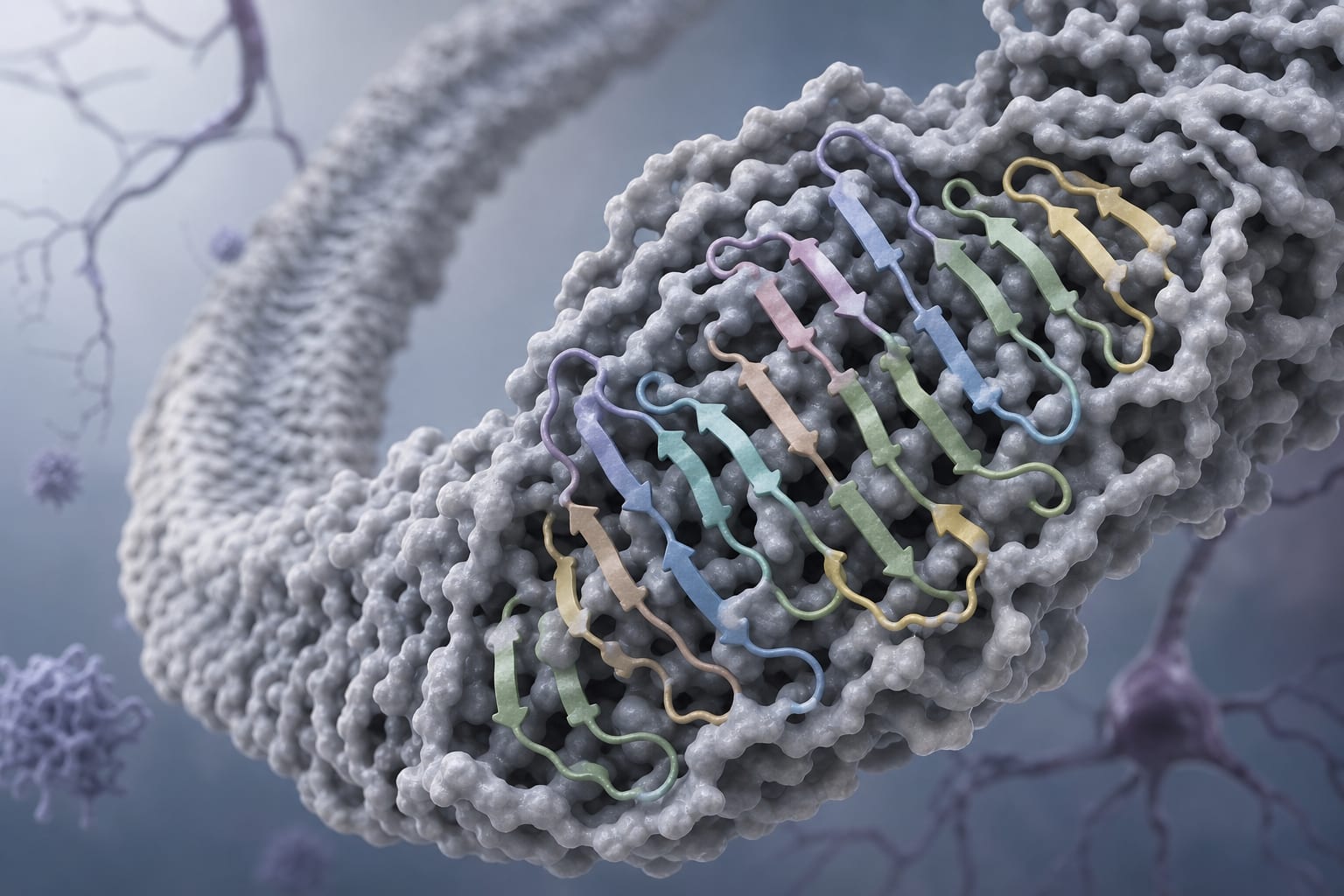
To present cryo-EM structures of tau filaments from individuals with MAPT mutations and analyze the structural specificity of tau filaments in neurodegenerative diseases.
Approach:
Cryo-EM Analysis: Cryo-electron microscopy was used to determine the structures of tau filaments extracted from the frontal and temporal cortex of FTDP-17 T individuals with specific MAPT mutations.
Mutation Examination: The study focused on MAPT mutations D252V, G272V, ΔG389-I392, and S320F, analyzing their effects on tau filament formation and structure.
Key Findings:
The D252V and ΔG389-I392 mutations resulted in tau filaments with a structure identical to the previously determined Pick fold.
The G272V and S320F mutations produced a more open variant of the Pick fold.
Both wild-type and mutant tau were found to co-assemble into filaments with the Pick fold.
Interpretation:
The findings highlight the structural diversity of tau filaments associated with different MAPT mutations and suggest that specific mutations influence the formation and characteristics of tau aggregates.
Limitations:
The cryo-EM maps did not provide insights into whether the tau filaments were made of wild-type or mutant tau due to the location of certain residues.
The study primarily focused on a limited number of MAPT mutations and their specific effects.
Conclusion:
The study contributes to understanding the structural basis of tau filament formation in neurodegenerative diseases linked to MAPT mutations.
by Chao Qi, Sofia Lövestam, Jenny Shi, Alexey G. Murzin, Sew Peak-Chew, Thomas T. Warner, Harro Seelaar, Patrick W. Cullinane, Zane Jaunmuktane, John C. van Swieten, Sjors H. W. Scheres, Michel Goedert