The article examines the objective, findings, and clinical context described in Integrating Flexible Fall-Prevention Strategies Into Primary Care: Modest Changes, Wider Impact.
Approach:
Study design: Matched-pair cluster randomized trial across 22 primary care practices; 11 matched pairs and 11,945 adults aged 65 years or older were included in the analysis.
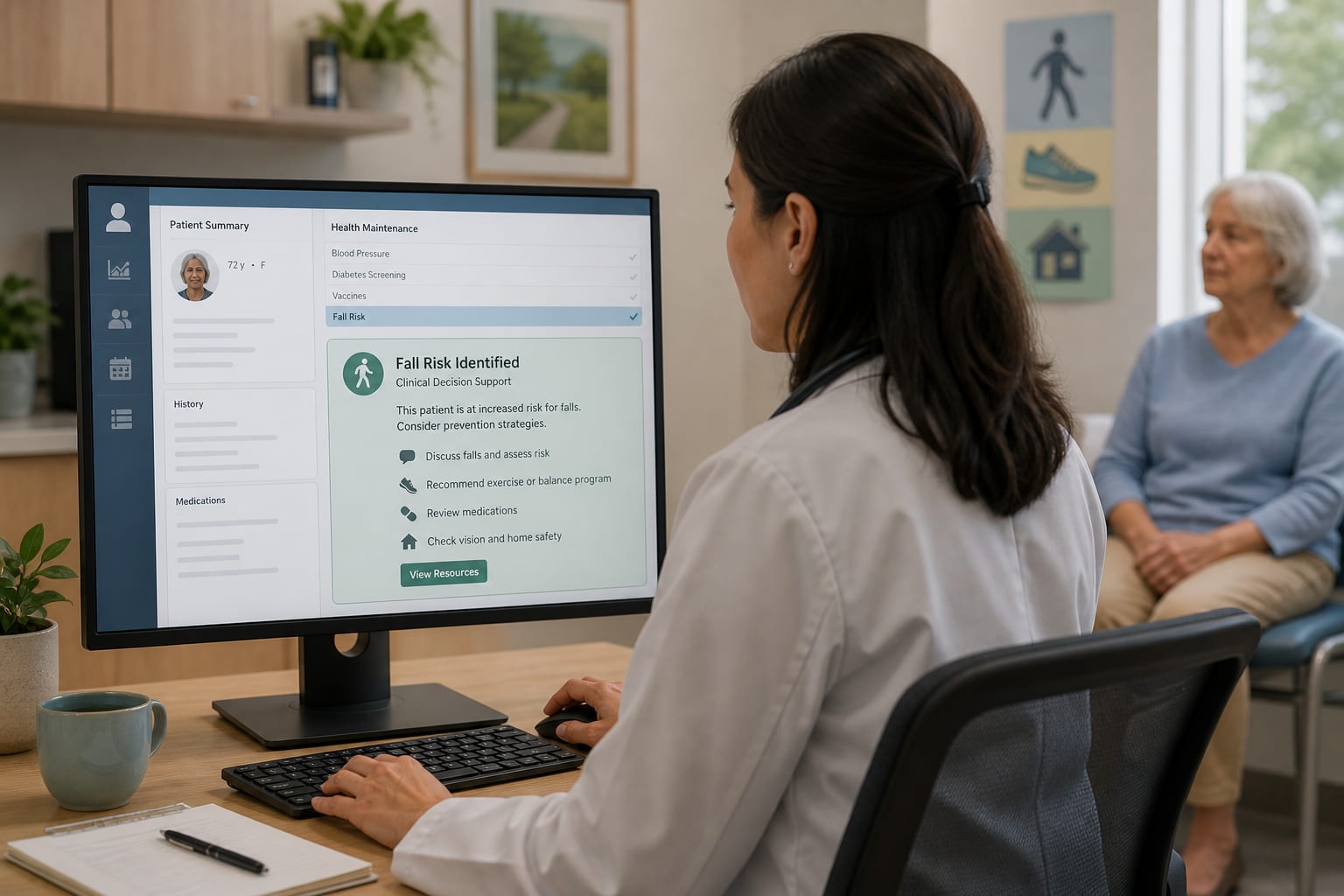
Intervention: An EHR-integrated, noninterruptive alert offered individualized strength and balance exercises, an optional physical therapy referral, and patient materials in print and digital formats.
Comparison and follow-up: Outcomes in intervention practices were compared with usual care over a mean follow-up of approximately 622 days.
Key Findings:
Adjusted rates per 100 patient-years favored intervention practices: 19.3 versus 21.2 for ICD-10-coded falls, 15.7 versus 16.7 for coded fall-related injuries, and 17.5 versus 19.2 for participant-reported falls or injuries.
The absolute differences corresponded to approximately 1.9 fewer patients with a recorded fall and 1.0 fewer with a recorded fall-related injury per 100 patient-years.
Exercise prescriptions were provided to 22.1% of patients in intervention practices.
Interpretation:
The article describes eSTEPS as a relatively low-burden approach that embeds fall-prevention steps in routine primary care workflows. Its effects were modest compared with more structured, supervised exercise programs, and the authors note that sustained exercise may require behavioral, caregiver, or community support.
Limitations:
An economic evaluation was not performed.
Exercise prescriptions reached 22.1% of patients in intervention practices.
The article notes that digital approaches may need adaptation for differences in technology access and digital literacy.
The supplied context ends mid-sentence, so any additional qualifications in the full article are unavailable.
Conclusion:
The article argues that fall-prevention models should be adapted to local health systems and resources rather than transferred unchanged, with interpersonal, caregiver, or community support added when appropriate.