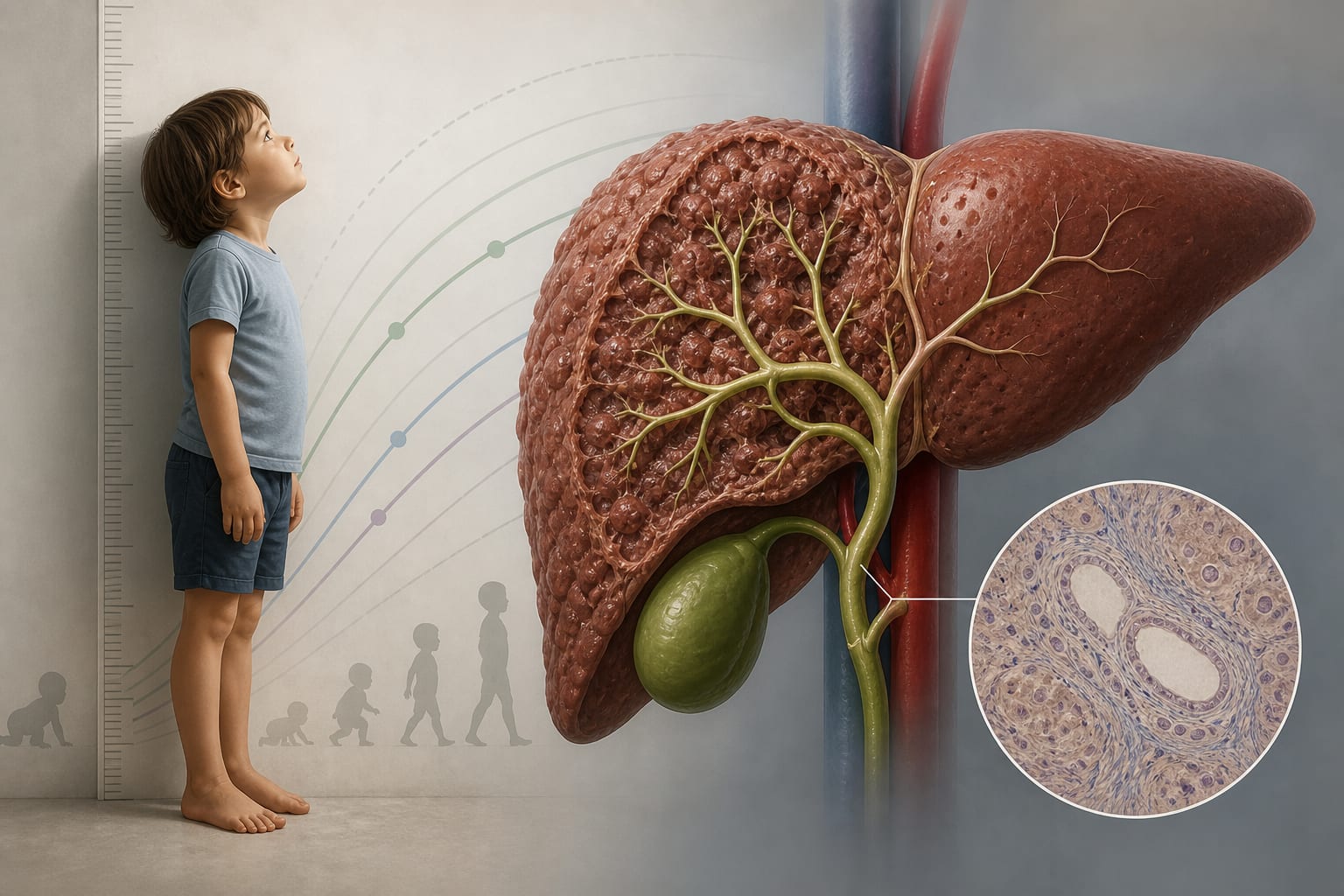
To examine growth patterns among children with biliary atresia (BA) in Denmark, their capacity for catch-up growth, and the role of liver transplantation, as well as to establish how the severity of liver disease is manifested in these children.
Approach:
Study Design: A retrospective longitudinal cohort study conducted at Copenhagen University Hospital, following children diagnosed with BA from January 2006 to December 2024.
Data Collection: Data were collected from electronic patient records, including anthropometric measurements and blood tests at regular intervals, and liver fibrosis was assessed using non-invasive scores.
Ethics: Ethics approval was obtained, and written consent was provided by parents or guardians.
Key Findings:
Biliary atresia is a significant cause of liver failure in children, with a high incidence in Denmark.
Growth impairment is common in children with BA, affecting their final height.
The timing of liver transplantation may influence catch-up growth and the severity of liver fibrosis.
Limitations:
The study is retrospective and may have inherent biases.
Liver biopsy data were only available for transplanted children, limiting fibrosis assessment in non-transplanted cases.