Nanomedicine delivery systems remodel the immunosuppressive microenvironment of colorectal cancer: synergistic strategies and mechanisms of targeted immune checkpoint inhibitors - Summary - MDSpire
Advertisement
Nanomedicine delivery systems remodel the immunosuppressive microenvironment of colorectal cancer: synergistic strategies and mechanisms of targeted immune checkpoint inhibitors
To summarize the review of targeted immunotherapy and nanomedicine in colorectal cancer (CRC) and explore their synergistic mechanisms and future development directions.
Approach:
Review of Current Applications: Systematic summary of targeted immunotherapy (immune checkpoint inhibitors, CAR-T cell therapy, tumor vaccines) and nanomedicine (liposomes, polymeric nanoparticles, metal nanoparticles) in CRC.
Analysis of Mechanisms: Exploration of the synergistic mechanisms between targeted immunotherapy and nanomedicine in overcoming the immunosuppressive tumor microenvironment.
Clinical Challenges: Discussion of the clinical challenges faced in the application of these therapies in CRC.
Key Findings:
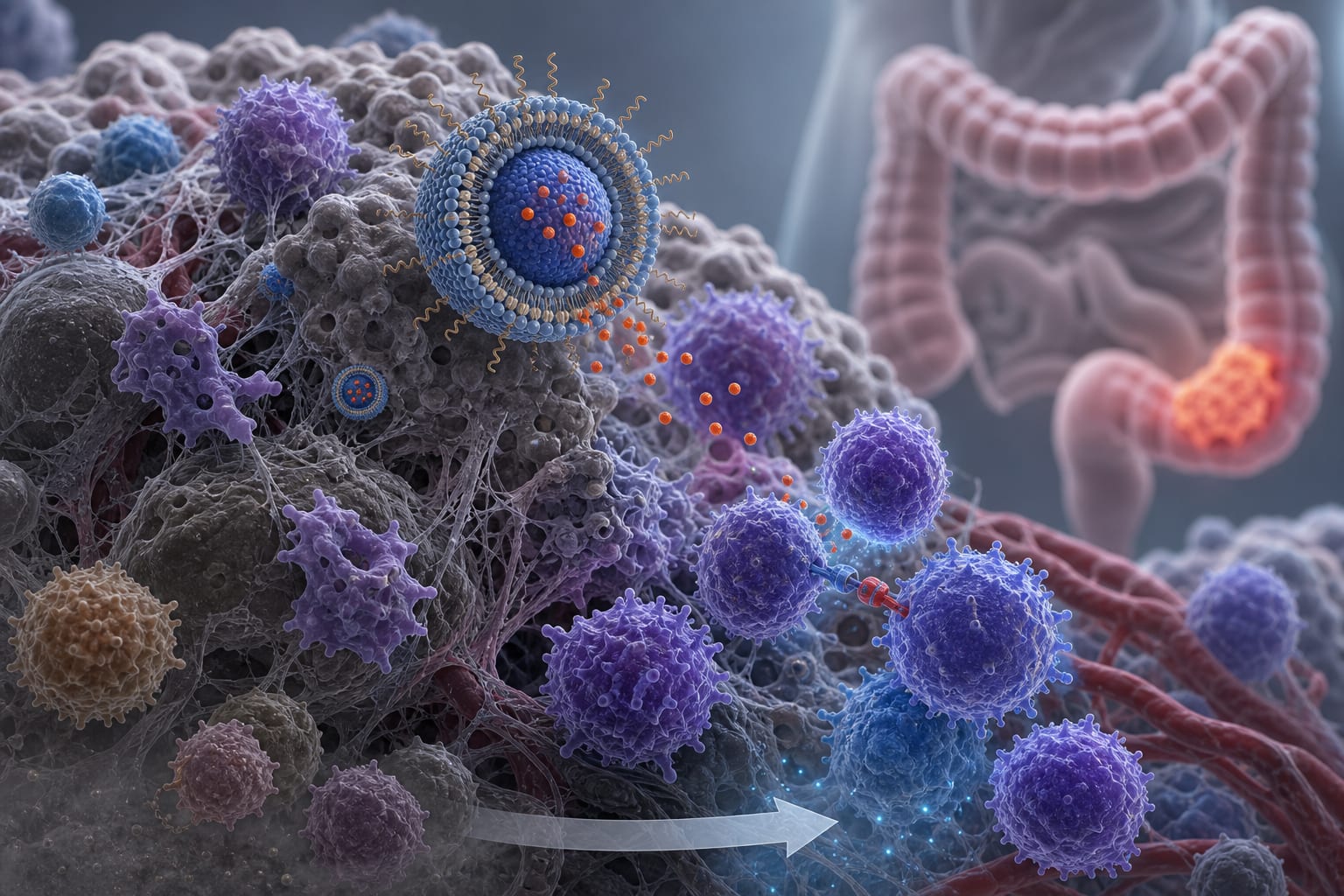
The tumor microenvironment (TME) in CRC is characterized by immunosuppressive cells such as Tregs, MDSCs, and TAMs, contributing to immune escape.
Nanomedicine can enhance drug delivery and modulate the immune response, potentially reversing the immunosuppressive environment in CRC.
Strategies using nanocarriers have been developed to target and reprogram immunosuppressive cells.
Interpretation:
The findings highlight the potential of combining nanomedicine with immunotherapy to improve treatment outcomes in CRC by addressing the challenges posed by the immunosuppressive TME.
Limitations:
The review does not provide specific clinical trial data or outcomes related to the discussed therapies.
Further research is needed to understand the mechanisms and optimize the application of nanomedicine in CRC treatment.
Conclusion:
The integration of nanomedicine and targeted immunotherapy presents a potential avenue for enhancing treatment of colorectal cancer.