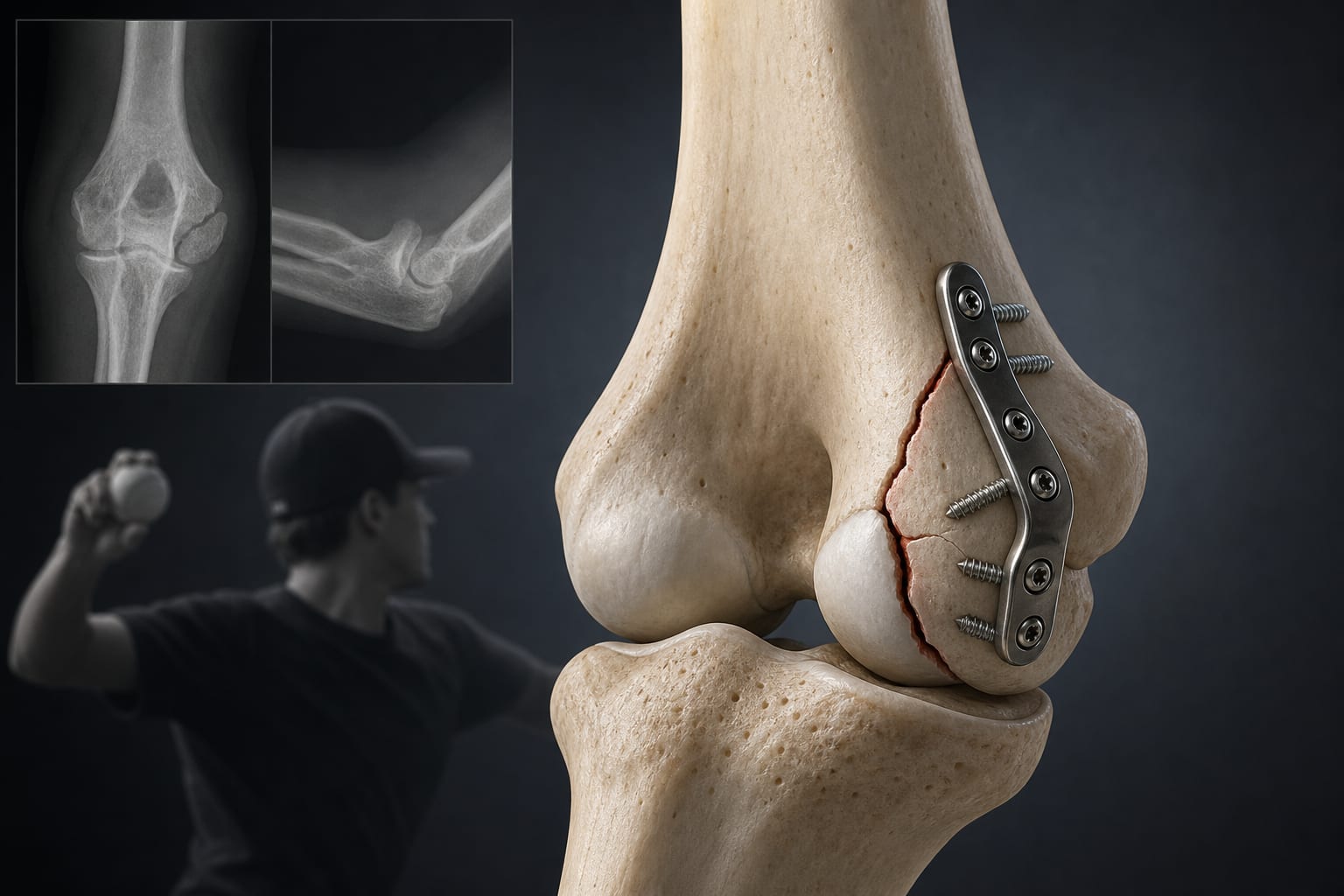
To provide a potential explanation for the pathomechanism of an isolated medial condylar fracture of the distal humerus induced by the throwing motion.
Approach:
Case Presentation: A 17-year-old male experienced an isolated medial condylar fracture of the distal humerus after pitching. Diagnosis was confirmed via X-ray, and the patient underwent open reduction and internal fixation.
Surgical Procedure: Open reduction was performed through a medial approach, ensuring protection of the ulnar nerve. A locking compression plate was used for fixation.
Follow-Up: Postoperative recovery showed intact neurovascular status. At three months, the patient regained full strength and range of motion, with complete bone healing observed.
Key Findings:
This case is the first report of an isolated medial condylar fracture of the distal humerus induced by the throwing motion.
The throwing motion can induce such fractures due to torsional forces exerted by muscles.
The patient's recovery was successful, allowing a return to sports without complications.
Interpretation:
The study provides a potential explanation for the pathomechanism behind isolated medial condylar fractures in young athletes.
Limitations:
The study is based on a single case report, limiting generalizability.
Long-term outcomes beyond the initial follow-up period are not fully documented.
Conclusion:
The findings suggest that throwing motions can lead to isolated medial condylar fractures, highlighting the need for awareness in young athletes.