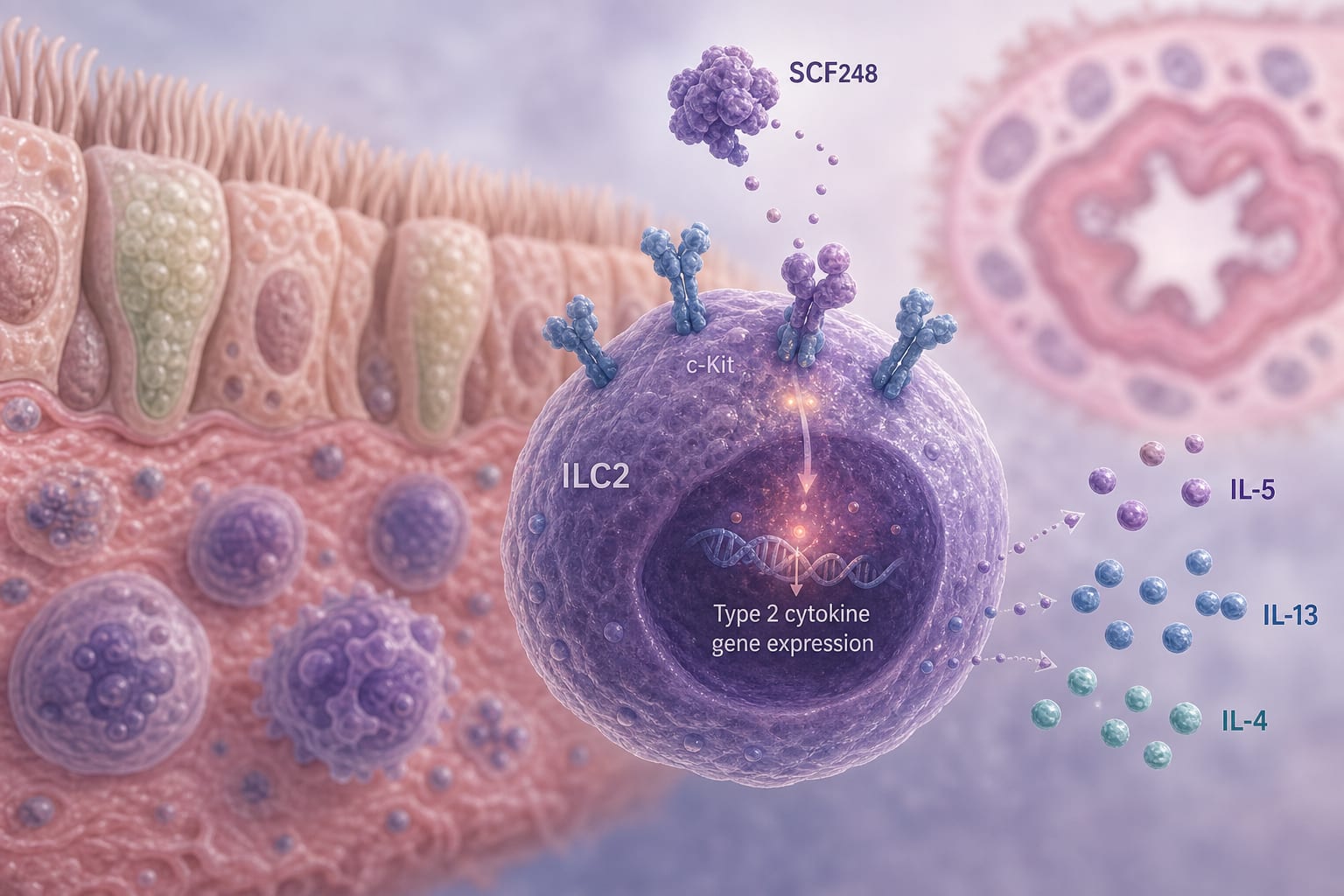
To characterize the role of Stem Cell Factor (SCF) and its isoform SCF248 in the regulation of innate lymphoid cells type 2 (ILC2), which are critical mediators of type 2 airway inflammation, during allergic airway inflammation.
Approach:
Transcriptional Profiling: Transcriptional profiling of SCF-deficient ILC2s was performed to assess gene expression changes related to cytokine signaling and activation.
In Vitro Studies: In vitro experiments were conducted to observe the induction of SCF248 expression in mesenchymal cells by pro-inflammatory cytokines.
In Vivo Validation: In vivo studies utilized tamoxifen-inducible SCF-deficient mice in an Alternaria alternata model to evaluate the effects of SCF deficiency on allergic inflammation.
Key Findings:
SCF248 expression is upregulated in the lungs and bone marrow during allergic inflammation.
SCF deficiency leads to reduced expression of key genes in ILC2s, impairing their inflammatory responsiveness.
Blocking SCF248 reduces allergic inflammation and alters ILC populations in the bone marrow.
Interpretation:
SCF248 is identified as a regulator of ILC2 maturation and activation, contributing to type 2 inflammation in allergic airway disease.
Limitations:
The study primarily focuses on mouse models, which may not fully replicate human allergic asthma.
Further research is needed to explore the therapeutic potential of targeting SCF248 in clinical settings.
Conclusion:
SCF248 is implicated in enhancing ILC2 activation and promoting mucosal type 2 inflammation during allergic responses.
by Nobuhiro Asai, Grace K. Lombardo, Ramon Ocadiz-Ruiz, Yao Gu, Andrew J. Rasky, Dana S. Garcia, Angela J. Montoya, Sarita Montaño, Kazuma Yagi, Wendy Fonseca