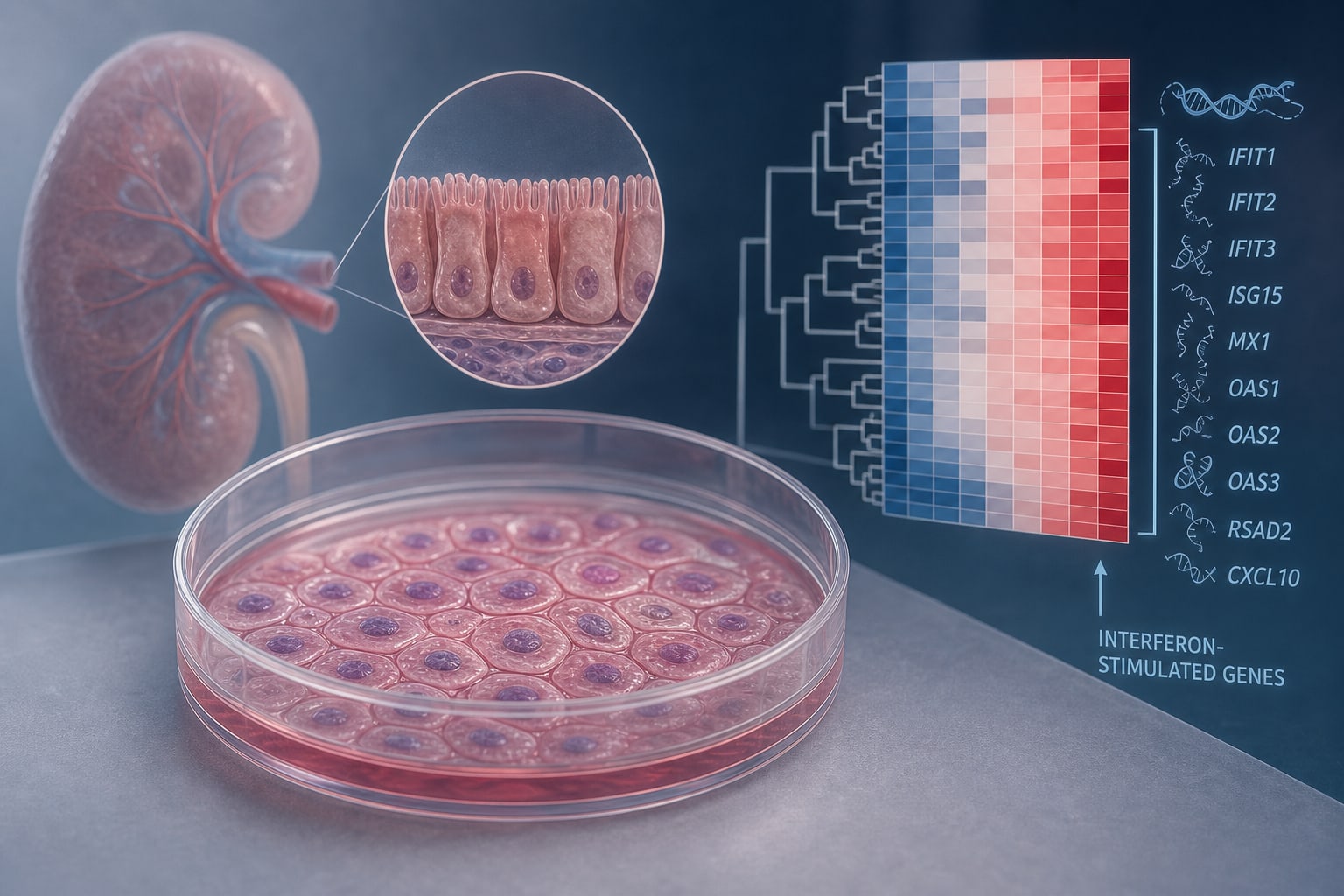
To determine the transcriptional injury program elicited by repeated exposure to gentamicin and tobramycin in human proximal tubular cells and to identify the most informative in vitro renal model for studying aminoglycoside nephrotoxicity.
Approach:
Model Comparison: Four human proximal tubular model systems were compared: primary proximal tubular epithelial cells (PTEC), human iPSC-derived proximal tubular-like cells (PTL), and immortalised cell lines RPTEC/TERT1 and HK-2.
Exposure and Analysis: Cells were exposed to aminoglycosides for seven days and analyzed using targeted transcriptomics to assess gene expression changes.
Key Findings:
Aminoglycoside toxicity varies based on the model system used.
Differentially expressed genes were identified, revealing compound-specific, model-specific, and donor-specific response signatures.
The study highlights the importance of cellular differentiation state and uptake capacity in aminoglycoside nephrotoxicity.
Interpretation:
The findings suggest that different renal models exhibit varying responses to aminoglycoside exposure, which is crucial for understanding nephrotoxicity mechanisms.
Limitations:
The study may not fully capture all aspects of aminoglycoside nephrotoxicity due to the limitations of in vitro models.
Responses observed in cell cultures may not directly translate to in vivo conditions.
Conclusion:
The study provides insights into the transcriptional responses of renal cells to aminoglycoside exposure, emphasizing the need for careful selection of model systems in nephrotoxicity research.