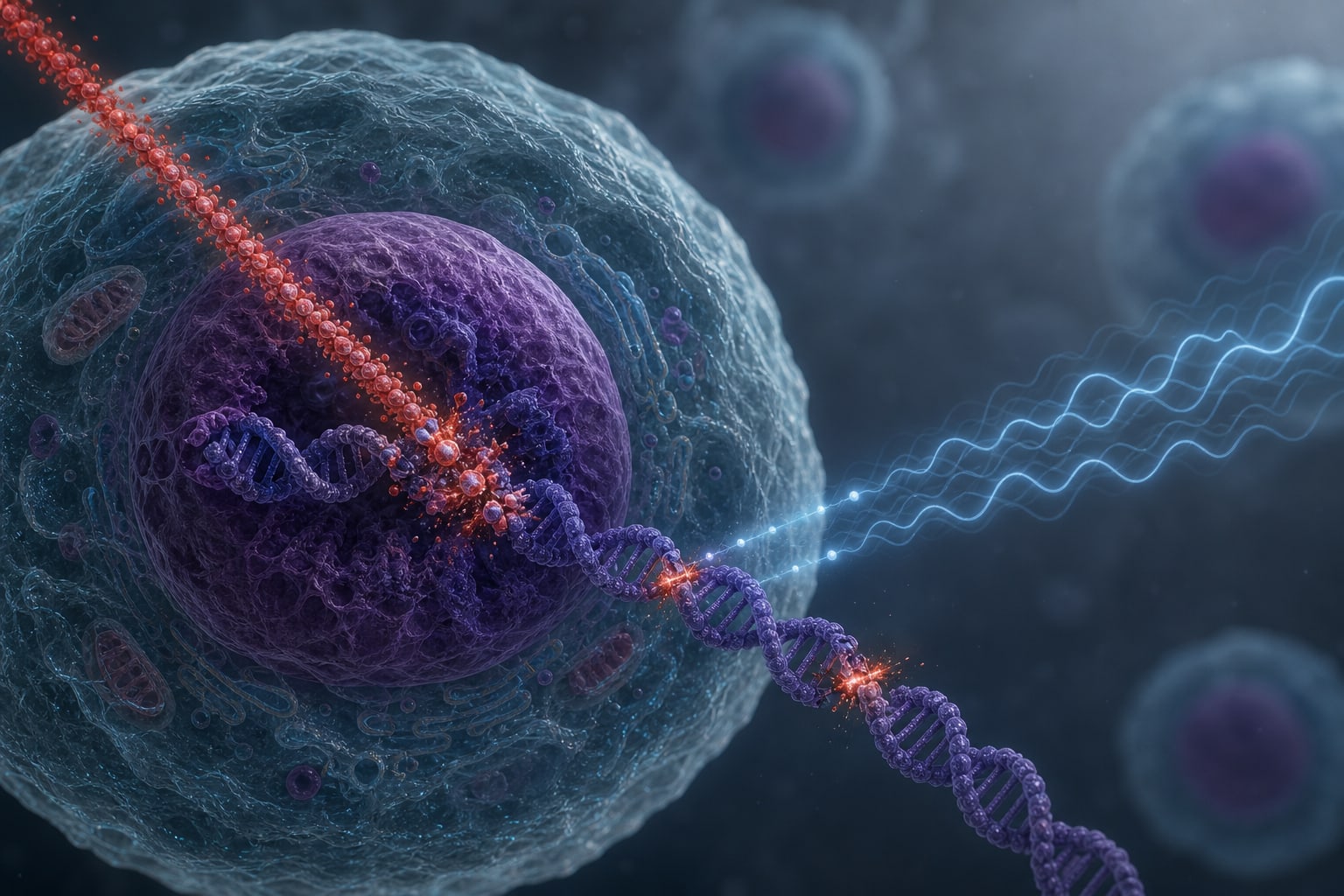
To investigate the transcriptional mechanisms underlying the biological effectiveness of high-linear energy transfer (LET) carbon ion radiation compared to low-LET X-rays in A549 non-small cell lung cancer cells.
Approach:
Irradiation and Profiling: A549 cells were exposed to equal physical doses (8 Gy) of X-rays or carbon ions (LET 73 keV/µm), followed by transcriptomic profiling 4 hours post-irradiation.
Data Analysis: Differential expression analysis was integrated with Hallmark pathway enrichment using gene set enrichment analysis (GSEA), over-representation analysis (ORA), and leading-edge gene interrogation.
Key Findings:
Both radiation modalities activated a conserved DNA damage response characterized by p53 signaling and apoptosis-related genes.
Carbon ions selectively suppressed mitotic regulators including CENPE, KIF2C, PLK1, and BUB1.
High-LET irradiation enriched inflammatory and stress-associated pathways, including tumor necrosis factor (TNF) and Nuclear Factor κB (NF-κB).
KRAS-associated gene networks were enriched under high-LET conditions.
Interpretation:
High-LET carbon ion irradiation induces a distinct transcriptional program compared to low-LET X-rays, characterized by downregulation of mitotic and chromatin regulatory programs and engagement of stress-associated signaling networks.
Limitations:
The study is limited to A549 non-small cell lung cancer cells and may not be generalizable to other cell types.
The analysis was conducted at a single time point (4 hours post-irradiation), which may not capture the full spectrum of transcriptional responses.
Conclusion:
The findings provide mechanistic insight into LET-dependent radiobiology, suggesting that transcriptional pathway remodeling may contribute to the enhanced biological effectiveness of carbon ions.