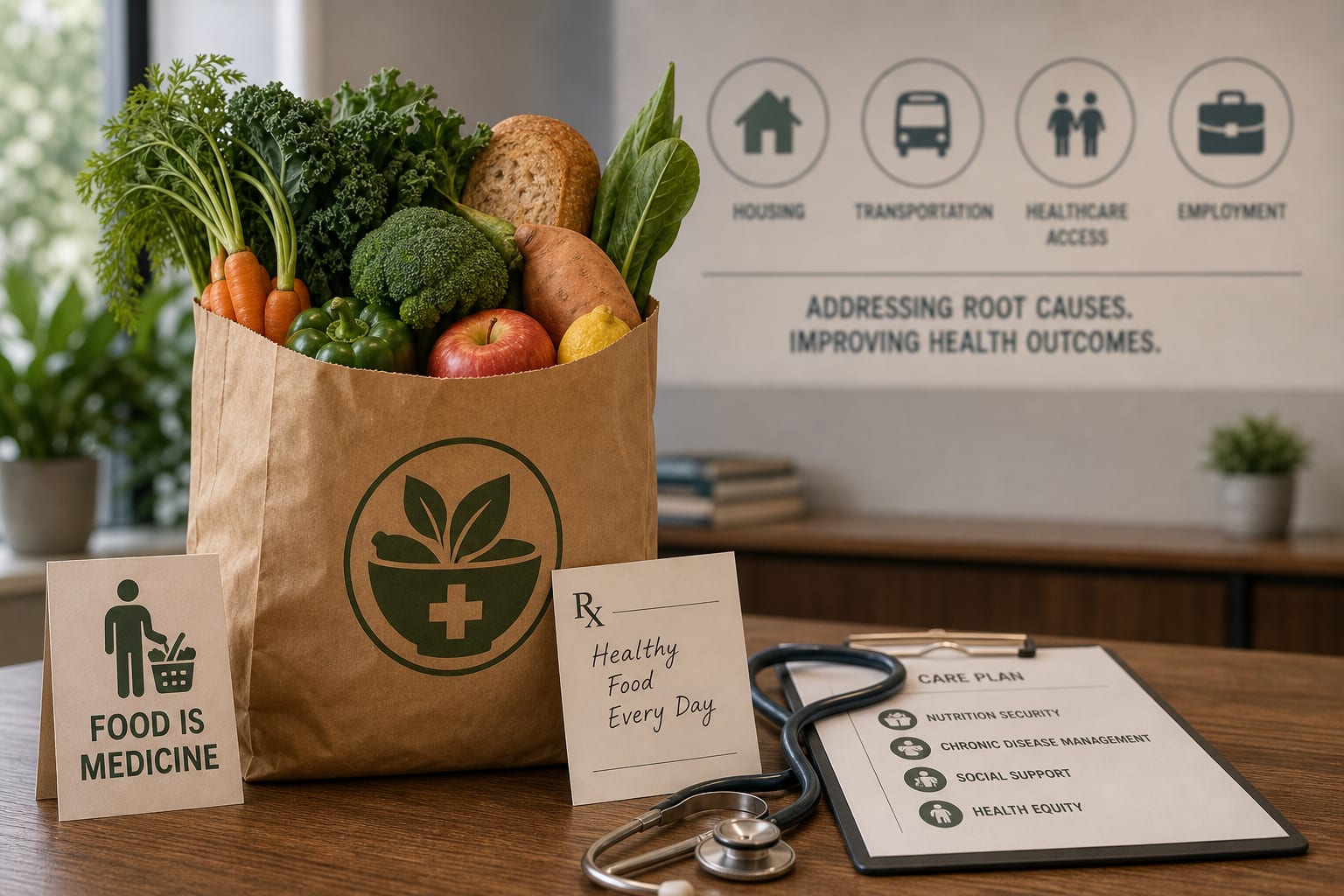
To evaluate the effectiveness of Food is Medicine (FIM) and Food as Medicine (FAM) interventions in addressing food insecurity and their impact on health outcomes.
Approach:
Study Evaluation: The article discusses a 12-month evaluation of a produce prescription program for food-insecure adults with chronic metabolic conditions, comparing outcomes such as food insecurity, fruit and vegetable intake, and psychosocial factors with a control group receiving SNAP benefits.
Key Findings:
The produce prescription program showed a decline in food insecurity, fruit and vegetable intake, and fatigue, but no significant differences in health outcomes compared to the SNAP control group.
Among participants with elevated baseline blood pressure, there was a decrease of 8.6 mmHg in systolic blood pressure.
Previous studies on FIM and FAM interventions have shown limited impact on clinical outcomes and healthcare costs.
Interpretation:
The findings suggest that while food access interventions are logical, they often lack significant clinical impact, highlighting the need for more rigorous and comprehensive studies.
Limitations:
The study lacked randomization and had limited statistical power.
The follow-up period for primary comparisons was short.
There was limited assessment of mediators of effect and contextual factors influencing food insecurity.
Conclusion:
Future research should focus on large-scale, rigorous studies that link FIM/FAM interventions to health outcomes.