Evolution of the prostate cancer diagnostic paradigm: integrated evidence and clinical pathways from targeted biopsy to biopsy-free strategy - Summary - MDSpire
Advertisement
Evolution of the prostate cancer diagnostic paradigm: integrated evidence and clinical pathways from targeted biopsy to biopsy-free strategy
To outline the evolutionary trajectory of prostate cancer diagnosis from traditional invasive procedures to precision, minimally invasive, and non-invasive approaches.
Approach:
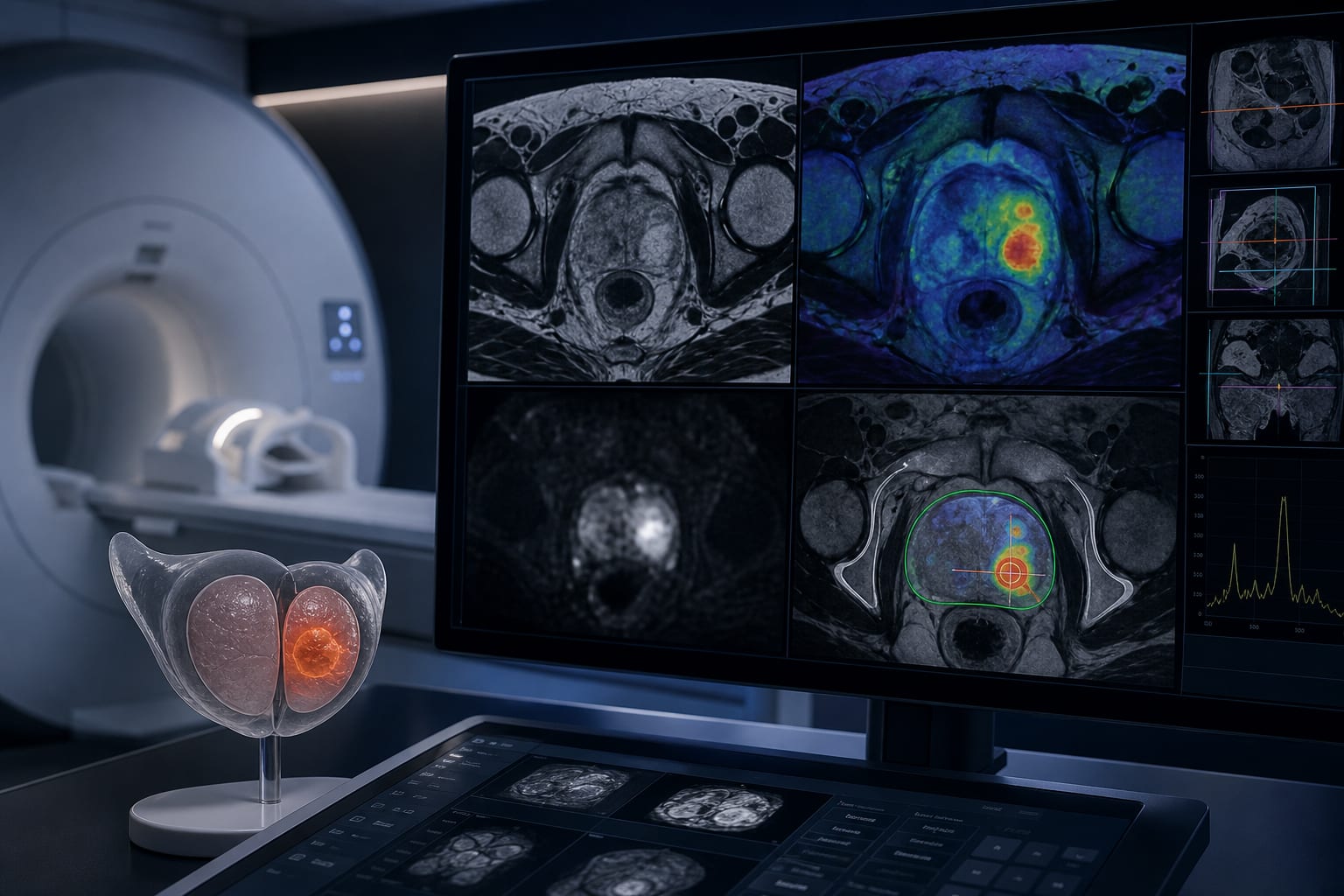
Patient Selection for Biopsy: Emphasizes precision-based initial screening and risk-stratified biopsy strategies utilizing multiparametric magnetic resonance imaging (mpMRI) and prostate-specific antigen density.
Biopsy Techniques Comparison: Compares transrectal and transperineal biopsy, highlighting the advantages of the transperineal approach in reducing infection risk.
Evolution of Biopsy Strategies: Discusses the transition from systematic template biopsy to targeted, individualized fusion biopsy guided by precision imaging modalities.
Biopsy-Free Diagnosis Paradigm: Explores the application prospects and clinical validation pathways for a new paradigm based on advanced imaging and molecular biomarkers.
Key Findings:
mpMRI increases detection rates of clinically significant prostate cancer (csPCa) by 12% compared to standard TRUS-guided biopsy.
Using mpMRI as a gatekeeper reduces unnecessary biopsies by 28%.
Active surveillance is recommended for patients with mpMRI-negative results, significantly reducing clinical burden.
Molecular biomarkers enhance prognostic stratification for localized prostate cancer.
Interpretation:
The article proposes a structured clinical pathway for prostate cancer diagnosis that emphasizes safety, precision, and individualization.
Limitations:
The article does not address potential barriers to implementing new diagnostic strategies in clinical practice.
Limited discussion on the cost-effectiveness of advanced imaging and molecular biomarkers.
Conclusion:
The advancements in prostate cancer diagnosis represent a significant shift towards safer and more personalized approaches.