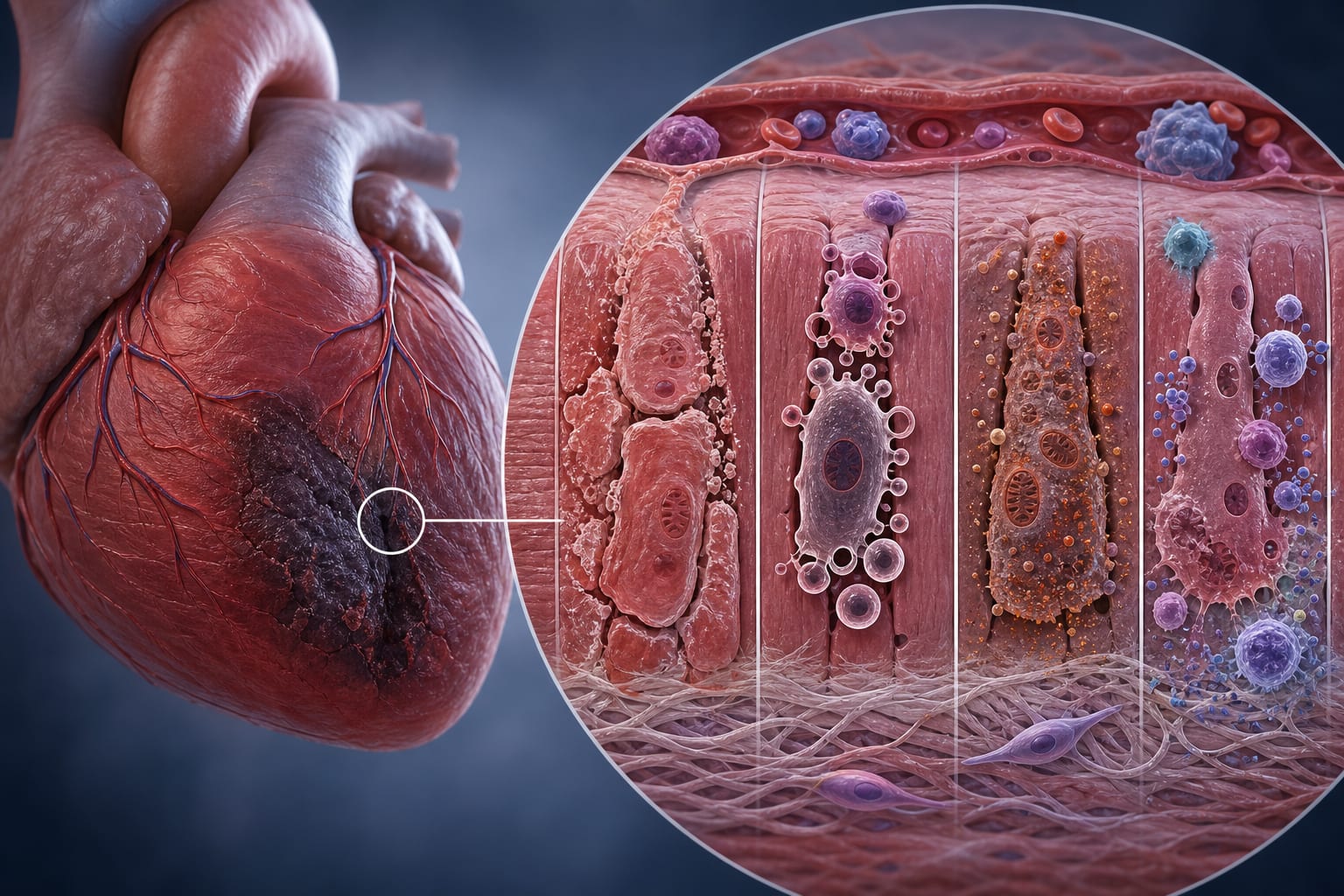
To systematically summarize the molecular mechanisms, interplay, and recent advances regarding different forms of cardiomyocyte death in post-MI ventricular remodeling, with an emphasis on potential therapeutic strategies.
Approach:
Overview of Cardiomyocyte Death Modalities: The review discusses various forms of cardiomyocyte death following myocardial infarction, including necrosis, apoptosis, ferroptosis, and pyroptosis, highlighting their distinct mechanisms and roles in ventricular remodeling.
Key Findings:
Cardiomyocyte death after myocardial infarction includes necrosis, apoptosis, ferroptosis, pyroptosis, and necroptosis.
Ferroptosis is linked to iron-dependent lipid peroxidation and is elevated after ischemia-reperfusion injury.
Pyroptosis activates the NLRP3/caspase-1/GSDMD pathway, releasing inflammatory cytokines and promoting myocardial fibrosis.
Necrosis is triggered by severe pathological stimuli, leading to cell swelling and rupture.
Necroptosis is mediated by the RIPK1/RIPK3-MLKL pathway, resulting in cell membrane rupture and release of damage-associated molecular patterns.
Interpretation:
Understanding the distinct and overlapping roles of various cardiomyocyte death modalities is essential for further research into therapeutic strategies following myocardial infarction.
Limitations:
The review may not cover all emerging forms of cardiomyocyte death.
Further research is needed to fully elucidate the interactions between different cell death modalities.
Conclusion:
The review provides insights into the complex network of cardiomyocyte death and its implications for ventricular remodeling and heart failure post-myocardial infarction.