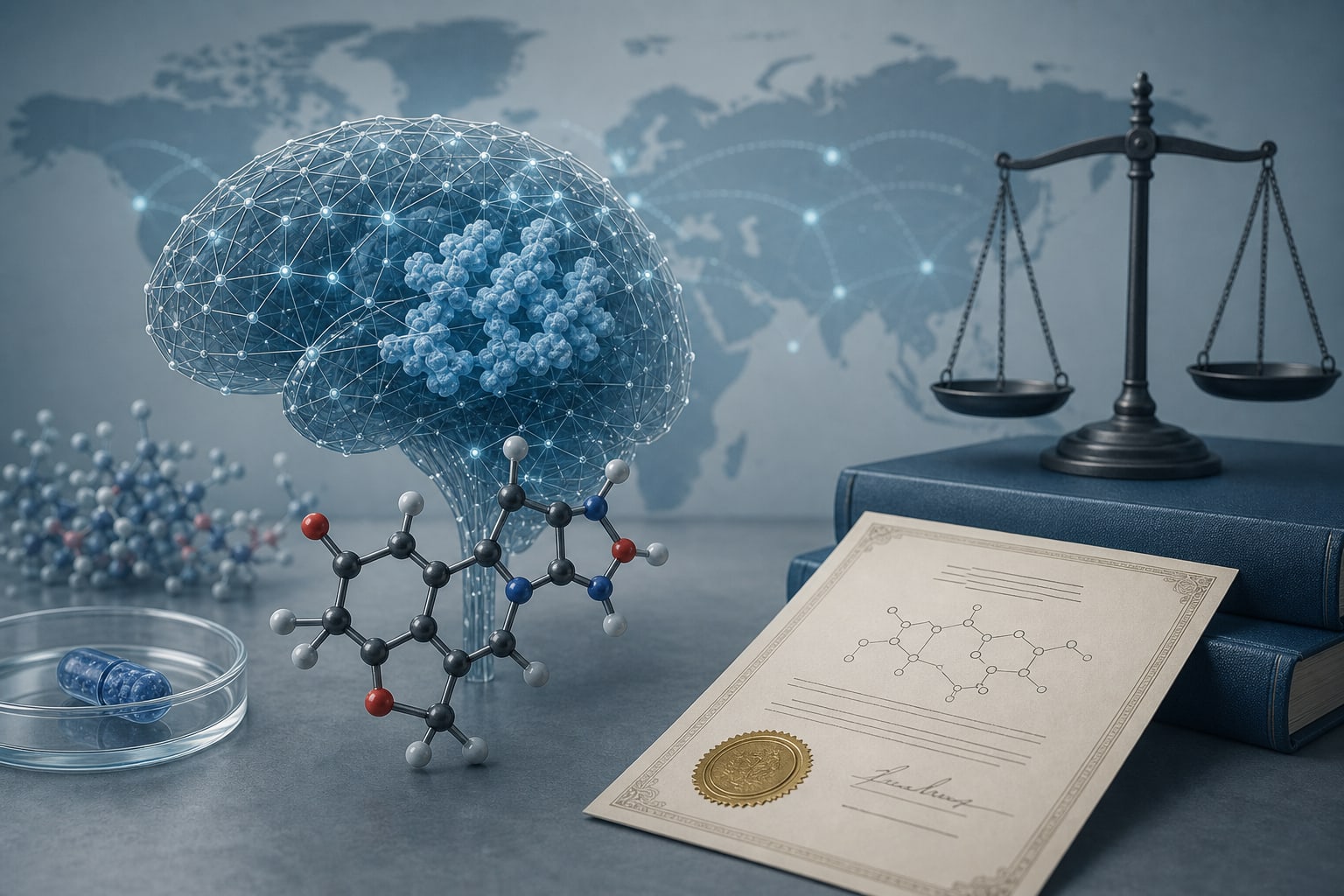
To examine AI-driven innovations in personalized medicine and drug design, with a specific focus on inventorship issues that directly affect pharmaceutical patent protection.
Approach:
Key Findings:
AI is transforming drug discovery and personalized medicine, raising complex IP challenges.
The US legal framework for inventorship does not currently accommodate AI as a legal inventor, which complicates patent protection.
Comparative approaches in Germany and China may offer insights for US stakeholders navigating these challenges.
Interpretation:
The evolving role of AI in pharmaceuticals necessitates a reevaluation of existing IP frameworks to address inventorship and copyright issues.
Limitations:
The review primarily focuses on US, German, and Chinese legal contexts, which may not be universally applicable and could limit the generalizability of the findings.
Specific case studies and examples may not cover the full spectrum of AI applications in pharmaceuticals.
Conclusion:
AI's integration into pharmaceuticals presents significant IP challenges that require careful navigation within existing legal frameworks.