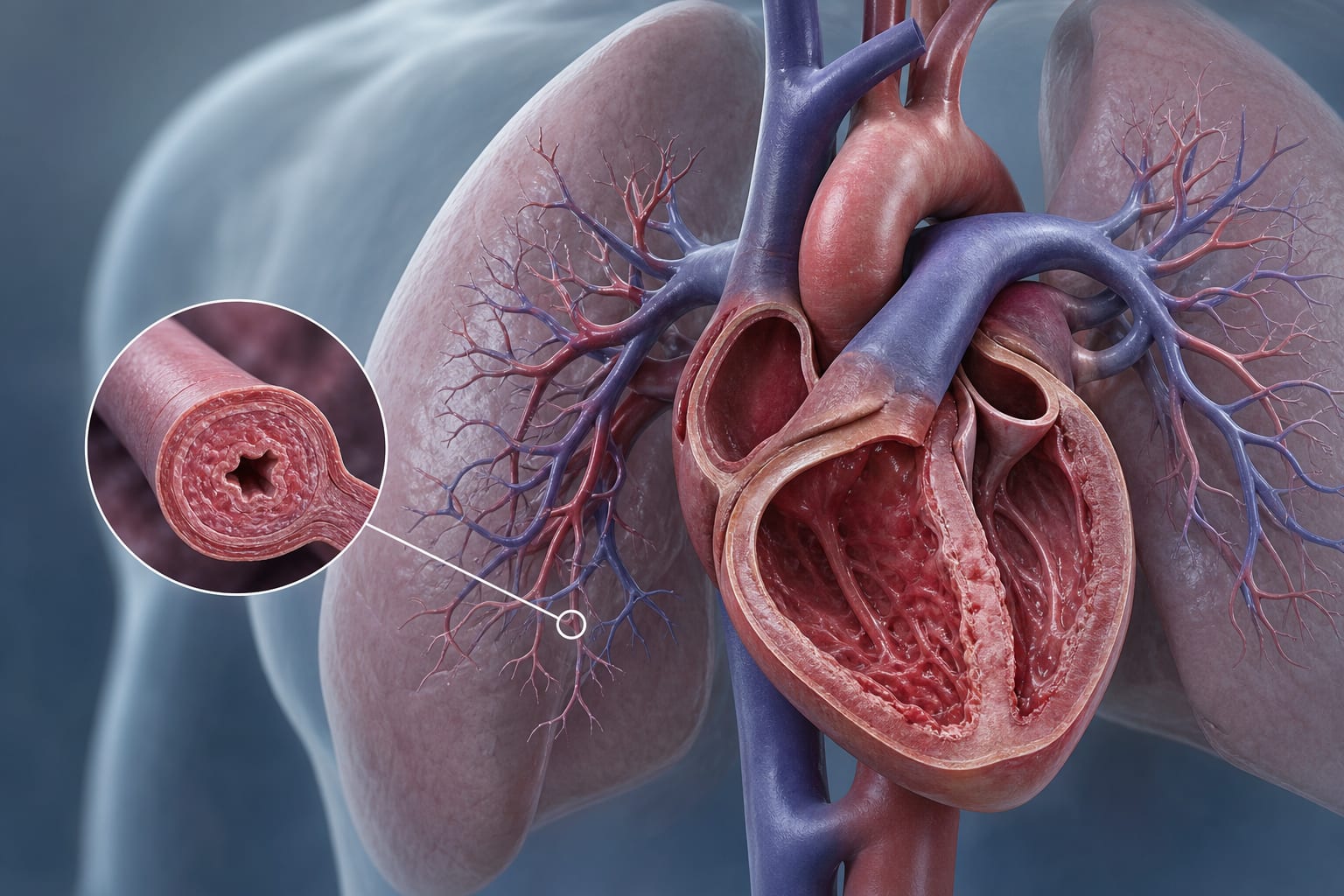
To identify succinylation-related genes associated with acute myocardial infarction (AMI) and evaluate their potential as biomarkers.
Approach:
Data Analysis: Weighted gene co-expression network analysis (WGCNA) was applied to identify AMI-related modules, and succinylation-annotated genes were retrieved from GeneCards. Machine-learning pipelines were evaluated using multiple datasets.
Validation: The study utilized GSE66360 as the training set and GSE48060, GSE60993, and GSE59867 as validation sets, assessing hub genes through differential expression and ROC analysis.
Single-Cell Analysis: Single-cell transcriptomics examined hub-gene expression across monocyte subsets in plaque rupture and non-plaque rupture cases.
Protein Measurement: ELISA was used to measure circulating protein levels of identified genes in AMI patients.
Key Findings:
Eighteen succinylation-annotated AMI genes were identified.
ASGR2 and NPL were prioritized as exploratory candidate biomarkers.
Both genes correlated positively with monocytes, particularly classical monocytes.
Classical monocytes were more abundant in non-plaque rupture than plaque rupture samples.
Elevated plasma levels of ASGR2 and NPL were observed in AMI patients compared to controls.
Interpretation:
ASGR2 and NPL are proposed as candidate biomarkers for AMI.
Limitations:
Findings are exploratory and require independent prospective validation.
The limited training sample size and the high number of evaluated machine-learning pipelines may affect the robustness of the results.
Conclusion:
ASGR2 and NPL are identified as hypothesis-generating candidate biomarkers associated with AMI, necessitating further validation.
Higher annual oral corticosteroid exposure was associated with greater odds of systemic adverse events, with avascular bone necrosis and pneumonia showing dose-dependent associations with cumulative dose and osteoporosis associated with longer annual exposure duration.