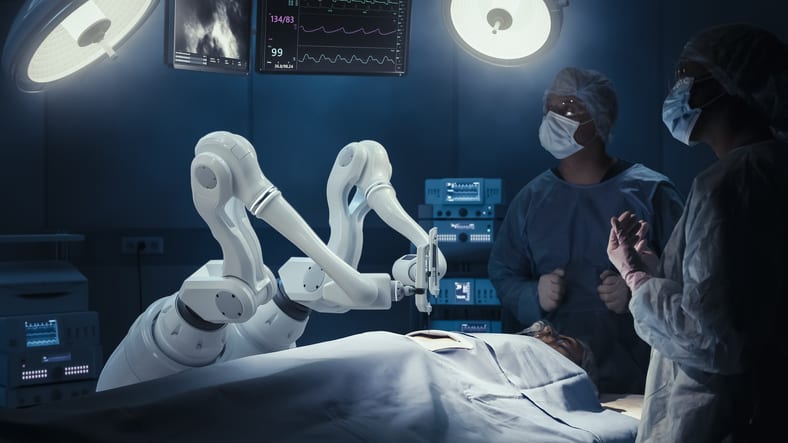
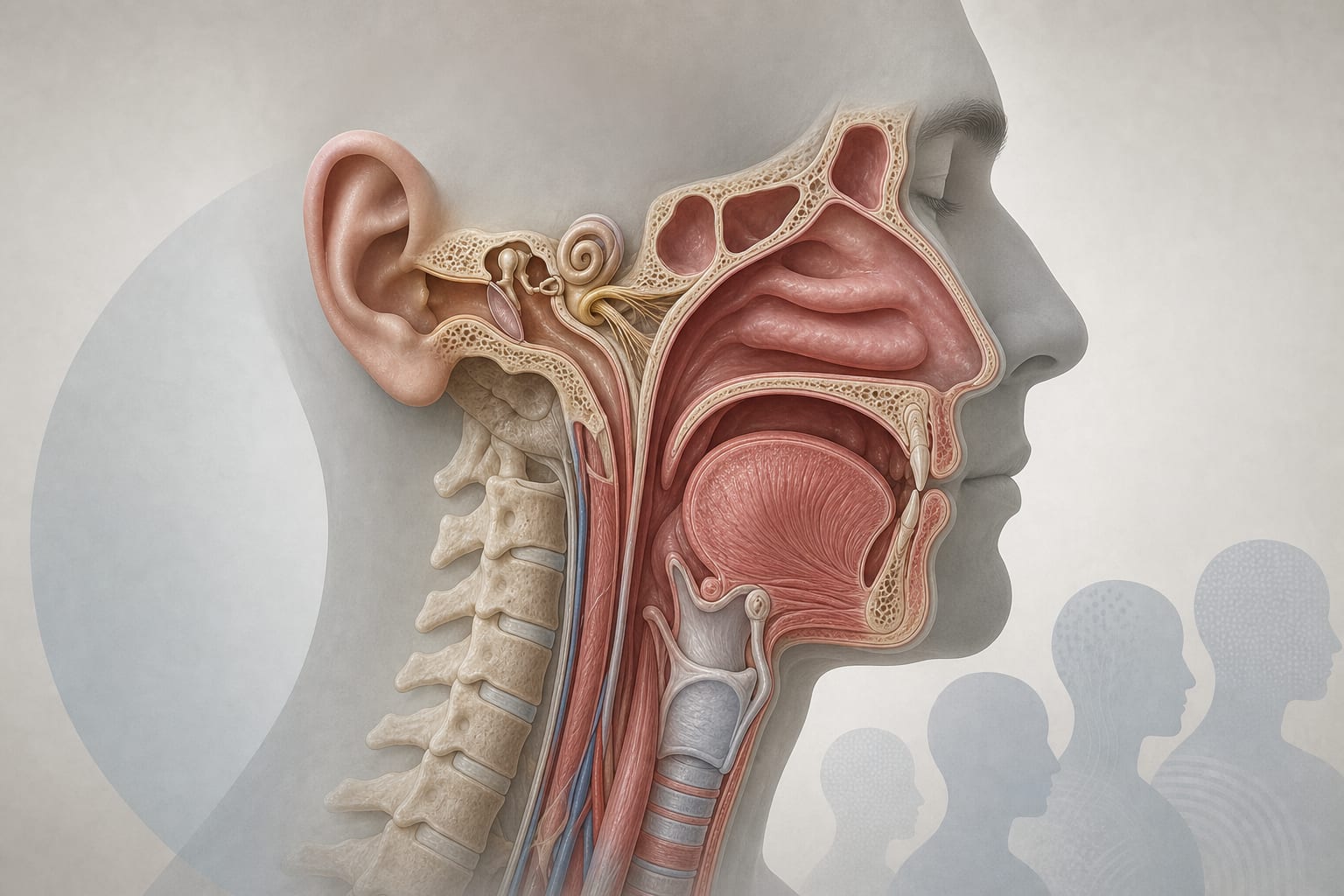
To assess the feasibility, workflow integration, and procedural safety of robot-assisted cochlear electrode insertion using the Otoarm-Otodrive system.
Approach:
Design and participants: Retrospective descriptive study of 50 consecutive adults who underwent cochlear implantation at one Canadian tertiary referral center from January to October 2025. Patients with cochlear malformations or ossification were excluded.
Procedure and assessment: All patients received MED-EL devices. Investigators assessed robotic setup and alignment, insertion time and depth, technical challenges, workflow integration, insertion completeness, and complications. The system advanced electrodes at 0.1 mm/second.
Key Findings:
Mean robotic setup and alignment time was 374 seconds; mean electrode insertion time was 444 seconds.
Mean operative time from incision to closure was 83 minutes (range, 70–95 minutes).
Full electrode insertion was achieved in 49 of 50 patients; one patient had an extracochlear contact at the round window level.
Imaging in 33 cases showed a mean angular insertion depth of 575°.
No major complications, including facial nerve palsy or infection, or device-related complications were reported.
The robotic system was introduced before electrode insertion, leaving preceding surgical steps unchanged. Alignment efficiency improved after approximately 5 to 10 cases.
Interpretation:
The investigators reported that robotic insertion could be incorporated into conventional cochlear implant surgery, with technical challenges sometimes requiring manual adjustment or conversion to forceps.
Limitations:
Retrospective, single-center design and small sample.
No manual-insertion comparison group; patients with complex cochlear anatomy were excluded.
Hearing preservation and speech perception outcomes were unavailable because follow-up was insufficient for meaningful audiometric assessment.
The study could not determine whether robotic insertion reduced intracochlear trauma or improved hearing outcomes. Cost and accessibility were identified as potential barriers.
Conclusion:
The authors described favorable early procedural outcomes and stated that ongoing follow-up will clarify the system’s role in optimizing hearing preservation outcomes.