Development and Experimental Validation of an Osteoporosis Diagnosis Model Based on Disulfidoptosis-related Genes and Immune Infiltration Analysis - Summary - MDSpire
Advertisement
Development and Experimental Validation of an Osteoporosis Diagnosis Model Based on Disulfidoptosis-related Genes and Immune Infiltration Analysis
To identify disulfidoptosis-related molecular signatures for osteoporosis diagnosis and explore their link to immune infiltration.
Key Findings:
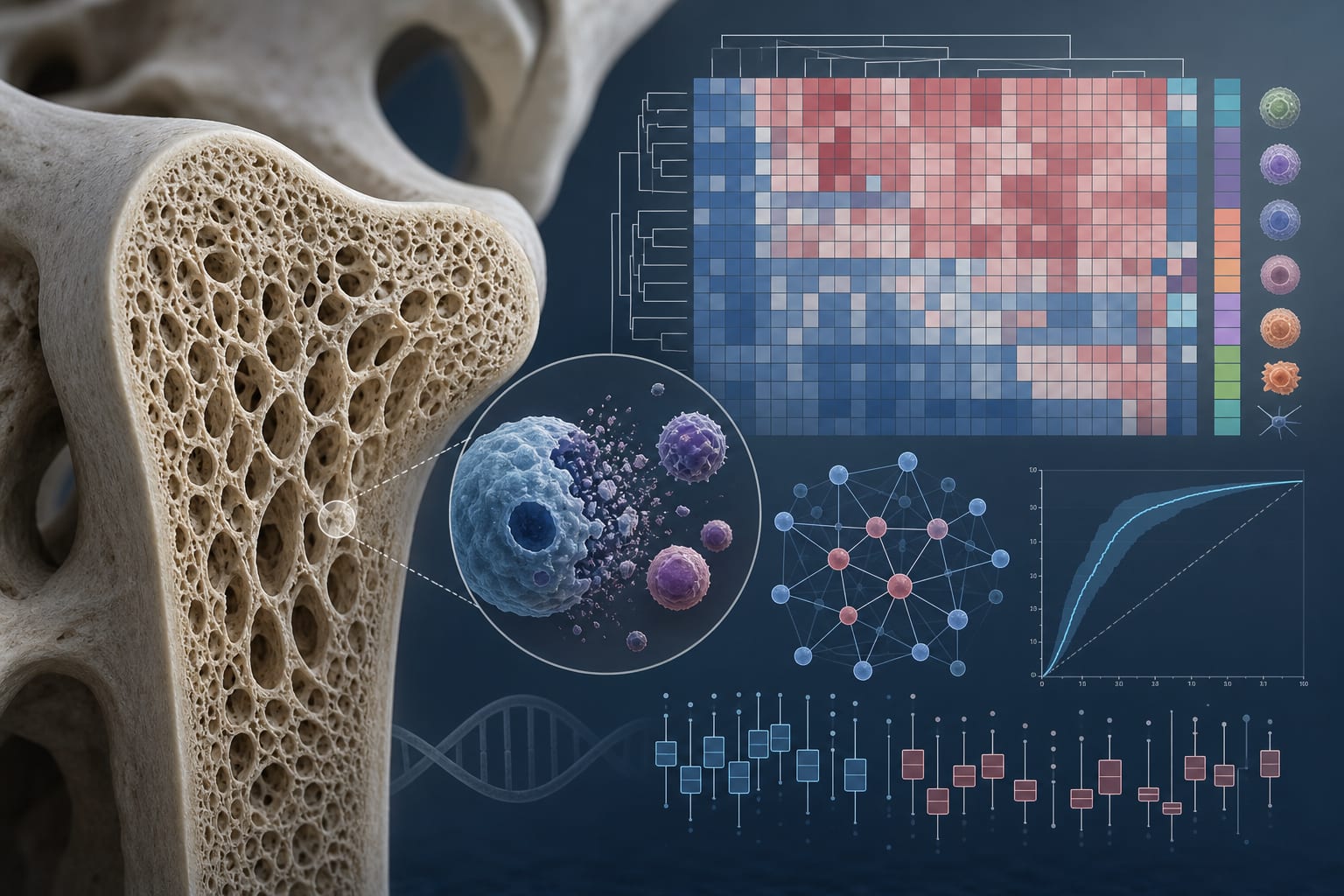
Identified 299 DRDEGs and constructed a diagnostic model based on three hub genes (SOAT2, FOLR3, TUBA8).
The model demonstrated moderate diagnostic accuracy in internal validation (AUC: 0.7-0.9) and high accuracy in external validation (AUC > 0.9).
Distinct immune infiltration patterns and significant correlations between key genes and immune cells were observed.
Consensus clustering defined two osteoporosis subtypes with unique molecular and immune characteristics.
Experimental validation confirmed significant dysregulation of these genes during osteoclast differentiation.
Interpretation:
The study establishes a diagnostic model for osteoporosis based on disulfidoptosis-related genes and provides experimental evidence for their dysregulation.
Limitations:
Conclusion:
Findings may reveal immune heterogeneity and uncover potential post-transcriptional regulatory mechanisms, offering insights for precision medicine in osteoporosis.