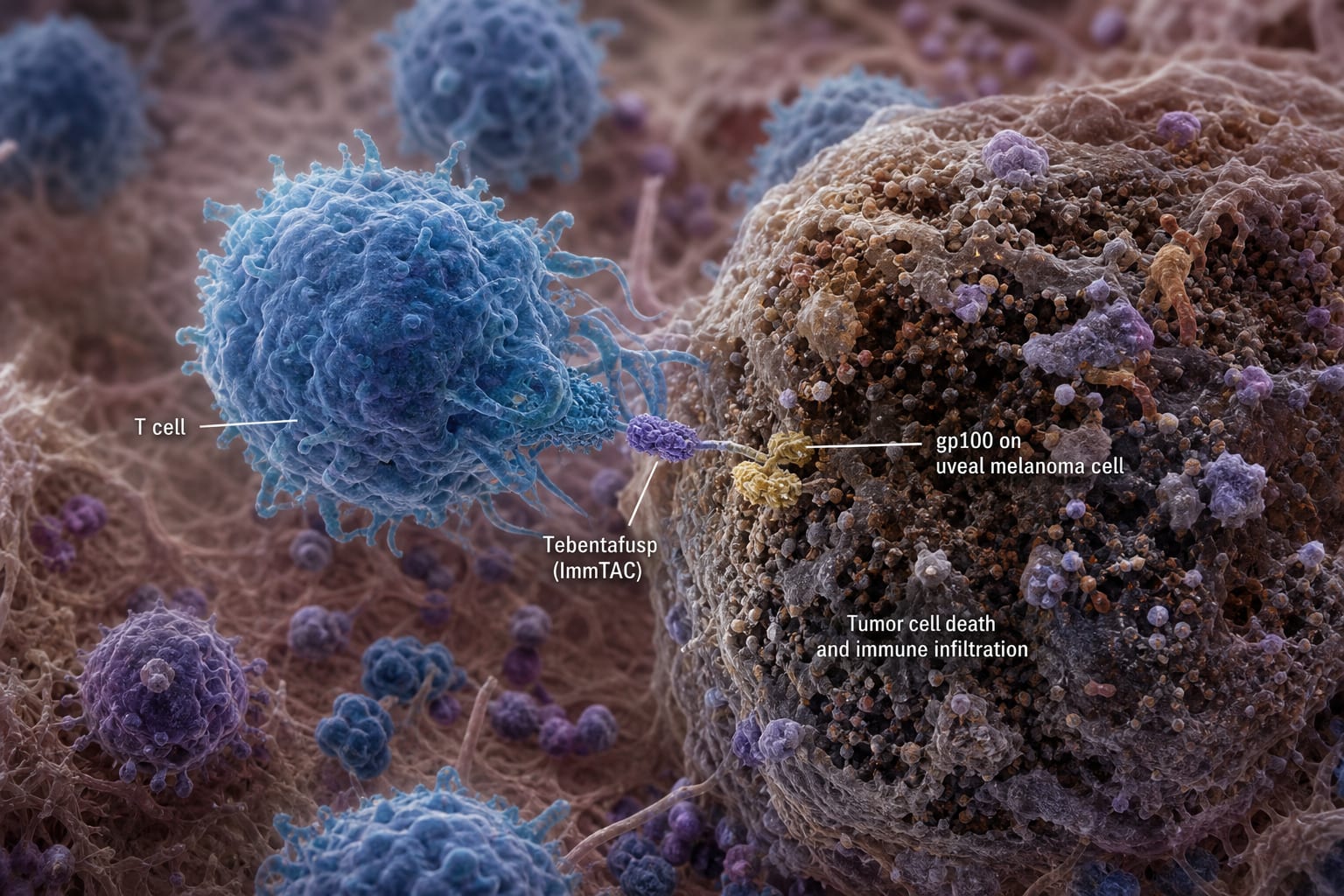
To describe the case of a patient with metastatic uveal melanoma treated with tebentafusp, highlighting the immune response and disease stability observed.
Approach:
Patient Background: An HLA-A*0201-positive patient with a history of choroidal melanoma and subsequent metastatic disease was treated with tebentafusp for over two years.
Treatment and Monitoring: The patient received tebentafusp monotherapy, undergoing 37 cycles with imaging showing stable disease and regression of hepatic lesions.
Autopsy Findings: Post-mortem examination revealed extensive tumor necrosis and immune cell infiltration in liver lesions, with minimal viable tumor cells.
Key Findings:
Tebentafusp therapy led to significant immune-mediated tumor remodeling, evidenced by extensive necrosis and immune cell infiltration.
The patient experienced stable disease on imaging despite the presence of necrotic tumor tissue.
Cardiac death was attributed to acute myocardial infarction due to pre-existing coronary artery disease.
Interpretation:
The findings suggest that tebentafusp can induce profound immune responses that may not be reflected in conventional imaging assessments.
Limitations:
The case study is based on a single patient, limiting generalizability.
The patient's pre-existing cardiovascular conditions complicate the interpretation of treatment-related cardiac events.
Conclusion:
This case underscores the need for integrated evaluation methods in assessing treatment responses in metastatic uveal melanoma.
by Parham Habibzadeh, Anushri Kulkarni, Drew Hurd, Amy Rose, Danielle Bednarz, Yana G. Najjar, John M. Kirkwood, Arivarasan Karunamurthy, Diwakar Davar