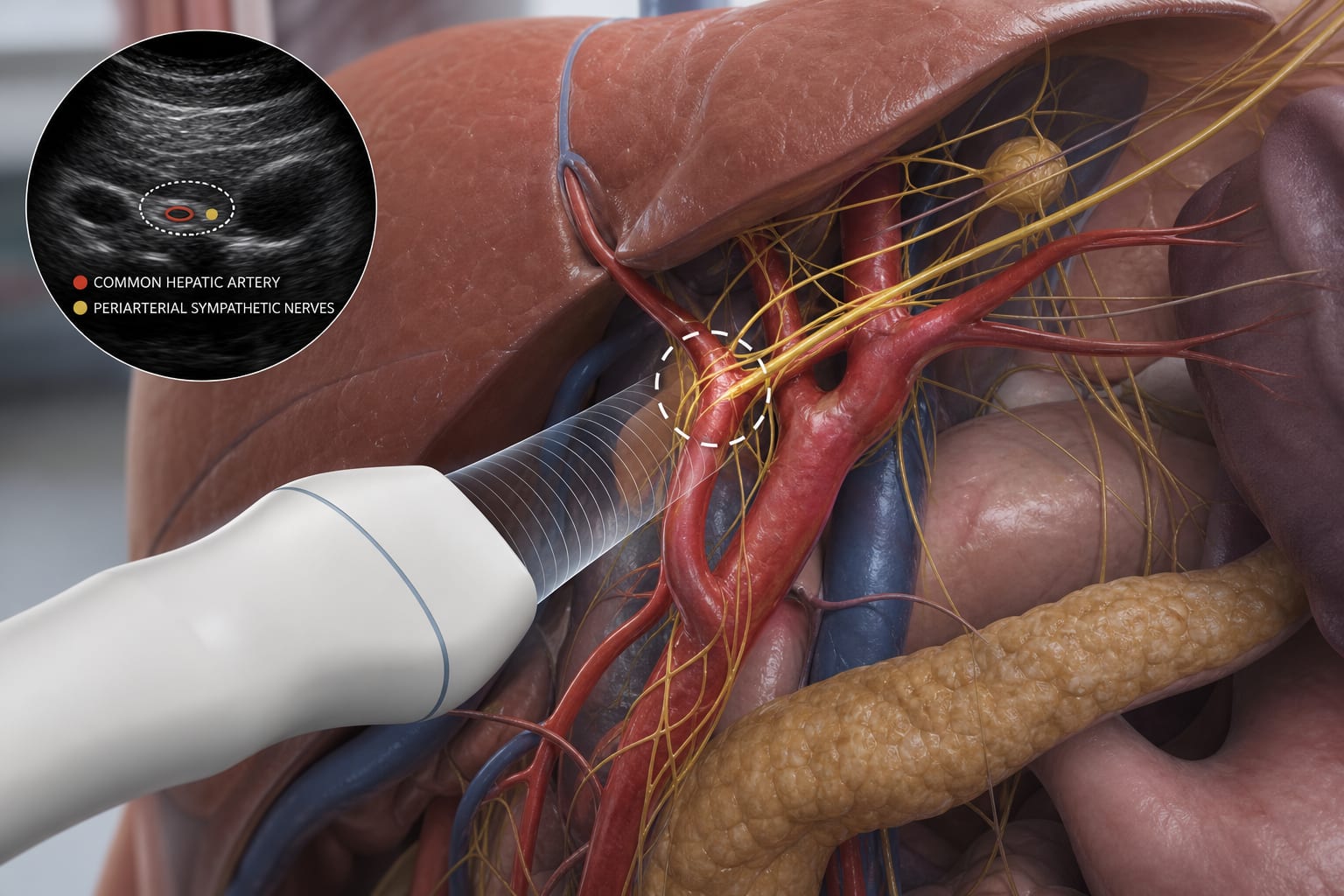
Ultrasound common hepatic artery denervation (CHA-D) as a novel neuromodulatory strategy for cardiovascular-kidney-metabolic syndrome: first-in-human experience - Summary - MDSpire
Advertisement
Ultrasound common hepatic artery denervation (CHA-D) as a novel neuromodulatory strategy for cardiovascular-kidney-metabolic syndrome: first-in-human experience
To present the first-in-human use of ultrasound-guided common hepatic artery denervation (CHA-D) in a patient with uncontrolled hypertension and high cardiometabolic risk, highlighting its potential as a novel treatment option.
Key Findings:
The patient had uncontrolled hypertension and significant cardiometabolic comorbidities, indicating a high-risk profile.
Ultrasound CHA-D was performed safely with no immediate complications, suggesting its feasibility.
The procedure aimed to explore additional blood pressure lowering effects beyond renal denervation, potentially offering new avenues for treatment.
Interpretation:
The study highlights the potential of CHA-D as an innovative approach for managing uncontrolled hypertension in patients with limited treatment options.
Limitations:
The study presents a single-case intervention, limiting generalizability and necessitating caution in interpretation.
No formal ethics committee approval was required, which may raise concerns about oversight and the robustness of the study.
Conclusion:
Ultrasound-guided CHA-D may represent a novel therapeutic option for patients with resistant hypertension and associated metabolic disorders, but further studies are needed to validate these findings and assess long-term outcomes.