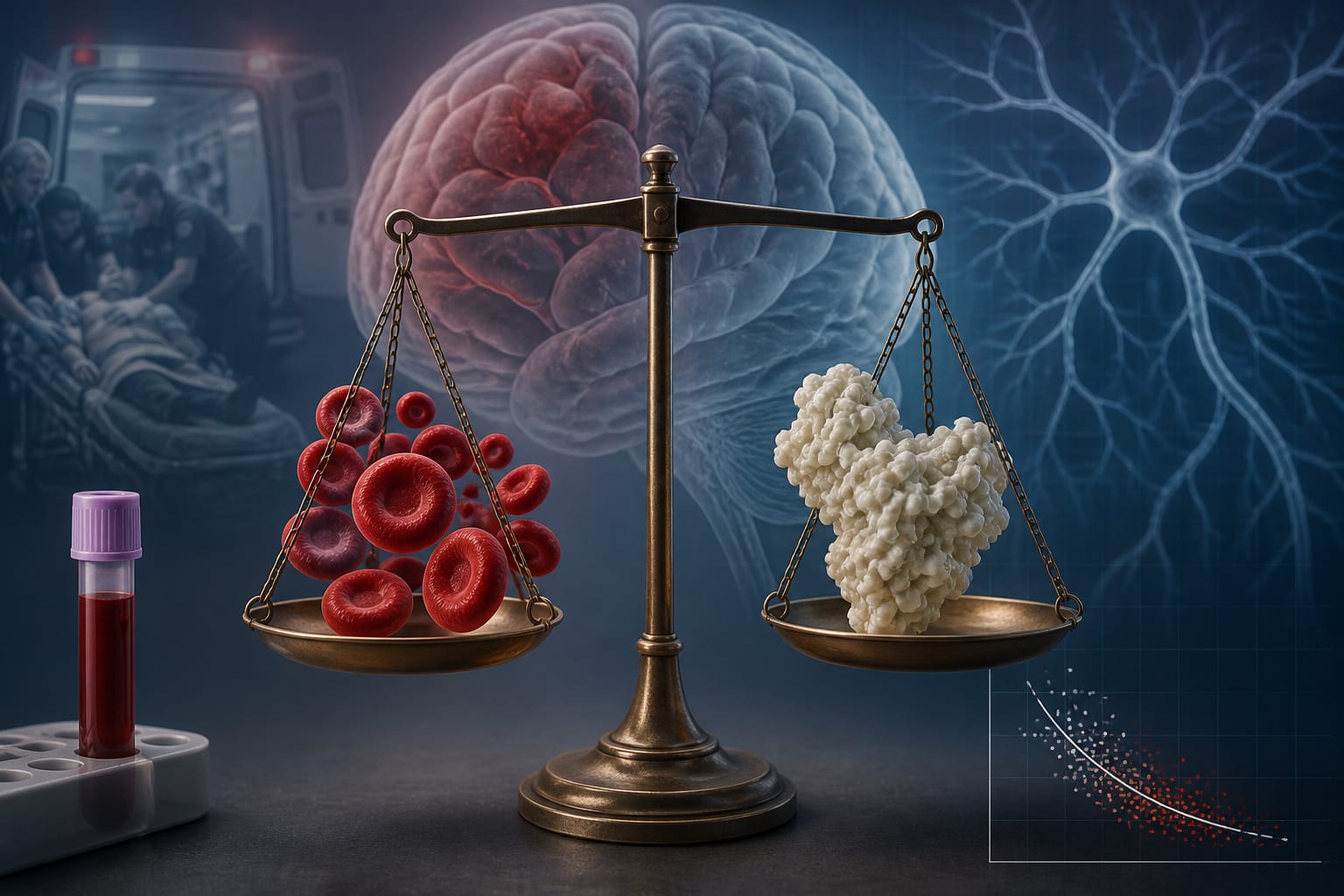
To examine the association between red blood cell distribution width-to-albumin ratio (RA) levels and neurological outcomes following cardiac arrest (CA) and evaluate RA's utility for predicting neurological function after CA/CPR.
Approach:
Study Design: A retrospective observational study of out-of-hospital cardiac arrest (OHCA) patients presenting to the emergency department from January 2023 through April 2026.
Cohort Assignment: Patients were assigned to cohorts based on cerebral performance categories (CPCs) representing good (CPC ≤ 2) or poor (CPC ≥ 3) neurological outcomes.
Statistical Analysis: Cox regression analyses estimated the association of RA with neurological outcomes, and the area under the receiver operating characteristic curve (AUC) was determined to assess RA's predictive capacity.
Key Findings:
Among the 80 patients included, 10 survived with favorable neurological function, while the others had unfavorable outcomes.
RA concentrations were significantly higher in patients with poor neurological outcomes.
RA yielded an AUC of 0.90, indicating excellent predictive accuracy for neurological outcomes.
Limitations:
The study is limited to a single-center retrospective design.
Potential confounding factors may not have been fully accounted for.