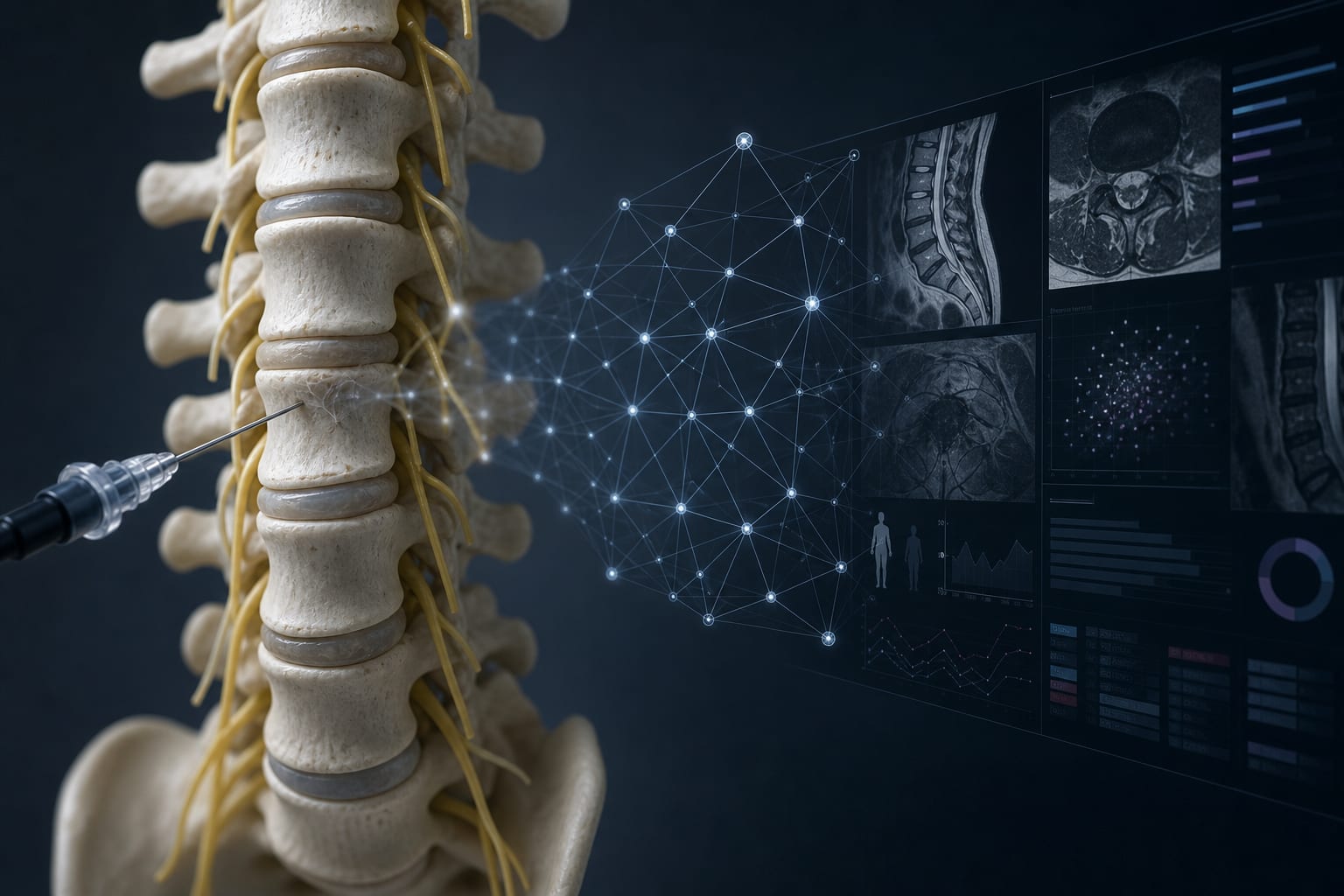
Artificial intelligence for prediction of clinical response and therapeutic value in interventional pain management: a scoping review - Summary - MDSpire
To map and characterise the available scientific evidence on the application of artificial intelligence techniques for predicting clinical response, procedural risk and dimensions of therapeutic value in adult patients undergoing interventional pain procedures.
Approach:
Method: A
Method: s
Method: c
Method: o
Method: p
Method: i
Method: n
Method: g
Method: r
Method: e
Method: v
Method: i
Method: e
Method: w
Method: w
Method: a
Method: s
Method: c
Method: o
Method: n
Method: d
Method: u
Method: c
Method: t
Method: e
Method: d
Method: i
Method: n
Method: a
Method: c
Method: c
Method: o
Method: r
Method: d
Method: a
Method: n
Method: c
Method: e
Method: w
Method: i
Method: t
Method: h
Method: J
Method: o
Method: a
Method: n
Method: n
Method: a
Method: B
Method: r
Method: i
Method: g
Method: g
Method: s
Method: I
Method: n
Method: s
Method: t
Method: i
Method: t
Method: u
Method: t
Method: e
Method: m
Method: e
Method: t
Method: h
Method: o
Method: d
Method: o
Method: l
Method: o
Method: g
Method: y
Method: a
Method: n
Method: d
Method: r
Method: e
Method: p
Method: o
Method: r
Method: t
Method: e
Method: d
Method: f
Method: o
Method: l
Method: l
Method: o
Method: w
Method: i
Method: n
Method: g
Method: P
Method: R
Method: I
Method: S
Method: M
Method: A
Method: -
Method: S
Method: c
Method: R
Method: g
Method: u
Method: i
Method: d
Method: e
Method: l
Method: i
Method: n
Method: e
Method: s
Method: .
Method: A
Method: s
Method: y
Method: s
Method: t
Method: e
Method: m
Method: a
Method: t
Method: i
Method: c
Method: s
Method: e
Method: a
Method: r
Method: c
Method: h
Method: w
Method: a
Method: s
Method: p
Method: e
Method: r
Method: f
Method: o
Method: r
Method: m
Method: e
Method: d
Method: i
Method: n
Method: P
Method: u
Method: b
Method: M
Method: e
Method: d
Method: ,
Method: S
Method: c
Method: o
Method: p
Method: u
Method: s
Method: ,
Method: W
Method: e
Method: b
Method: o
Method: f
Method: S
Method: c
Method: i
Method: e
Method: n
Method: c
Method: e
Method: ,
Method: a
Method: n
Method: d
Method: I
Method: E
Method: E
Method: E
Method: X
Method: p
Method: l
Method: o
Method: r
Method: e
Method: f
Method: o
Method: r
Method: s
Method: t
Method: u
Method: d
Method: i
Method: e
Method: s
Method: p
Method: u
Method: b
Method: l
Method: i
Method: s
Method: h
Method: e
Method: d
Method: b
Method: e
Method: t
Method: w
Method: e
Method: e
Method: n
Method: 2
Method: 0
Method: 1
Method: 5
Method: a
Method: n
Method: d
Method: 2
Method: 0
Method: 2
Method: 6
Method: .
Key Findings:
Twenty-five studies were included, focusing on predictive applications in epidural injections, radiofrequency procedures, vertebral augmentation, and spinal cord stimulation.
AI models explored patterns related to clinical response, durability of benefit, procedural risk, opioid use trajectories, functional recovery, and scenarios of low therapeutic value.
Most studies were retrospective and primarily relied on internal validation, with limited external validation reported.
Interpretation:
The evidence indicates that AI has been applied across multiple interventional pain domains to explore predictive approaches related to clinical response and therapeutic value, but methodological heterogeneity and limited external validation restrict interpretability.
Limitations:
Methodological heterogeneity among studies.
Retrospective study designs.
Limited external validation of findings.
Conclusion:
Further prospective studies with robust external validation are required before routine clinical implementation can be considered.
With an aging population, spine disorders are becoming increasingly common. Age-related spinal degeneration is nearly universal, but not all patients experience symptoms—and not all degeneration progresses the same way.
Patients with preoperative vitamin D deficiency had higher postoperative pain scores and opioid use after mastectomy, including more than triple the odds of moderate to severe pain within 24 hours of surgery.