CORO1A links inflammatory chondrocyte subpopulations to immune microenvironment alterations in osteoarthritis: an integrative multi-omics and single-cell study - Summary - MDSpire
Conexiant’s news site is now MDSpire News. Learn more
Advertisement
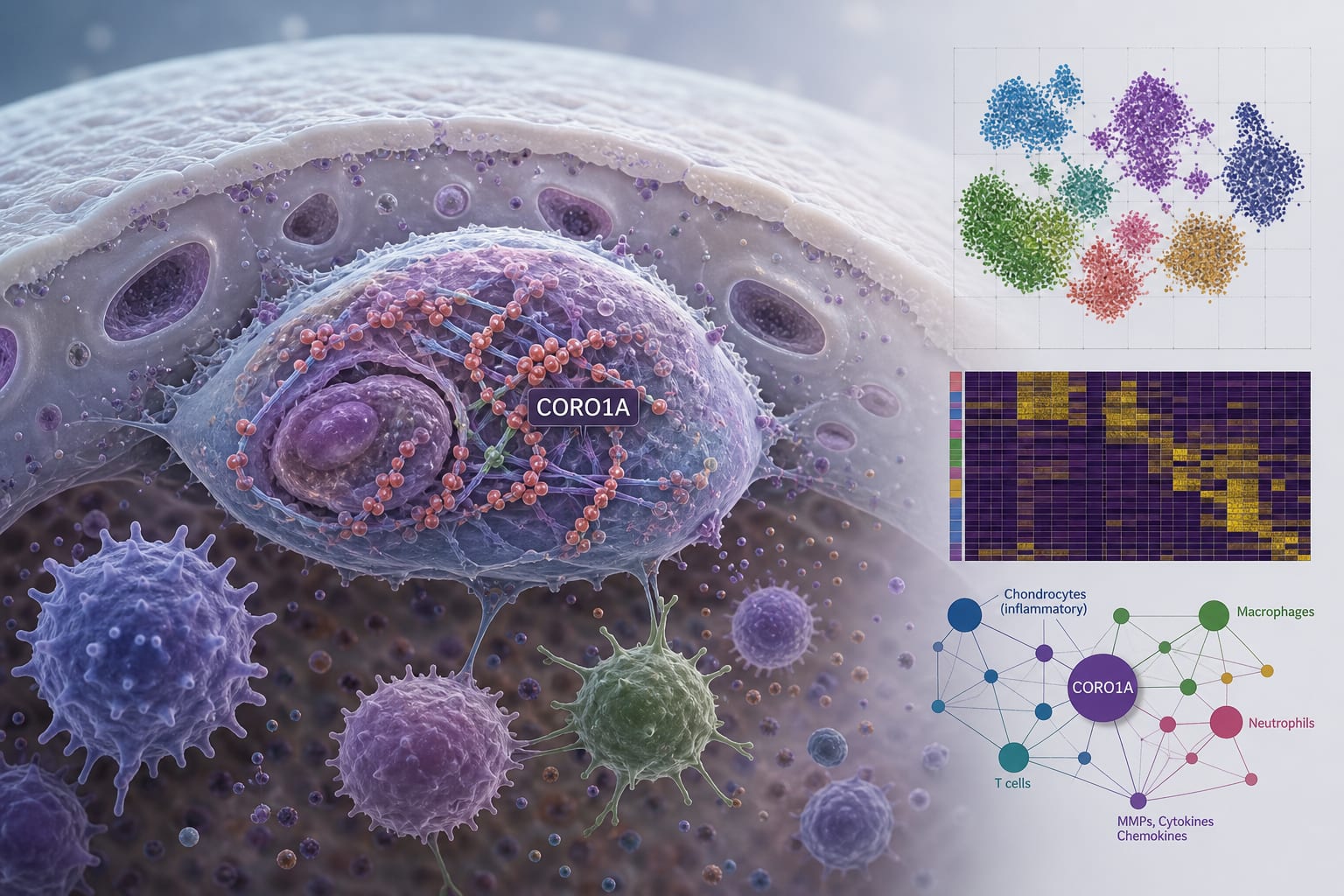
CORO1A associates inflammatory chondrocyte subsets with changes in the immune microenvironment in osteoarthritis: a comprehensive multi-omics and single-cell analysis
To investigate the specific molecular mechanisms by which CORO1A influences chondrocyte populations and their interactions with the immune microenvironment in osteoarthritis (OA).
Approach:
Key Findings:
CORO1A is significantly expressed in osteoarthritic cartilage, particularly in inflammatory and proliferative chondrocyte subpopulations.
Increased CORO1A expression correlates with the infiltration of immune cells such as M2 macrophages, plasma cells, and natural killer cells.
CORO1A upregulation is linked to the activation of IL-6/JAK-STAT3 and TNF-α/NF-κB signaling pathways.
Experimental data show elevated CORO1A levels in cartilage affected by OA in both humans and mice.
Suppressing CORO1A expression reduces MMP13 expression and chondrocyte migration.
Interpretation:
CORO1A serves as a critical regulator of interactions between immune microenvironment and chondrocyte subpopulations, linking immune remodeling to inflammatory and proliferative processes in OA.
Conclusion:
This study identifies CORO1A as a mechanistic factor contributing to cartilage degradation in OA, suggesting its potential as a therapeutic target for innovative treatment strategies.