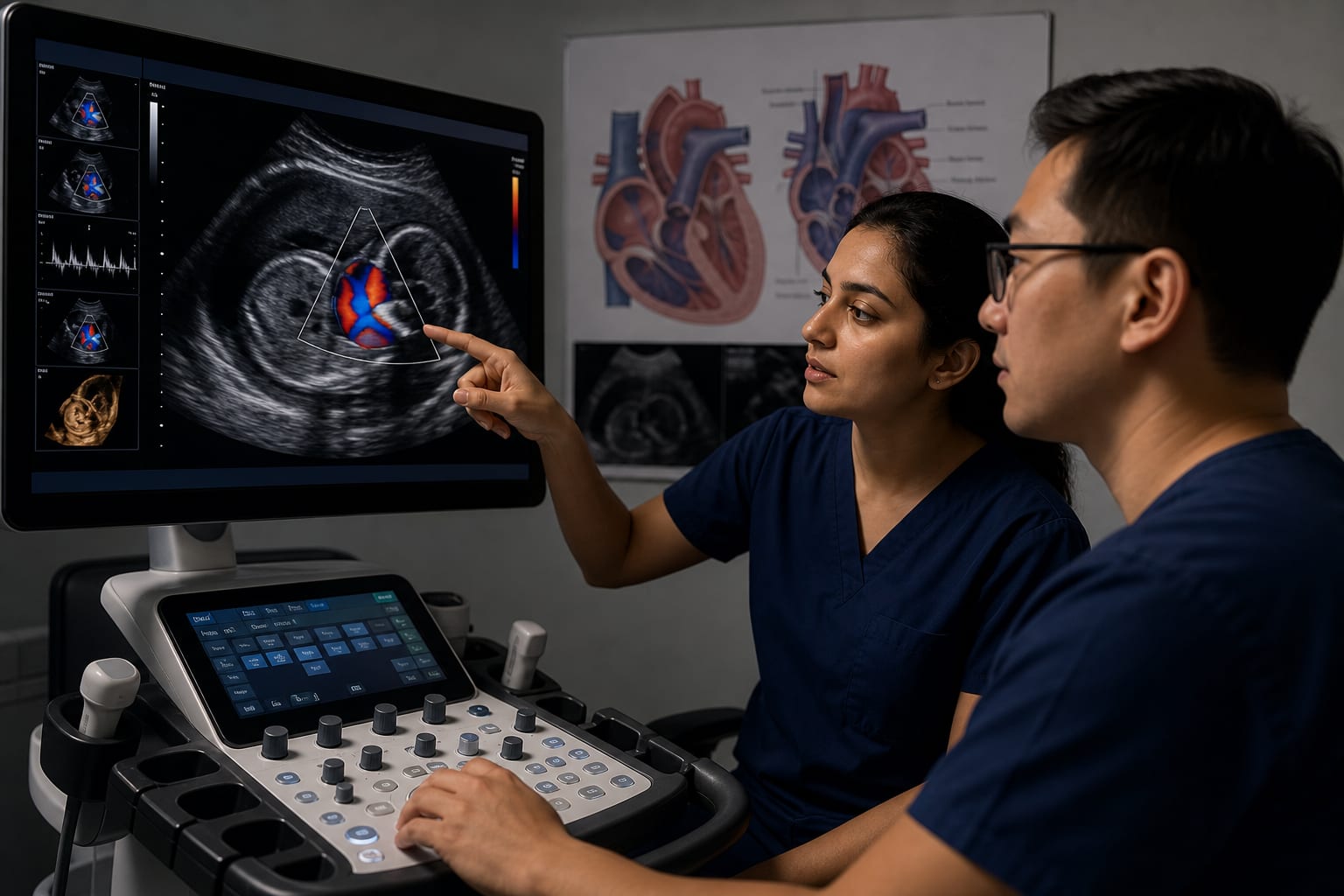
To develop a standardized fetal cardiology curriculum for pediatric cardiology fellows to address specific educational gaps in fetal cardiac imaging and enhance learning experiences.
Key Findings:
56 fellows participated in the curriculum from 2018 to 2025, with a response rate of 39.3% from 22 fellows completing post-course surveys, indicating a need for improved survey engagement.
Confidence scores in fetal cardiac imaging topics significantly improved post-course, with median scores rising from 30-50 to 72-78, highlighting the curriculum's effectiveness.
Interpretation:
The curriculum was effective in enhancing fellows' understanding and interpretation of fetal cardiac imaging.
Limitations:
Low survey response rate may limit the generalizability of the findings, suggesting a need for strategies to enhance participation in future evaluations.
No defined minimum exposure required to complete the curriculum, which may affect the consistency of learning outcomes.
Conclusion:
The structured fetal cardiology curriculum successfully improved fellows' confidence and knowledge in fetal cardiac imaging, which is crucial for their future practice in pediatric cardiology.
by Nia Choi, Shreya S. Sheth, Tam T. Doan, William Buck Kyle, BriAnna Souder, Aura Sanchez, Deidra Ansah, Emily Lawrence, Hasti Sanandajifar, James Chris Wilkinson, Betul Yilmaz Furtun
Investigative report cites internal communications, VAERS data, and CDC case reviews describing myocarditis and pericarditis reports in adolescents and young adults after mRNA COVID-19 vaccination.
A prespecified exploratory analysis of the FIND-CKD clinical trial examined kidney function, albuminuria, and kidney failure outcomes in 903 patients with glomerular diseases.