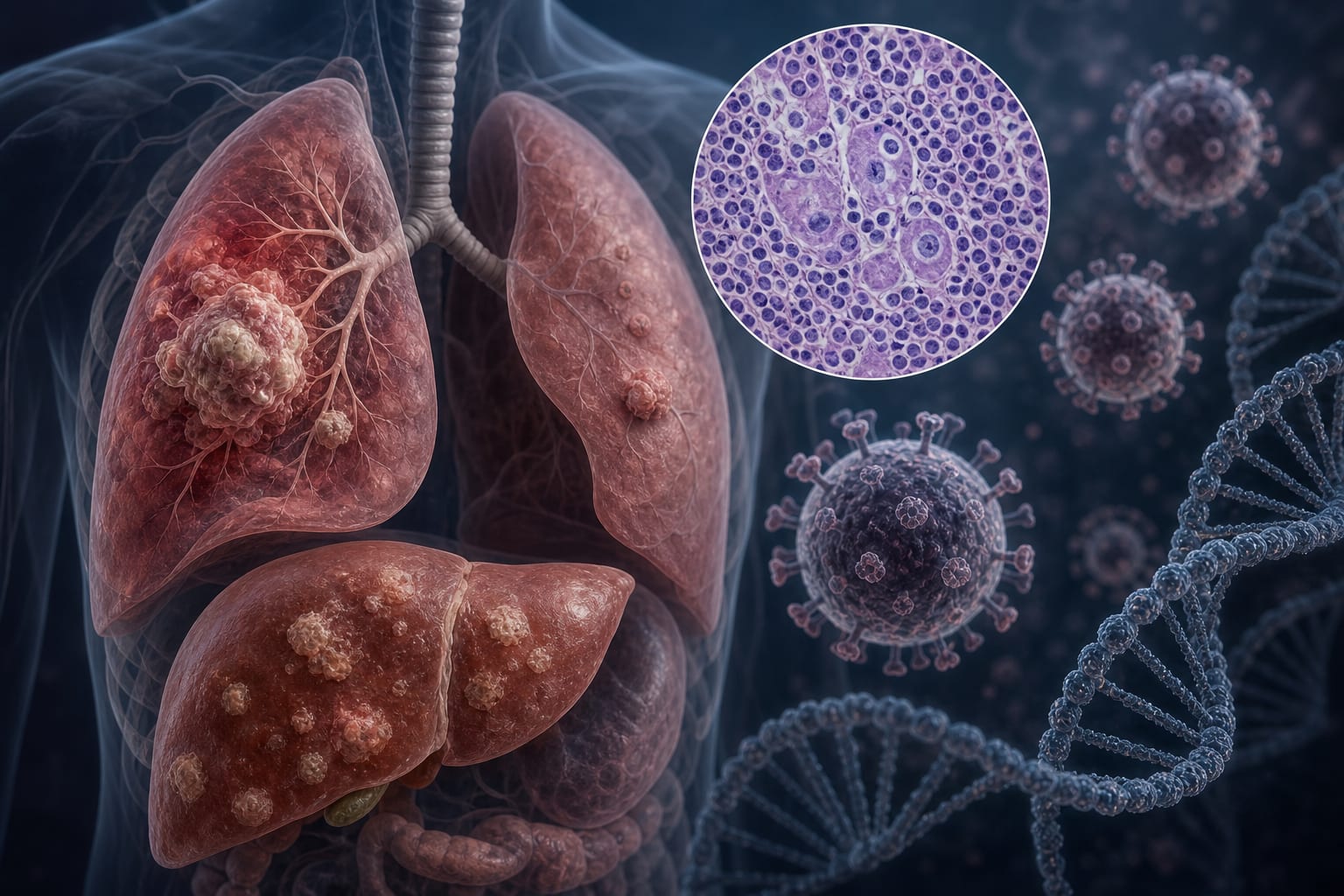
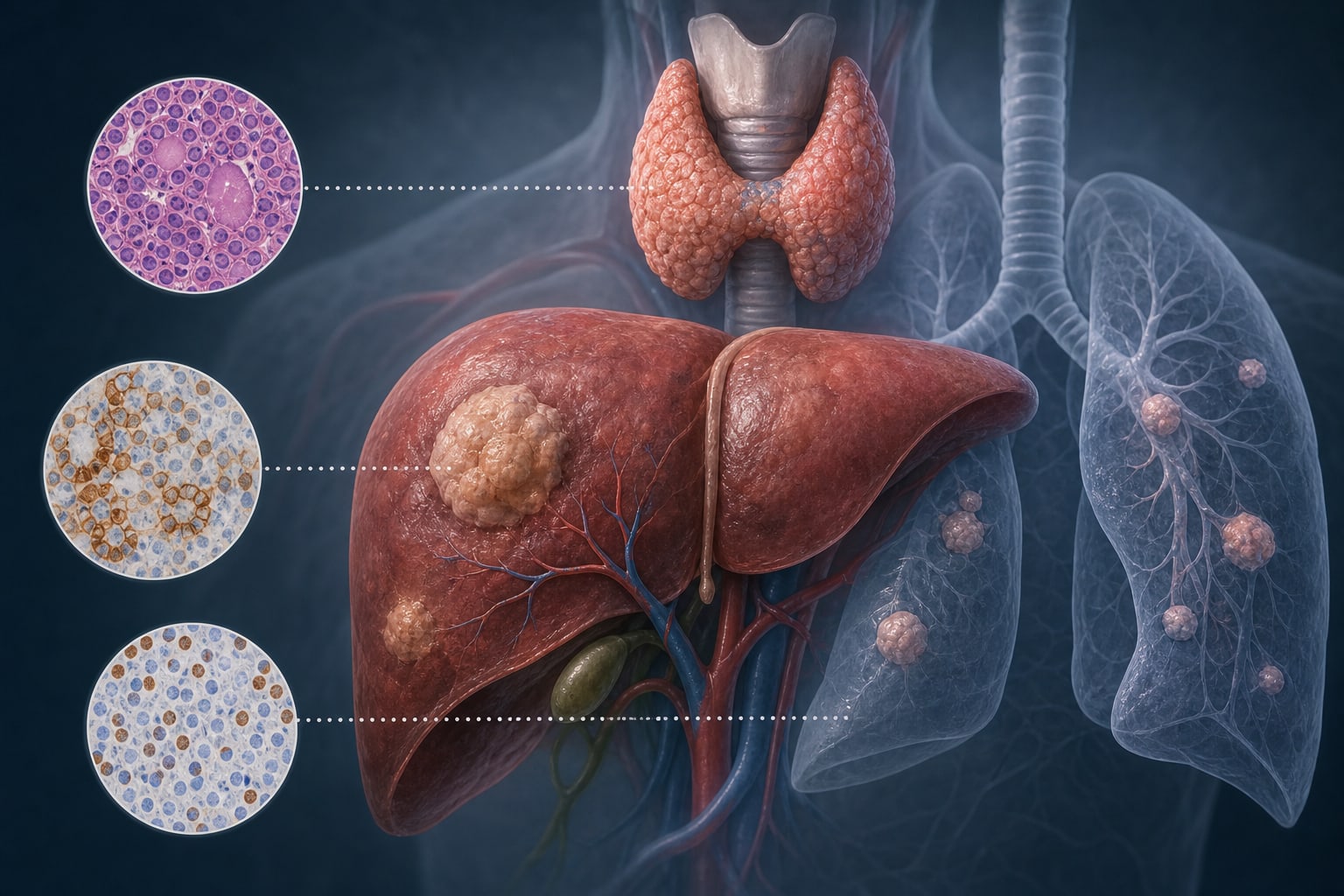
To outline the clinical features, therapeutic pathway, and management difficulties of advanced pulmonary lymphoepithelioma-like carcinoma (LELC), emphasizing metastatic disease and complications that hinder treatment.
Approach:
Key Findings:
Pulmonary LELC can exhibit aggressive clinical behavior despite multimodal therapy.
Serial plasma EBV-DNA concentrations correlated with disease activity.
Persistent high-grade fever presented significant diagnostic and therapeutic challenges.
Interpretation:
Limitations:
The rarity of pulmonary LELC limits the availability of prospective randomized clinical trials.
Management of treatment-related complications, such as persistent fever, remains inadequately characterized.
Conclusion:
Advanced pulmonary LELC may show aggressive characteristics with significant metastatic load, and timely management of complications is crucial for optimizing treatment outcomes.