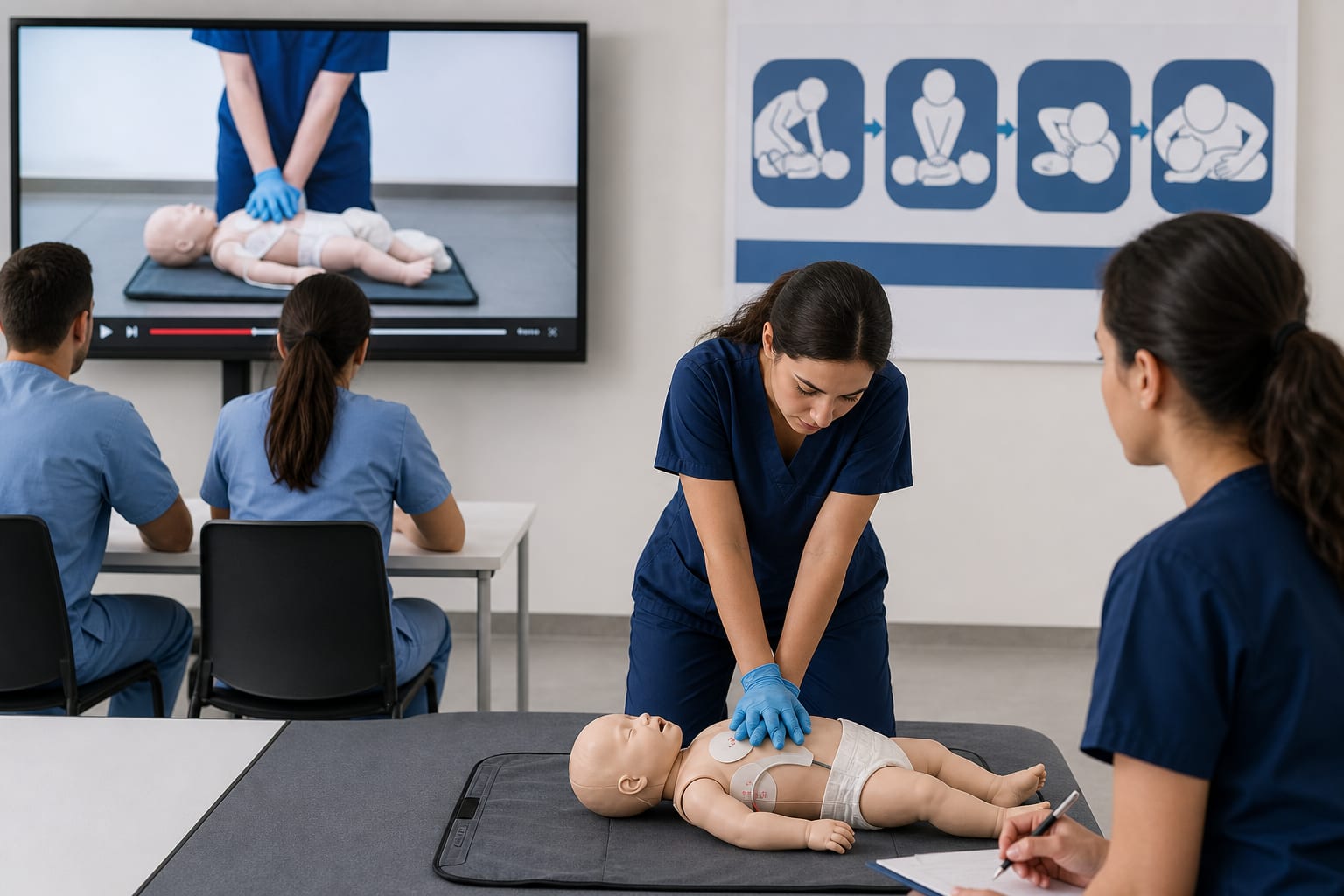
To compare video-based instruction and four-step low-fidelity simulation for pediatric Basic Life Support (BLS) training among interns and nurses.
Approach:
Study Design: Pilot randomized controlled trial conducted in two teaching hospitals in Tunisia.
Participants: 60 participants (33 interns, 27 nurses) without formal pediatric BLS certification in the past 2 years.
Training Methods: Participants were randomized to receive either video-based instruction or simulation-based training covering identical ERC 2021 pediatric BLS content.
Assessment: Knowledge assessed via a 15-item questionnaire, practical skills evaluated through a SimBaby scenario, and learner satisfaction measured using a 5-point Likert scale.
Key Findings:
Both training modalities significantly improved knowledge and skills immediately after training (median knowledge scores: video 86.7%, simulation 86.7%, p=0.270; practical skills median 90.0%, p=0.18).
At 3 months, knowledge and skills retention declined significantly across both groups (median knowledge 61.5%, p<0.001; skills 80.0%, p=0.035).
Exploratory analyses suggested higher skill scores among nurses trained with simulation compared to video-based instruction (90.0% vs 85.0%, p=0.023).
All participants reported high satisfaction with no differences between groups.
Interpretation:
Both video-based instruction and low-fidelity simulation improved pediatric BLS knowledge and skills, with no significant differences overall.
Limitations:
Pilot study design with limited sample size.
Single-country setting.
Absence of long-term clinical outcome assessment.
Conclusion:
The study indicates the need for regular refresher training due to observed declines in knowledge and skills at 3 months. Larger multicentre studies are warranted.