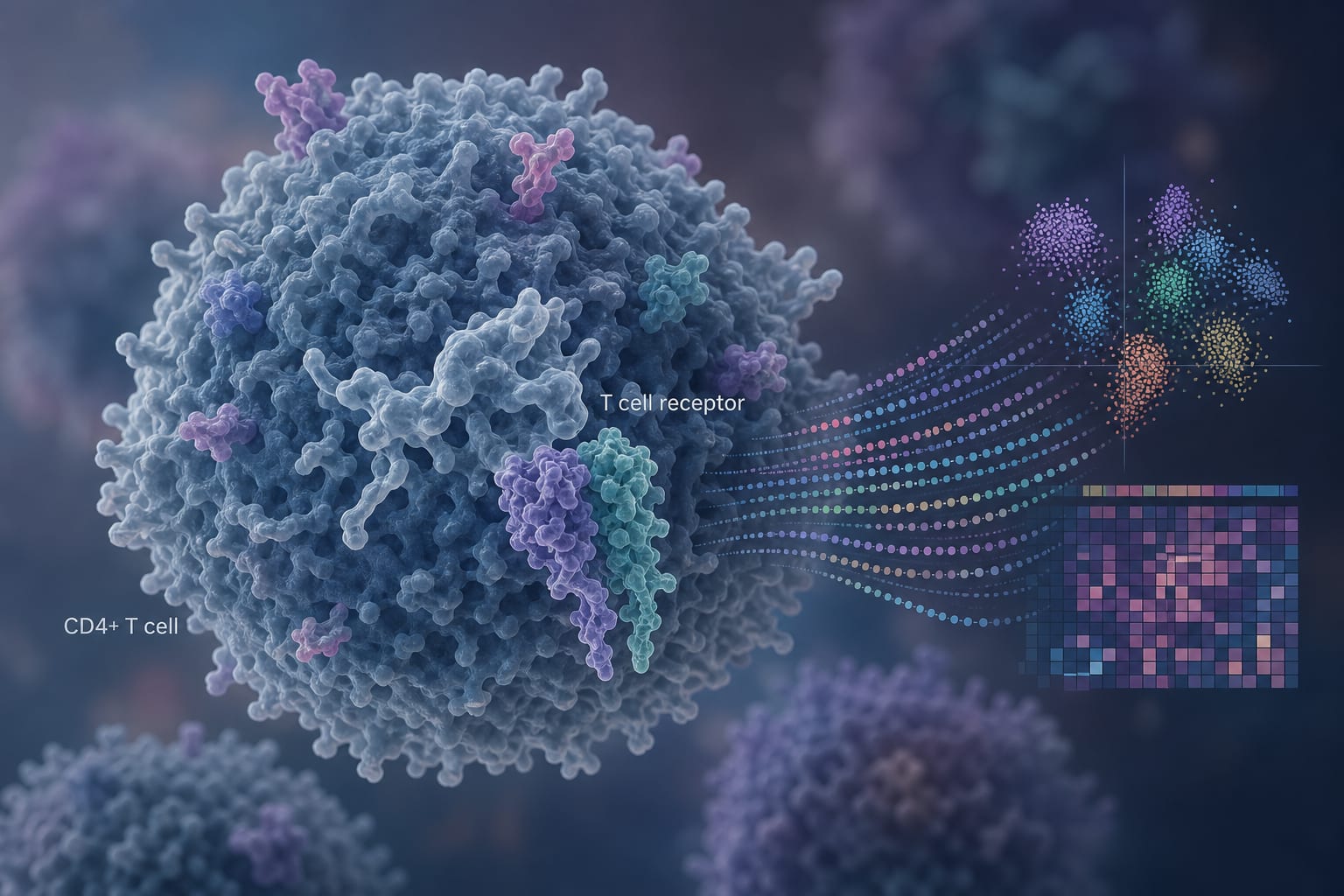
To analyze T cell receptor (TCR) and transcriptome profiles to understand T cell plasticity in patients with systemic lupus erythematosus (SLE).
Approach:
Data Analysis: Analyzed bulk RNA-seq data from the ImmuNexUT cohort, including 117 SLE patients, 317 patients with other immune-mediated diseases, and 134 healthy controls.
TCR and Transcriptome Profiling: Extracted TCR α- and β-chain sequences from RNA-seq reads and characterized shared structure between TCR repertoire and transcriptome data using regularized canonical correlation analysis.
Statistical Modeling: Utilized generalized linear mixed models to evaluate TCR clonotype overlap and calculated a transcriptome-based Th1 Tregness score.
Key Findings:
Distinct TCR and transcriptome profiles were identified for various T cell types in SLE patients compared to healthy controls.
Correlations were observed between TCR clonotype overlap and disease signatures.
A Th1 Tregness score was developed and associated with SLE disease activity.
Interpretation:
The study provides insights into T cell plasticity in SLE, highlighting the potential for TCR and transcriptome data to inform on T cell behavior and disease mechanisms.
Limitations:
The study relies on bulk RNA-seq data, which may not capture the full heterogeneity of T cell populations.
Findings are limited to the ImmuNexUT cohort, which may not represent all SLE patients.
Conclusion:
The findings suggest that T cell plasticity plays a role in SLE pathogenesis and that TCR and transcriptome analyses can provide complementary insights into T cell behavior.
A prespecified exploratory analysis of the FIND-CKD clinical trial examined kidney function, albuminuria, and kidney failure outcomes in 903 patients with glomerular diseases.
Investigational inhibitor was not associated with treatment-related serious adverse events and produced biomarker changes consistent with pathway inhibition in healthy volunteers.