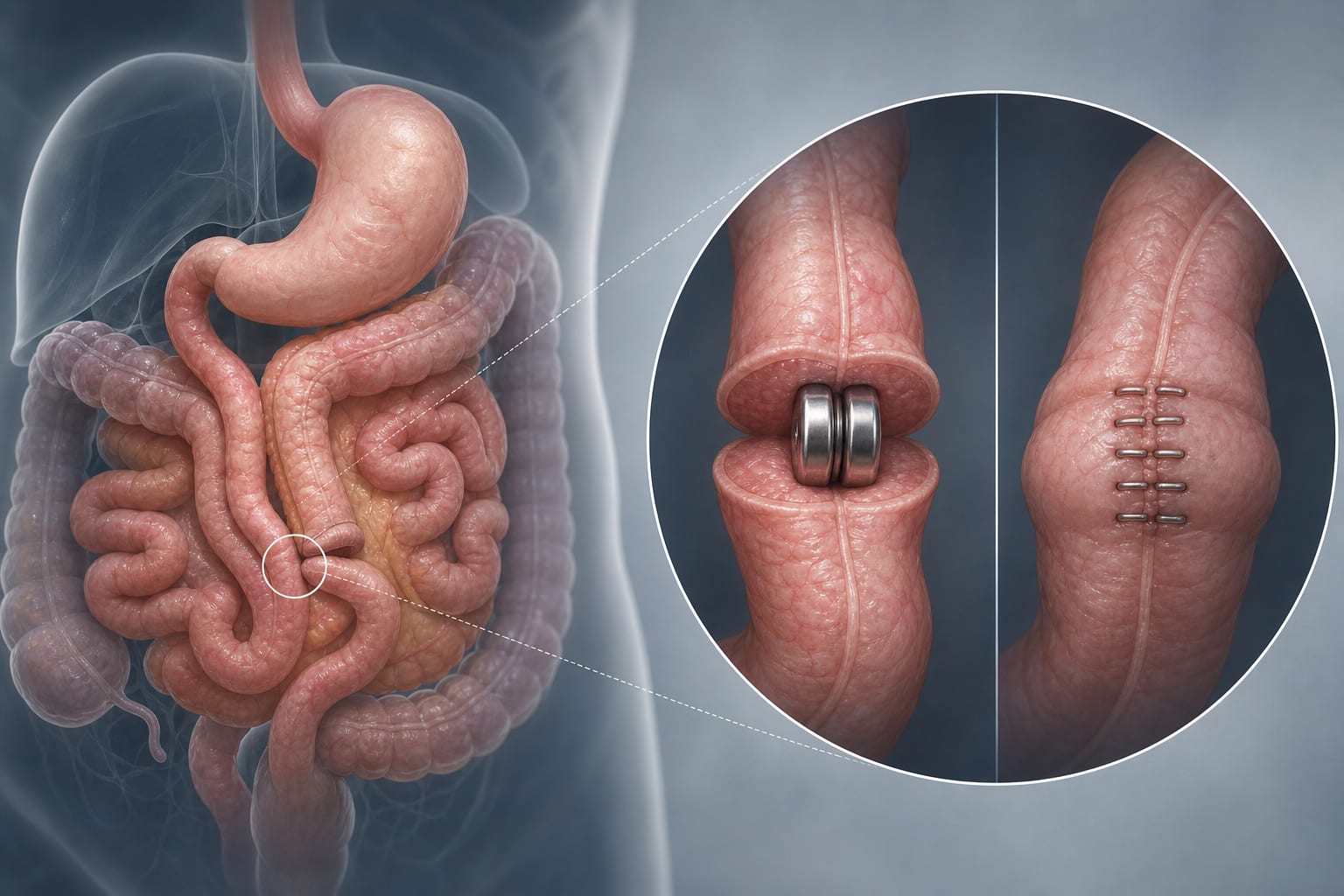
To compare the efficacy and safety of magnetic versus stapled jejuno-ileostomy (JI) techniques in patients with mild obesity and type 2 diabetes (T2D) after one year.
Key Findings:
The study aimed to determine if the magnetic technique achieves non-inferior weight and metabolic outcomes compared to the stapled technique at one year, with specific metrics to be reported.
Magnetic compression anastomosis is hypothesized to be less invasive and safer than traditional stapled methods, potentially leading to better patient outcomes.
Interpretation:
The study provides a comparative analysis of two surgical techniques for obesity and T2D, focusing on their safety and efficacy, with implications for future surgical practices.
Limitations:
The study is non-randomized and relies on historical controls for comparison, which may introduce biases.
The sample size for the MagJI cohort is small (n = 10), limiting the generalizability of the findings.
Conclusion:
The study investigates a novel magnetic technique against an established method, contributing to the understanding of surgical options for obesity and T2D, with potential implications for clinical practice.