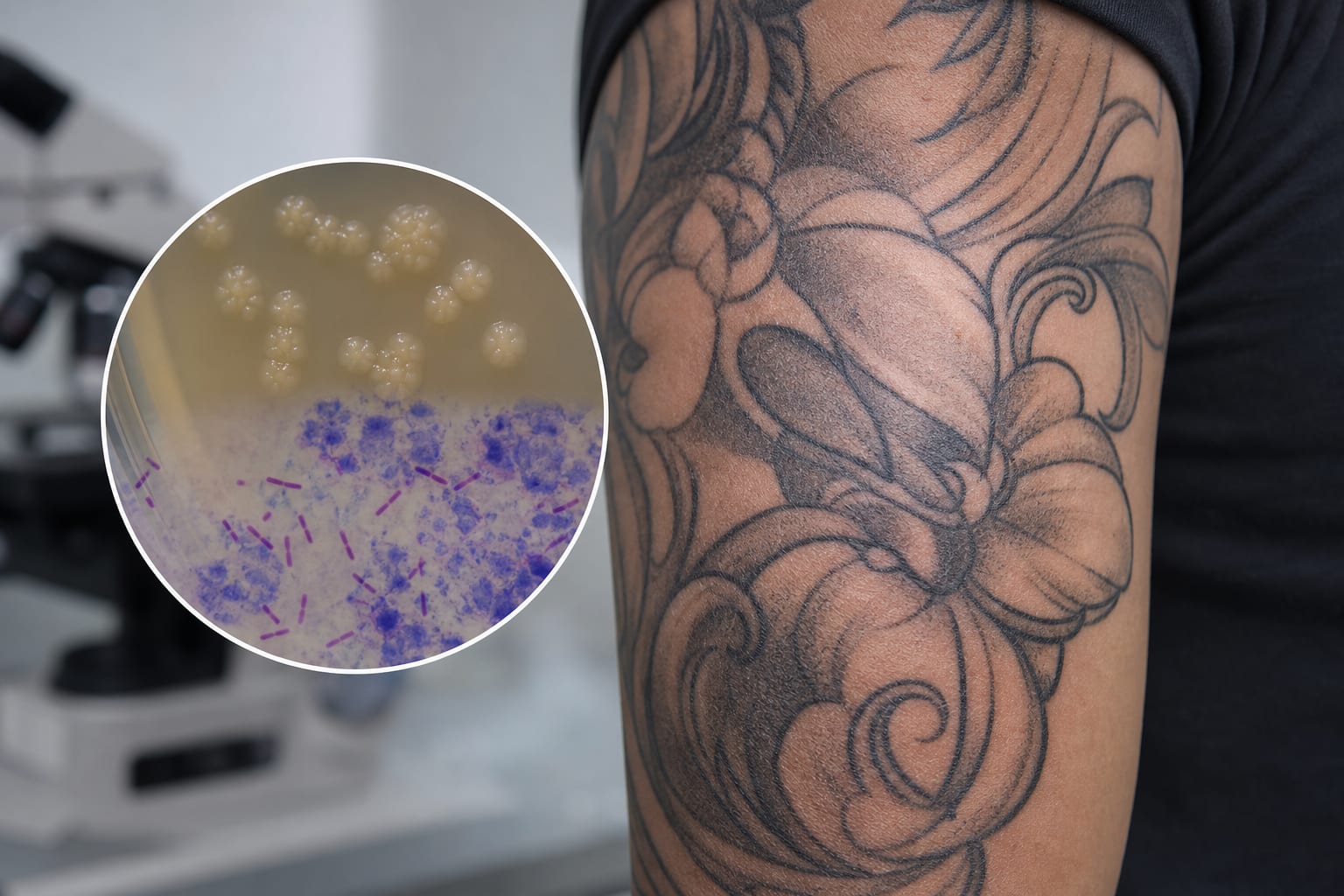
To describe an atypical, asymptomatic tattoo-associated cutaneous nontuberculous mycobacterial infection and its diagnostic and management considerations.
Approach:
Presentation: Two months after tattooing, a healthy 28-year-old man developed asymptomatic papules in gray and blue tattooed areas on his right upper arm and left calf.
Evaluation: A punch biopsy from the right upper arm was submitted for histopathology and tissue culture, including acid-fast bacilli culture.
Treatment: While culture results were pending, he received triamcinolone acetonide 0.1% ointment twice daily and doxycycline 100 mg for one week. After prolonged acid-fast bacilli culture confirmed nontuberculous mycobacterial infection and the organism was identified as Mycobacterium abscessus complex, treatment was changed to doxycycline 100 mg twice daily and clarithromycin 500 mg, planned for three months.
Key Findings:
The patient had no local or systemic symptoms despite papules at two tattoo sites.
Histopathology showed acute folliculitis and lichenoid vacuolar lymphohistiocytic interface dermatitis associated with tattoo pigment, rather than the commonly described granulomatous pattern.
Prolonged acid-fast bacilli culture confirmed nontuberculous mycobacterial infection; the organism was identified as M abscessus complex.
Interpretation:
The authors describe an atypical histopathologic pattern that, without microbiologic testing, could have supported an inflammatory or lichenoid tattoo reaction. Culture confirmed tattoo-associated nontuberculous mycobacterial infection.
Limitations:
This is a single-patient case report.
The provided article context does not report treatment outcome or follow-up.