Assessment of Potential Drug–Drug Interactions and Associated Factors Among Pulmonary Inpatients in a Tertiary Care Hospital: A Cross-Sectional Study - Summary - MDSpire
To assess the prevalence and associated factors of potential drug-drug interactions (pDDIs) among hospitalized pulmonary patients in a tertiary care hospital in Nepal.
Approach:
Study Design: Cross-sectional study conducted in the medical ward of a tertiary care hospital in Chitwan, Nepal.
Patient Selection: Patients aged 18 or older, diagnosed with pulmonary diseases, admitted for at least 24 hours, and prescribed two or more medications were included.
Sample Size: Sample size of 377 calculated to ensure maximum variability, with one patient enrolled per day until the target was achieved.
Data Collection: Data collected using structured patient profile forms and pDDIs identified using Lexicomp and Micromedex databases.
Key Findings:
37.4% of pulmonary inpatients were exposed to at least one potential drug-drug interaction.
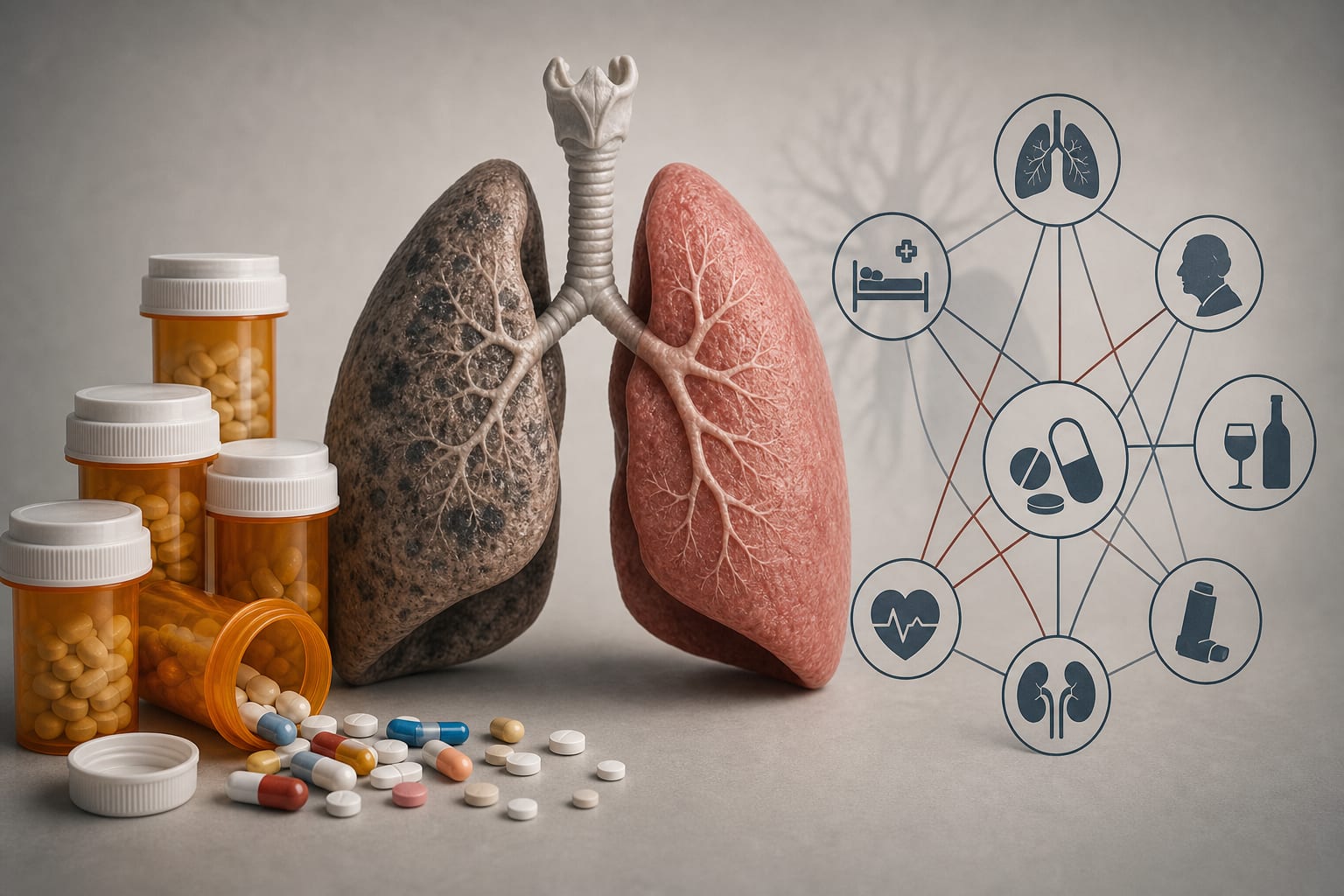
Polypharmacy, prolonged hospital stay, co-morbidities, alcohol use, and advanced age were significant predictors of pDDIs.
Lexicomp identified more pDDIs than Micromedex, although both databases showed moderate agreement.
Interpretation:
The study highlights the prevalence of pDDIs among pulmonary inpatients and identifies key factors contributing to these interactions.
Limitations:
The study was limited to a single tertiary care facility, which may affect generalizability.
Potential biases in patient selection and data collection methods could influence results.
Conclusion:
The findings underscore the need for careful medication management in hospitalized pulmonary patients to mitigate the risk of pDDIs.