To detail the comprehensive perioperative management strategies for a patient with a ruptured giant neurofibroma complicated by hemorrhagic shock.
Approach:
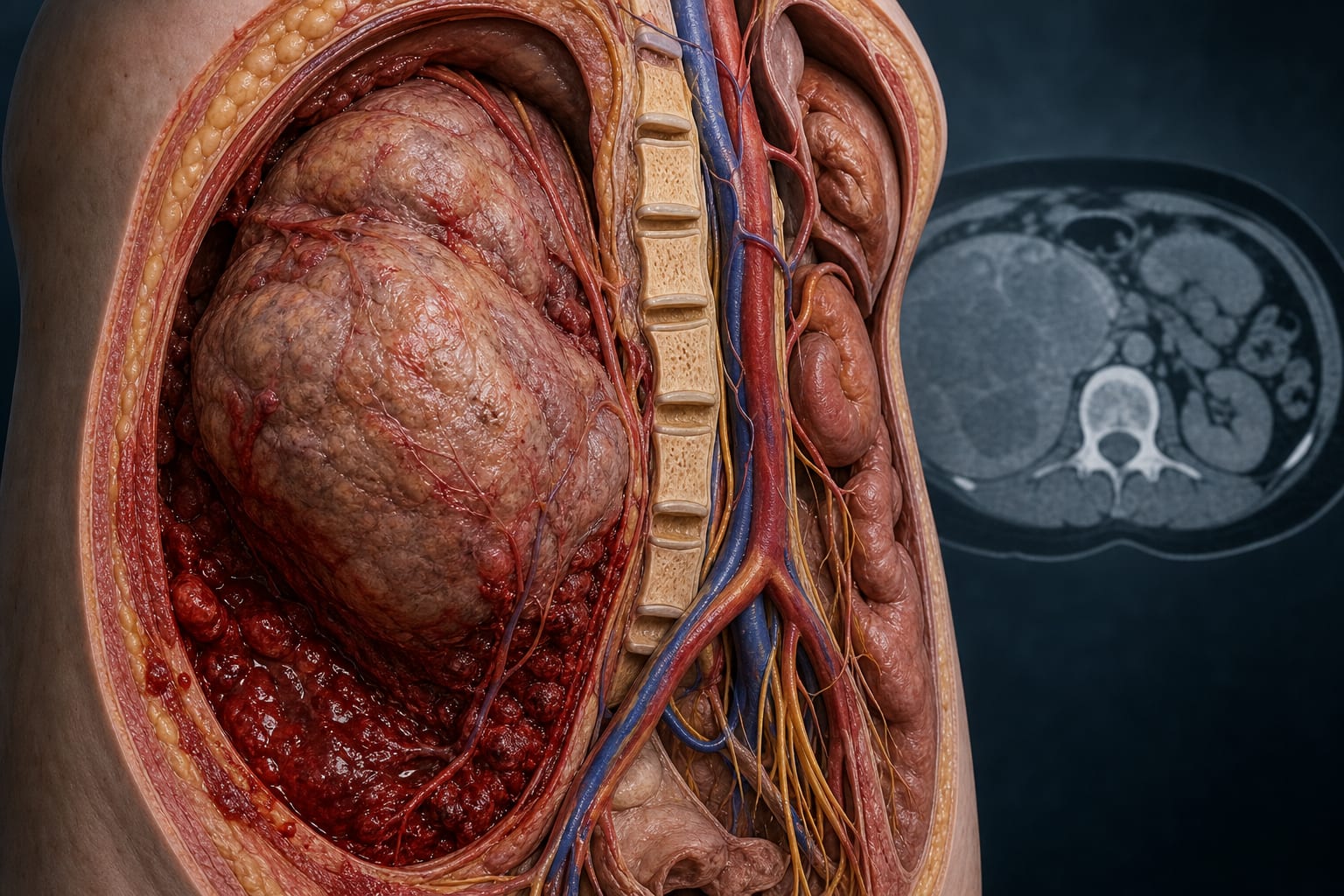
Patient Presentation: A 39-year-old man with congenital neurofibromatosis presented with acute swelling and pain in the right lumbar region after trauma, leading to a diagnosis of ruptured neurofibroma with active bleeding.
Surgical Intervention: Emergency surgery involved evacuation of 3,000 mL of clotted blood, with hemostatic measures including suture ligation and electrocautery, while managing the patient's critical condition.
Multidisciplinary Management: Collaboration among surgical, anesthesia, and critical care teams was essential for resuscitation, hemodynamic monitoring, and postoperative care.
Key Findings:
Giant neurofibromas can rupture, leading to massive hemorrhage and shock, as demonstrated in the case.
Effective perioperative management requires a multidisciplinary approach, which was crucial in this case.
Hemostatic packing was necessary due to the difficulty in achieving complete hemostasis during surgery.
Interpretation:
Limitations:
The case report is based on a single patient experience, which may limit the applicability of the findings.
Outcomes may not be generalizable to all patients with similar conditions due to the unique nature of this case.
Conclusion:
The report emphasizes the critical role of multidisciplinary teams in managing severe complications associated with giant neurofibromas.
AI offers meaningful opportunities to improve efficiency in ophthalmic ASC coding and revenue cycle workflows, but accurate reimbursement still depends on structured review and oversight.