To define the dynamic, multi-organ nature of the heart-immune axis following myocardial infarction (MI) and evaluate immunomodulatory strategies, emphasizing its significance in improving patient outcomes.
Key Findings:
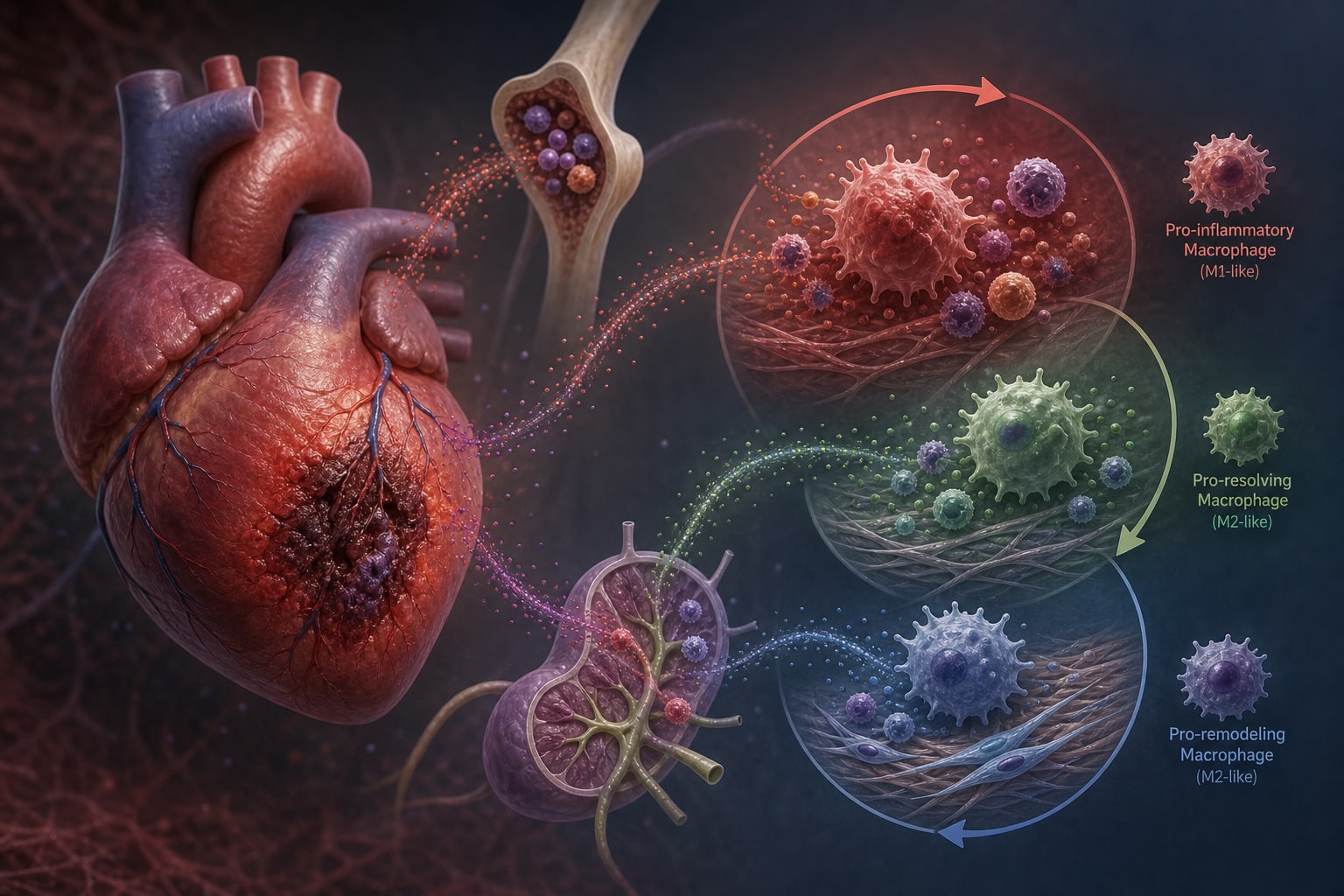
MI triggers a systemic immune response involving complex interactions between the heart and immune organs, with significant implications for patient outcomes.
The heart-immune axis evolves through phases of inflammation, resolution, and remodeling, each with distinct characteristics.
Targeting specific immune pathways, such as macrophage polarization and regulatory T cell promotion, holds therapeutic potential for improving cardiac function.
Interpretation:
The review provides a phase-specific, multi-organ roadmap of the heart-immune axis, highlighting the need for targeted immunomodulation in MI therapies to enhance patient outcomes.
Limitations:
The dynamic nature of the heart-immune interaction is still poorly defined, with significant translational gaps in current immunomodulatory strategies, such as the lack of effective clinical applications.
Conclusion:
The review emphasizes the importance of understanding the heart-immune axis to develop next-generation therapies for myocardial infarction, underscoring the urgency of this research.