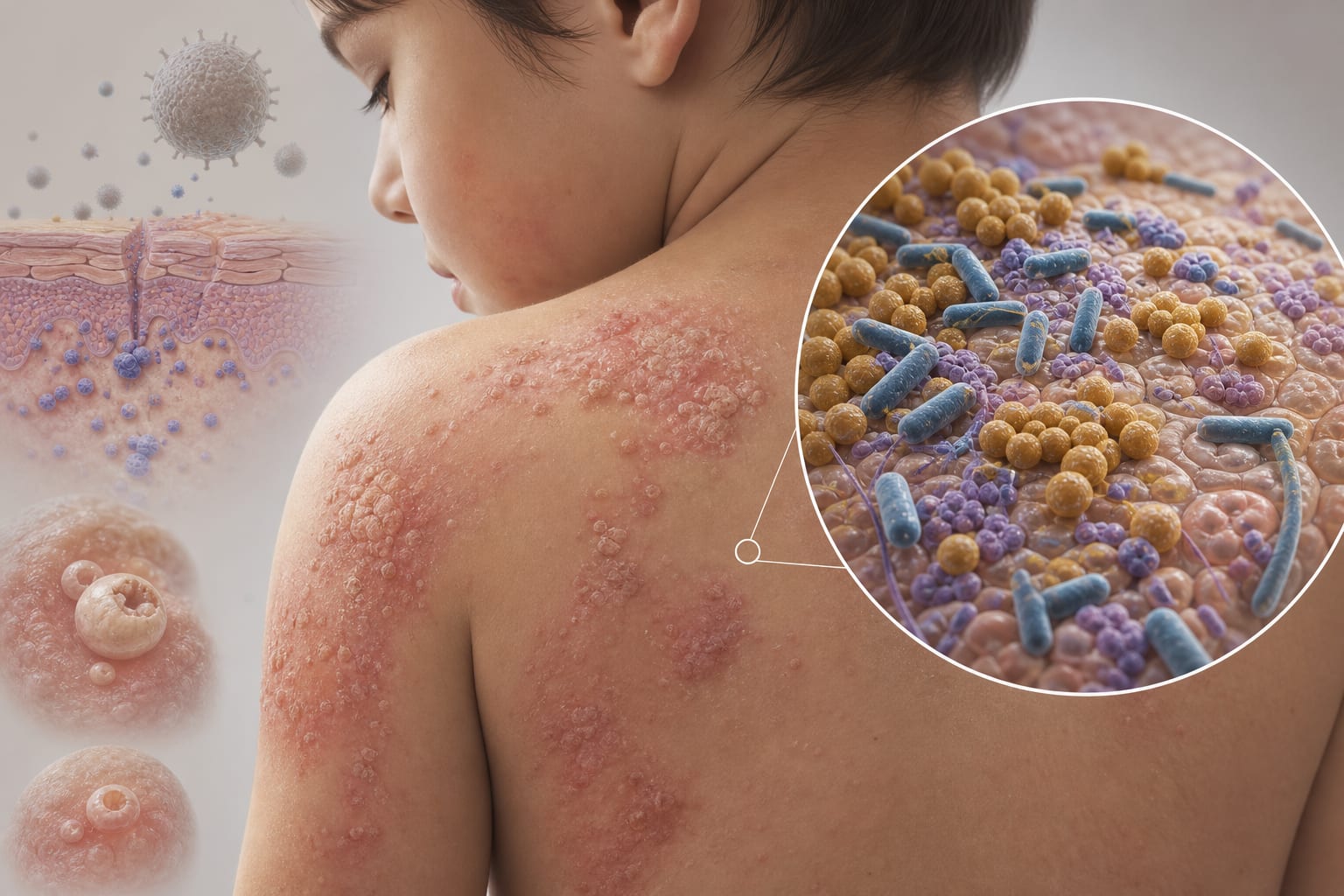
To explore infection dynamics and interventions in pediatric atopic dermatitis (AD).
Approach:
Editorial Overview: The editorial synthesizes various articles discussing microbial imbalance, immune dysregulation, and infection in pediatric AD.
Empirical Evidence: Li et al. conducted a retrospective study on children with molluscum contagiosum, showing that those with coexisting AD required more treatment sessions.
Genetic Insights: Abidov and Bayer reviewed literature linking AD with genetic disorders, emphasizing the need for improved diagnostic integration.
Comorbidity Analysis: Shi et al. examined immune interactions between autism spectrum disorder and AD, demonstrating how AD modifies immune responses.
Key Findings:
Infection in pediatric AD is a dynamic, multifactorial process.
Children with AD require more treatment sessions for molluscum contagiosum compared to those without AD.
Genetic factors contribute to severe AD phenotypes and influence microbial colonization.
AD interacts with other pediatric conditions, affecting immune responses and treatment decisions.
Interpretation:
The findings suggest that understanding the complexities of AD and its infections requires a holistic approach that integrates various biological and clinical factors.
Limitations:
Lack of dedicated clinical trials to support findings.
Gaps in translating advanced genetic testing into clinical practice.
Conclusion:
Future research should prioritize integrated studies that encompass skin barrier, immune profiling, and microbiome data to better understand and manage pediatric AD.
Off-label ivarmacitinib rapidly relieved pruritus and improved skin lesions in a patient with refractory primary cutaneous amyloidosis, according to a case report.