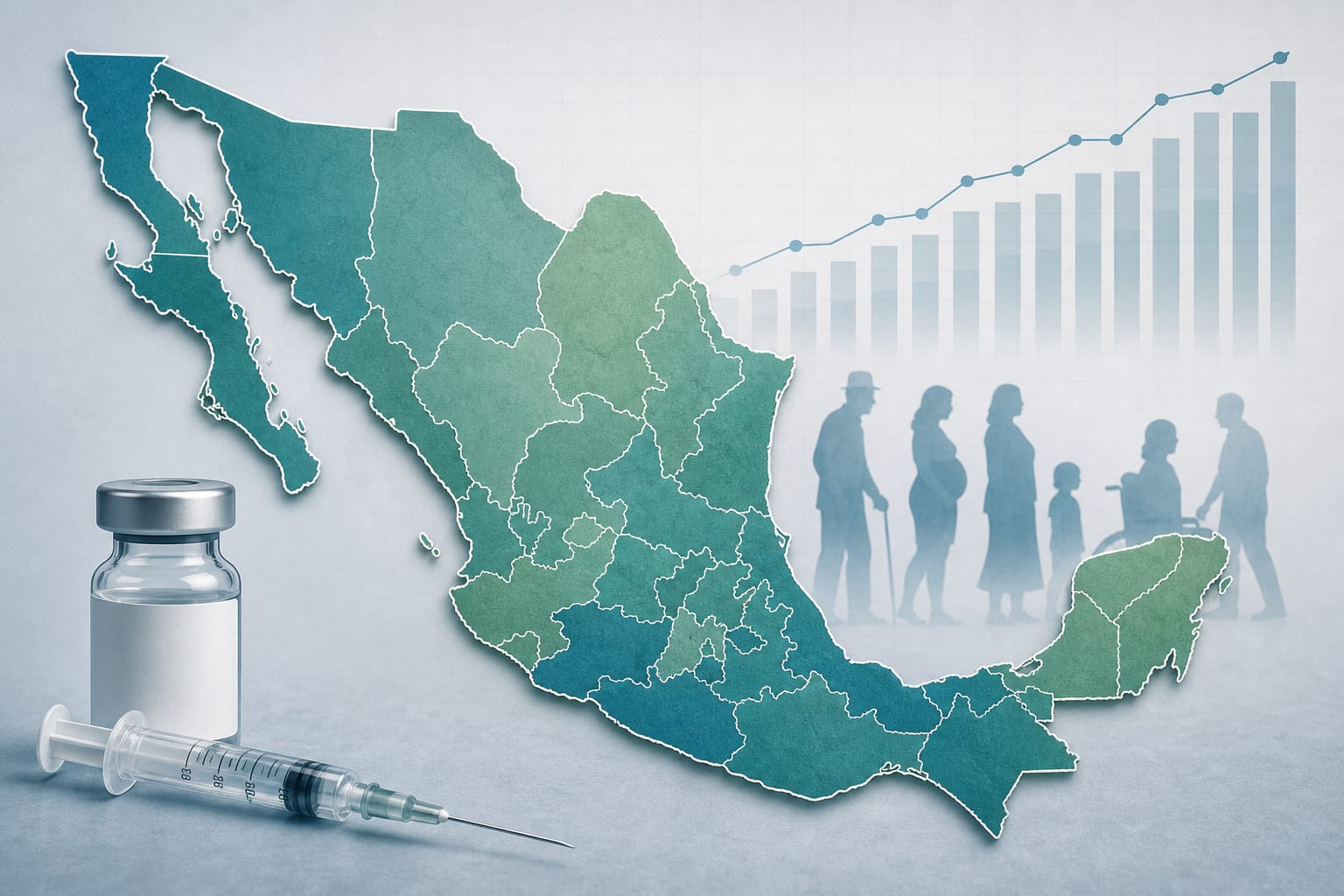
To estimate the size of populations eligible for influenza vaccination and evaluate vaccination coverage gaps among at-risk populations in Mexico from 2010 to 2021.
Approach:
Study Design: A retrospective analytical study using epidemiological and administrative healthcare databases from Mexican public healthcare institutions.
Data Analysis: Descriptive analyses and time-series modeling were performed to evaluate vaccination coverage patterns and healthcare demand over time.
Key Findings:
Healthcare service utilization among at-risk populations was consistently lower than notified cases and prevalence-based estimates.
Vaccination coverage varied significantly across at-risk populations and remained incomplete throughout the study period.
In 2021, approximately 12.5 million influenza vaccine doses were administered, but many eligible individuals remained unvaccinated.
Forecasting analyses indicated a progressive increase in healthcare demand among at-risk populations over time.
Interpretation:
Gaps exist between the estimated population at risk, diagnosed individuals, healthcare utilization, and vaccination coverage in Mexico.
Limitations:
The study relied on retrospective data, which may have limitations in accuracy and completeness.
The analysis may not fully capture all at-risk individuals due to variations in healthcare access and reporting.
Conclusion:
Important gaps persist between the estimated population at risk, diagnosed individuals, healthcare utilization, and influenza vaccination coverage in Mexico.