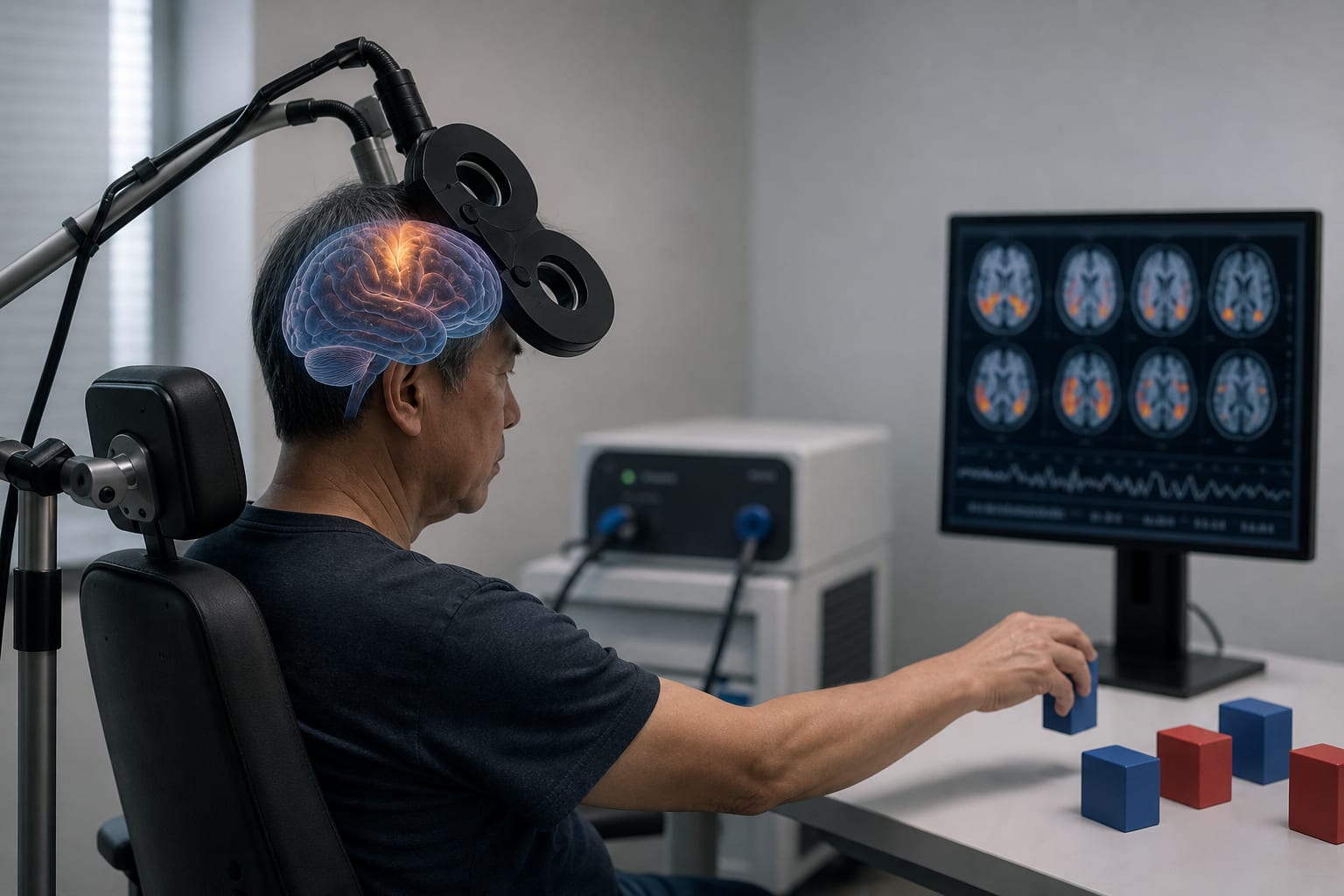
To evaluate the effects of transcranial magnetic stimulation (TMS) on various limb function assessments in stroke patients.
Approach:
Data Sources: A systematic search of PubMed, Web of Science, Embase, and Ovid databases was conducted to identify relevant studies.
Methods: Only randomized controlled trials (RCTs) investigating TMS interventions in stroke patients were included. Data analysis was performed using Stata 18.0, incorporating subgroup analysis, sensitivity analysis, and bias assessments.
Key Findings:
TMS significantly improved Action Research Arm Test (ARAT) scores (MD = 8.01, 95% CI: 0.53–15.50, P = 0.04) and Box and Block Test (BBT) scores (MD = 5.36, 95% CI: 0.16–10.56, P = 0.04).
No significant effects were observed for Fugl-Meyer Assessment for Upper Limb (FMA-UL), Fugl-Meyer Assessment for Lower Limb (FMA-LL), Modified Ashworth Scale (MAS), and Wolf Motor Function Test (WMFT) (P > 0.88).
Subgroup analysis indicated that intervention cycles had a significant effect on FMA-UL, with weeks > 2 improving FMA (MD = 4.44, 95% CI: 0.83–8.06, P = 0.016).
Interpretation:
Limitations:
Limited sample size in the included studies.
Variability in intervention characteristics and outcomes assessed.
Conclusion:
Further large-scale RCTs are necessary to confirm these findings.