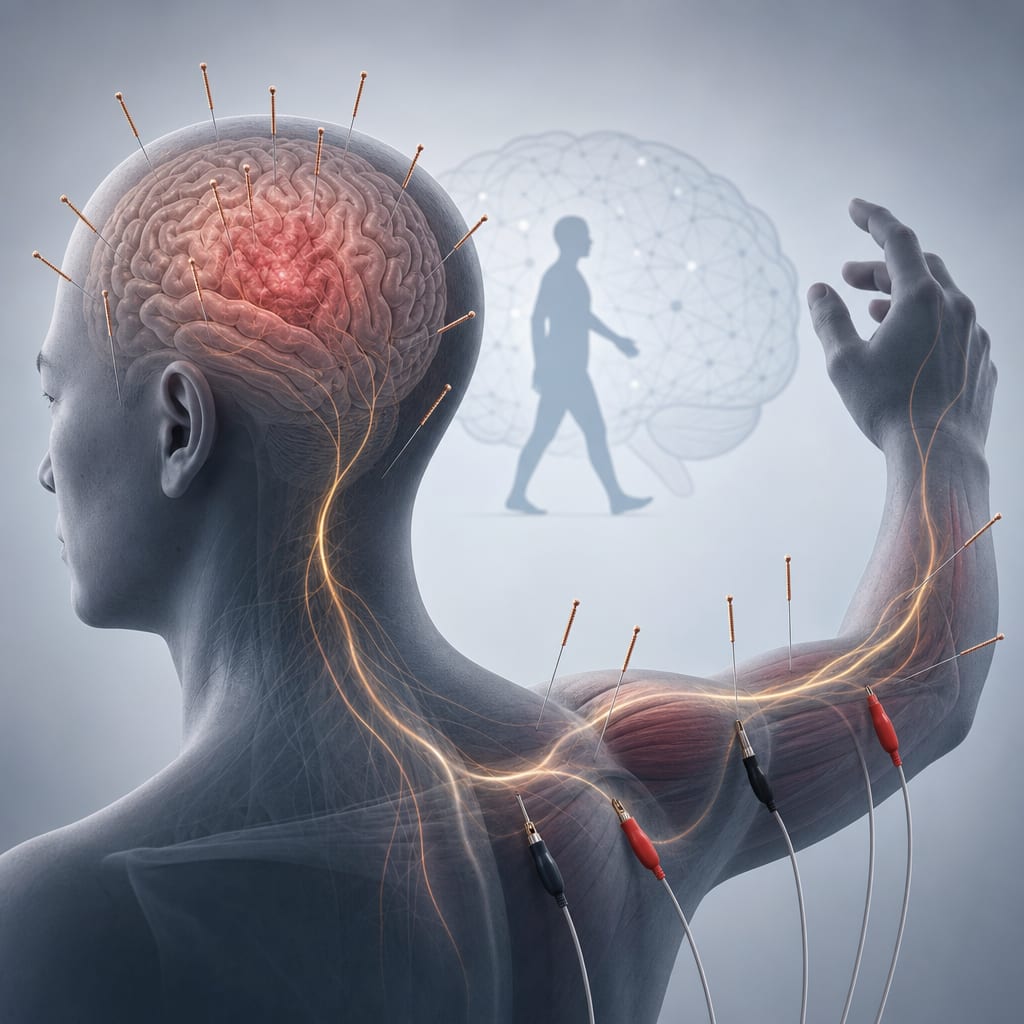
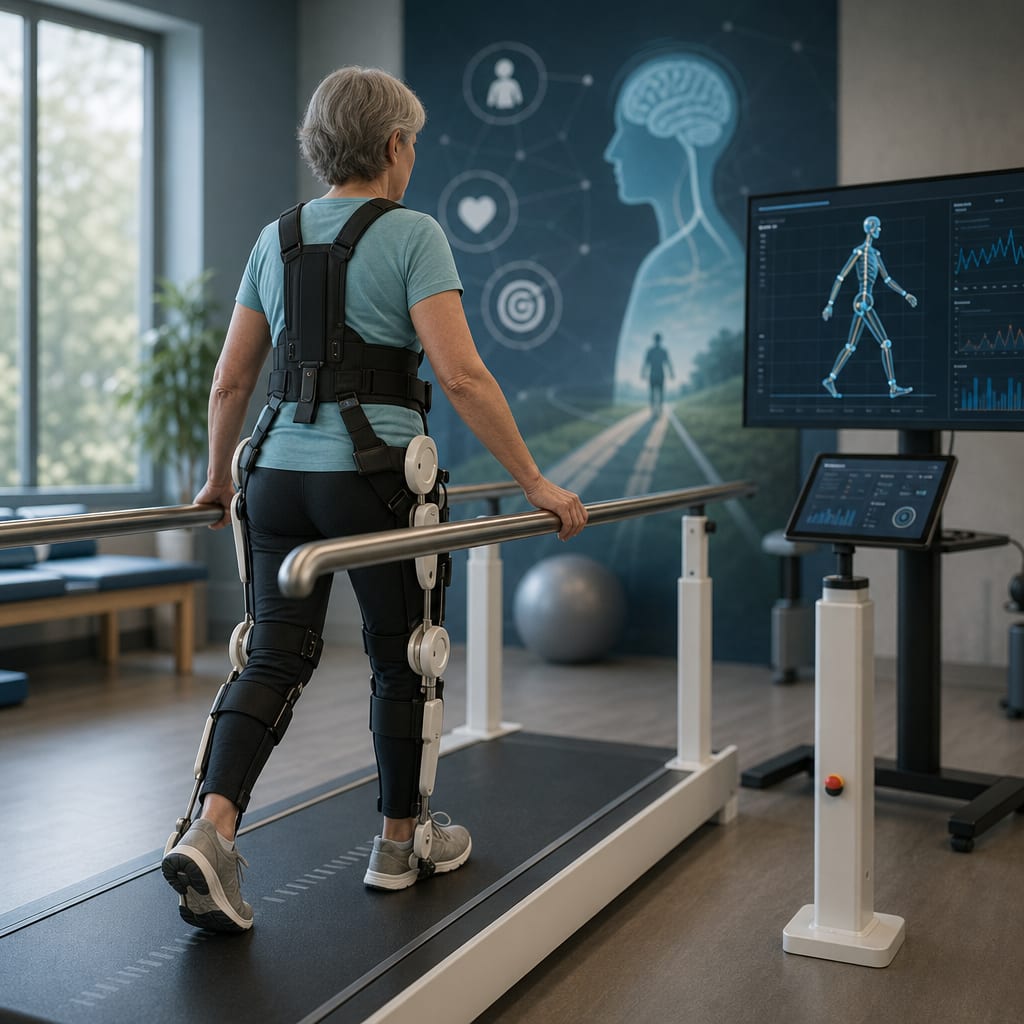
To evaluate the effectiveness of combined acupuncture therapy (scalp acupuncture, electroacupuncture, and body acupuncture) plus conventional rehabilitation compared with conventional rehabilitation alone on motor function recovery and quality of life in patients with subacute stroke.
Key Findings:
The acupuncture group showed significantly greater improvement in FMA scores (61.28 ± 11.85 vs. 52.15 ± 10.42, p < 0.001) with a mean difference of 9.13 points (95% CI: 5.89–12.37).
Acupuncture group also had superior outcomes in MBI (73.58 ± 12.34 vs. 62.04 ± 11.56, p < 0.001), NIHSS (5.52 ± 1.89 vs. 7.62 ± 2.15, p < 0.001), and SS-QOL (181.35 ± 26.48 vs. 163.52 ± 24.86, p < 0.001).
At 12-week follow-up, improvements were sustained.
79.6% of the acupuncture group achieved favorable functional outcomes (mRS 0–2) compared to 53.7% of controls (OR = 3.38, 95% CI: 1.52–7.51, p = 0.003).
No serious adverse events occurred.
Interpretation:
Combined acupuncture therapy integrated with conventional rehabilitation significantly improved motor function and quality of life in patients with subacute stroke, with benefits persisting at 12-week follow-up.
Limitations:
Retrospective design limits causal inferences and the lack of randomization and sham control groups may affect the validity of the results.
Conclusion:
Combined acupuncture therapy shows promise as an effective adjunct to conventional rehabilitation for improving outcomes in post-stroke patients, warranting further investigation through randomized controlled trials with sham controls.