MCT4 drives HCC progression by activating MMPs and polarizing M2 macrophages
-
By
-
Kaiyuan Zhang
-
Xiaochen Ni
-
Chuhang Wang
-
Jianing Guo
-
Wei Fan
-
Tao Sun
-
Tao Jiang
-
Guangji Zhang
-
July 1, 2026
-
Objective:
To explore the role of MCT4 in hepatocellular carcinoma (HCC) progression and its impact on the tumor immune microenvironment.
Approach:
- Bioinformatic Analysis: Integrated analysis of multiple datasets (TCGA-LIHC, GSE46408, GSE36411) to identify differentially expressed lactate metabolism-related genes.
- Experimental Validation: Conducted functional assays in HCC cell lines (Huh7, MHCC97-H) and a murine xenograft model to validate findings.
- Immune Cell Analysis: Analyzed immune cell infiltration and polarization using CIBERSORT and single-cell RNA sequencing data.
Key Findings:
- MCT4 is significantly upregulated in HCC tissues and correlates with advanced tumor stage and poor survival.
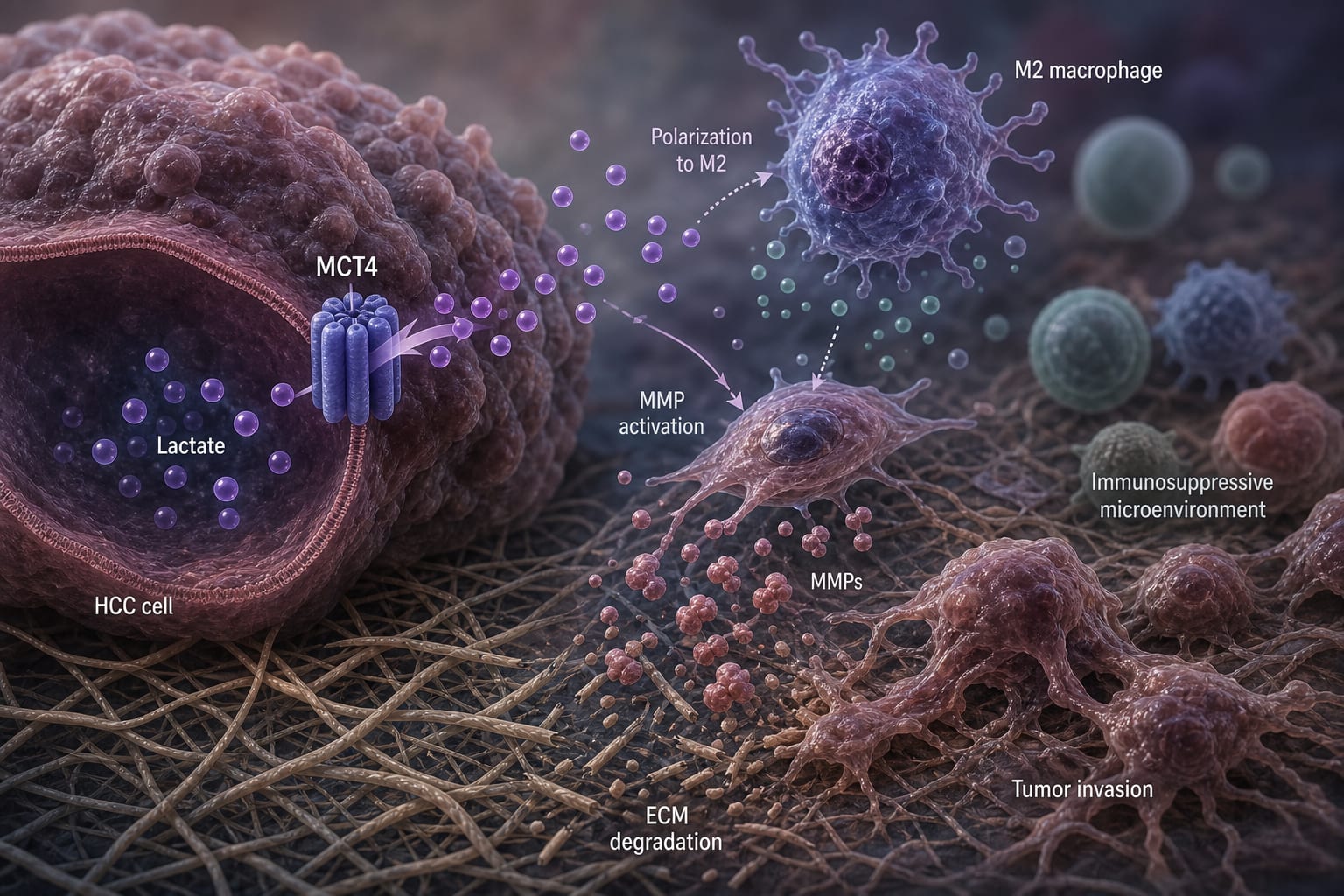
- MCT4 expression is associated with matrix metalloproteinase (MMP) pathways.
- Knockdown of MCT4 reduces MMP1, MMP2, and MMP9 expression, inhibiting HCC cell migration and invasion.
- High MCT4 expression correlates with M2 macrophage polarization in the tumor microenvironment.
- In vivo MCT4 knockdown inhibits tumor growth and reduces CD206+ M2 macrophage infiltration.
Interpretation:
MCT4 drives HCC progression through enhancing MMP-mediated invasion and promoting immunosuppressive M2 macrophage polarization.
Conclusion:
MCT4 is implicated in HCC progression and may influence tumor immune responses.