Biomarkers predicting good prognosis among patients receiving immunosuppressive treatment in IgA nephropathy: the promising role of serum TGF-β1 and MCP-1 - Summary - MDSpire
Advertisement
Biomarkers predicting good prognosis among patients receiving immunosuppressive treatment in IgA nephropathy: the promising role of serum TGF-β1 and MCP-1
To identify biomarkers predictive of good prognosis in patients with IgA nephropathy (IgAN), particularly among those receiving immunosuppressive therapy.
Approach:
Study Design: A prospective cohort study enrolling adults with biopsy-proven IgAN from 2010-2020.
Prognosis Definition: Good prognosis was defined as a ≥50% reduction in urine protein-to-creatinine ratio (uPCR) or <0.5 g/g with preserved estimated glomerular filtration rate 1 year after biopsy.
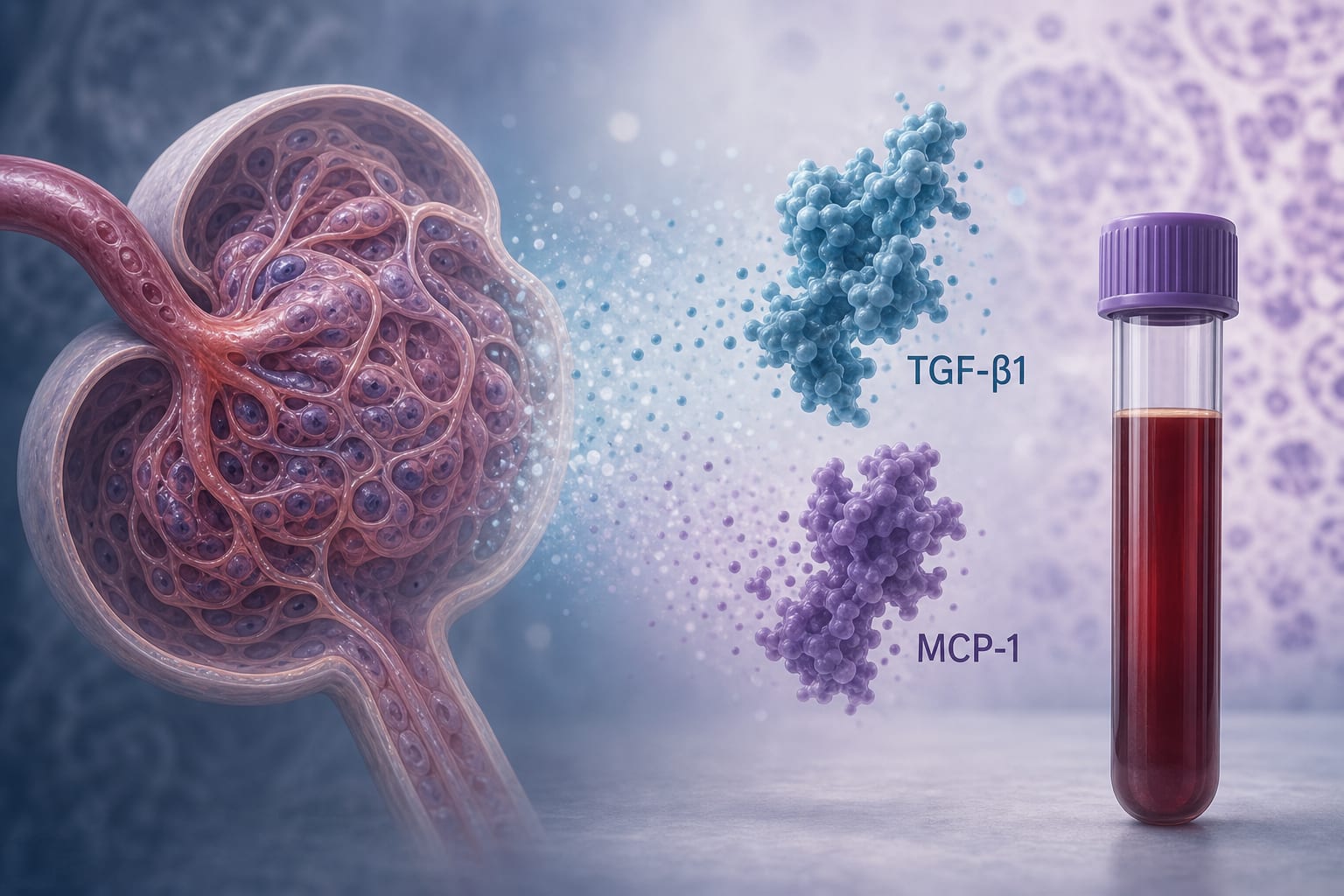
Biomarker Analysis: Serum and urine cytokines/chemokines (TGF-β1, MCP-1, RANTES, and VEGF) and intrarenal immune cell infiltration were analyzed.
Key Findings:
Among the 202 patients, 120 (59.4%) had a good prognosis and showed a significantly lower risk of end-stage kidney disease over a 10-year follow-up.
Independent predictors of good prognosis included immunosuppressive therapy, low histologic grade, lower uPCR, absence of hypertension, higher serum TGF-β1 levels (adjusted odds ratio [aOR], 1.16; 95% confidence interval [CI], 1.04–1.31), and reduced intrarenal CD45+ and CD3+ cell infiltration (aOR not specified).
In patients receiving immunosuppressive therapy, higher serum TGF-β1 (aOR, 1.16; 95% CI, 1.04–1.31) and lower serum MCP-1 (aOR, 0.99; 95% CI, 0.97–1.00) levels independently predicted good prognosis.
Interpretation:
Serum TGF-β1 and MCP-1 levels may serve as biomarkers of prognosis among IgAN patients receiving immunosuppressive therapy.
Limitations:
The study was limited to a single center and may not be generalizable.
Follow-up duration varied among patients, which may affect the outcomes.
Conclusion:
Integrating serum cytokine profiles and tissue immune signatures may help inform individualized treatment decisions for IgAN.