Three-year longitudinal assessment of denosumab’s efficacy and safety in postmenopausal osteoporosis: a 36-month real-world cohort study - Summary - MDSpire
Advertisement
Three-year longitudinal assessment of denosumab’s efficacy and safety in postmenopausal osteoporosis: a 36-month real-world cohort study
To evaluate the 36-month effectiveness and safety of denosumab in postmenopausal women with osteoporosis receiving routine clinical care.
Approach:
Study Design: Retrospective analysis of a prospectively followed cohort of 130 postmenopausal women treated with denosumab.
Treatment Protocol: Participants received denosumab (60 mg subcutaneously every 6 months) along with calcium and vitamin D supplementation.
Outcome Measures: Assessments included bone mineral density (BMD), T-scores, bone turnover markers, renal function, adherence patterns, fracture occurrence, and adverse events.
Statistical Analysis: Changes over time were analyzed using paired longitudinal comparisons and linear mixed-effects models.
Key Findings:
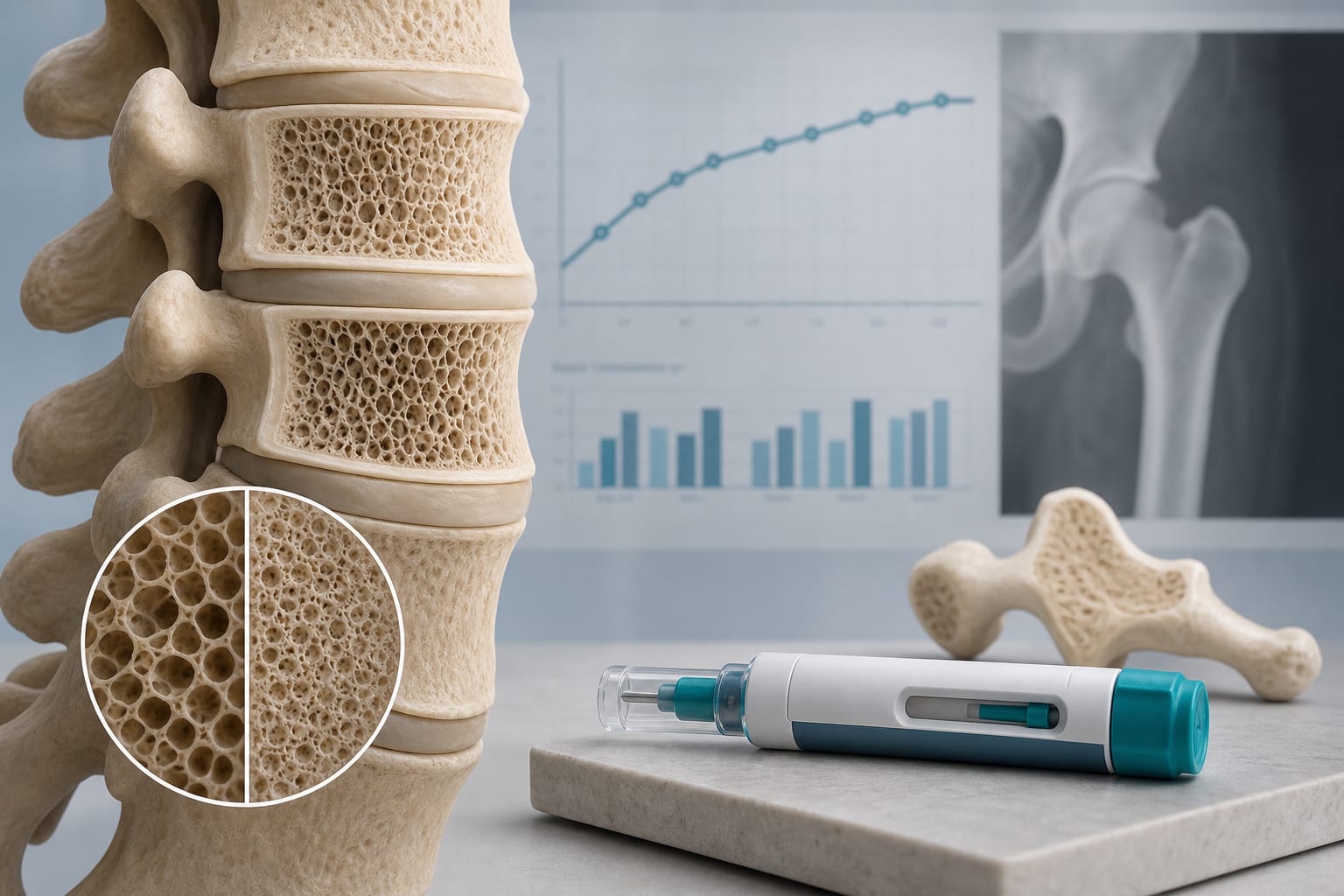
Lumbar spine BMD increased from 0.674 to 0.741 g/cm2 and femoral neck BMD from 0.526 to 0.562 g/cm2 over 36 months (both p < 0.001).
Bone turnover markers showed sustained suppression of bone resorption.
No clinically meaningful renal deterioration was observed.
All patients completed seven denosumab injections, with most delays in injections being <30 days.
No new fragility fractures or serious adverse events were reported.
Interpretation:
Thirty-six months of denosumab treatment was associated with sustained improvement in BMD and suppression of bone turnover, with acceptable adherence and a favorable safety profile.
Limitations:
Only patients completing all seven injections were included, which may overestimate adherence and safety outcomes.
The study was conducted in a single center, which may limit generalizability of the findings.
Conclusion:
The findings indicate the effectiveness of denosumab under routine clinical practice, highlighting the need for continued monitoring and adherence management.