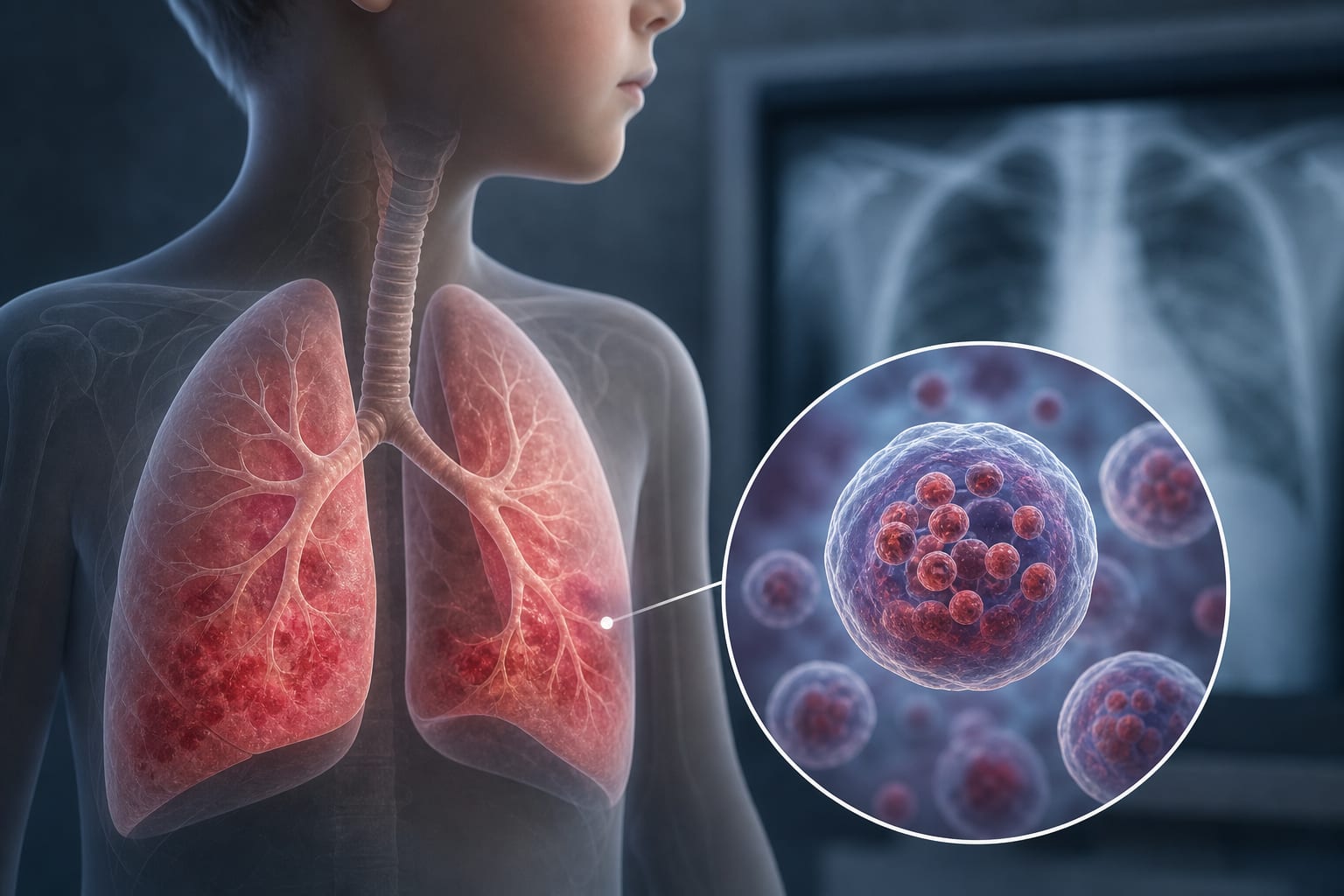
To summarize the clinical features of Chlamydia pneumoniae pneumonia in children.
Approach:
Study Design: Single-centre retrospective cross-sectional study analyzing clinical data from 145 children diagnosed with Chlamydia pneumoniae pneumonia.
Data Collection: Retrospective collection of demographic information, clinical manifestations, laboratory test results, pulmonary imaging findings, and treatment details.
Key Findings:
Among the 145 children, 89 were male and 56 were female.
The median age at onset was 11 years (IQR: 8.33–12.42), and the median disease duration was 14 days (IQR: 12–18).
Cough was present in 144 cases (99.3%), with wet cough being predominant (141 cases, 97.2%).
Fever was observed in 65 cases (44.8%), primarily low to moderate grade, with a median peak temperature of 38.5°C (IQR: 38.0–39.0).
Unilateral lung involvement was observed in 109 cases, while bilateral involvement was seen in 36.
Laboratory results showed a median white blood cell count of 8.09 × 10^9/L (IQR: 6.43–9.58), a mean neutrophil of 4.65 × 10^9/L (IQR: 3.44–6.14), a mean lymphocyte of 2.41 × 10^9/L (IQR: 1.88–2.91), a median neutrophil-lymphocyte ratio of 1.95 (IQR: 1.32–2.99), and a median CRP level of 4.39 mg/L (IQR: 0.86–11.77).
93 children received azithromycin, and 65 received doxycycline for treatment.
Interpretation:
Limitations:
The single serum IgM antibody test has a sensitivity of 85%-90% but a specificity of 70%-75%, which may lead to false-positive results.
Through a case-based, evidence-driven approach, this Neuroscience Grand Rounds session highlights how clinicians can differentiate among neuromuscular conditions, localize disease processes and identify those disorders where timely treatment can significantly alter disease trajectory.