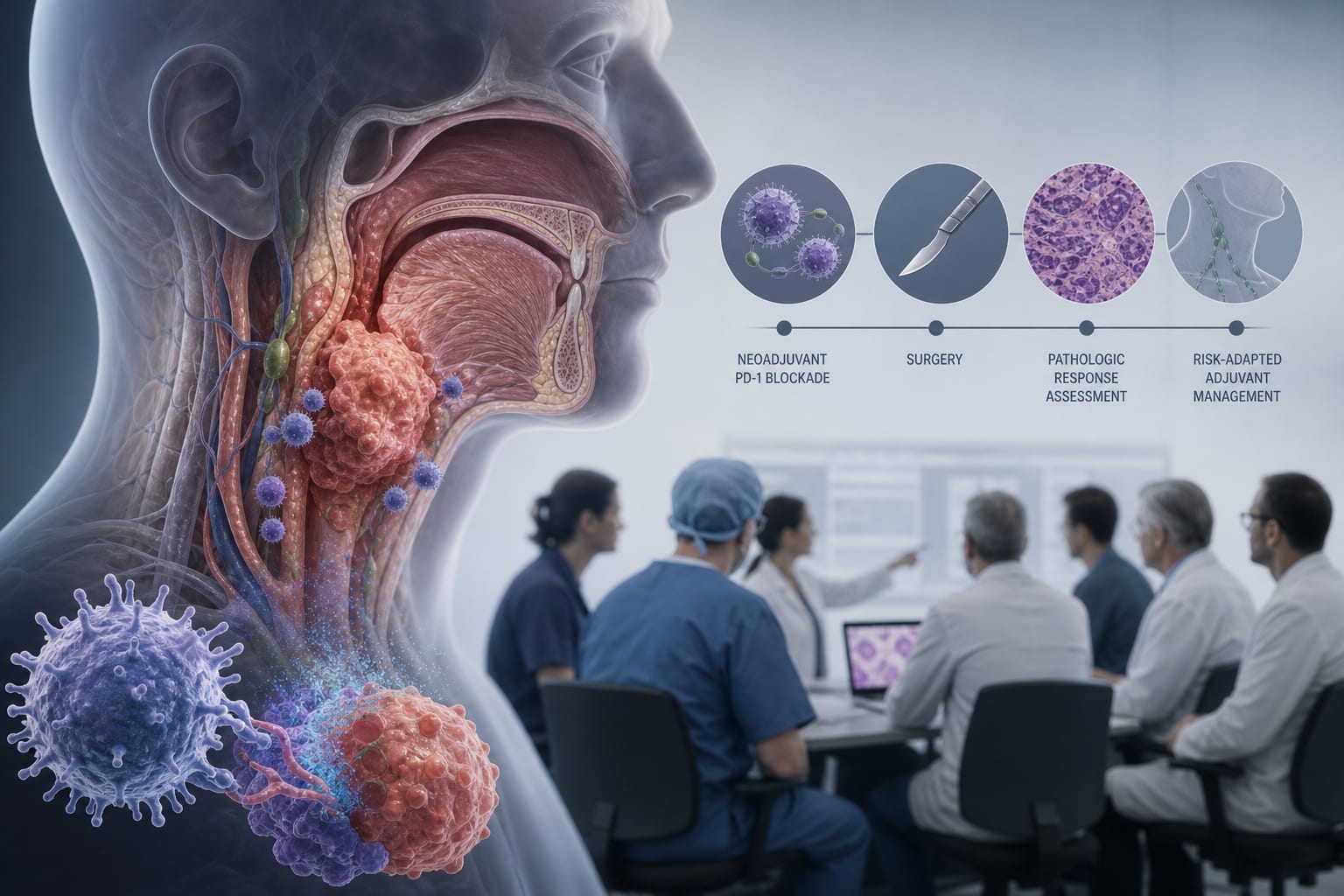
To review phase III perioperative trials and key neoadjuvant studies in resectable HNSCC, with a focus on outcomes and practical questions relevant to surgeons and multidisciplinary teams.
Key Findings:
Neoadjuvant PD-1 priming followed by surgery and risk-adapted postoperative treatment improves event-free survival compared to standard care.
Postoperative nivolumab added to adjuvant treatment improves disease-free survival in high-risk patients.
Short preoperative ICI exposure is feasible without compromising resectability but requires protected timelines to avoid delays in curative treatment.
Interpretation:
Perioperative ICI necessitates a re-engineering of treatment pathways, underscoring the critical need for synchronized multidisciplinary team efforts to optimize patient outcomes.
Limitations:
Real-world implementation of tightly coordinated treatment pathways is challenging, as delays can significantly impact treatment efficacy.
Delays in the MDT pathway can alter the biological potential of curative strategies, necessitating careful management.
Conclusion:
Successful implementation of perioperative ICI in HNSCC care relies on standardized workflows, effective MDT scheduling, and the establishment of prospective registries to optimize treatment sequencing.