Epigenetic regulation of inflammation by dopamine in primary human macrophages - Summary - MDSpire

Epigenetic regulation of inflammation by dopamine in primary human macrophages

  • By

  • Yash Agarwal

  • Margish Ramani

  • Samyuktha Manikandan

  • Kimberly Bonar

  • John Montilla Luna

  • Peter J. Gaskill

  • Stephanie M. Matt

  • June 26, 2026

  • 0 min

Share

Objective:

To investigate the epigenetic mechanisms by which dopamine influences inflammation in primary human macrophages.

Approach:
  • Treatment and Evaluation: Primary human monocyte-derived macrophages were treated with dopamine, and DNA methylation at the IL-1β proximal promoter was evaluated alongside IL-1β and epigenetic enzyme gene expression.
  • Demographic Associations: Associations between donor characteristics, dopamine receptor expression, and dopamine-induced epigenetic responses were examined.
Key Findings:
  • Dopamine increased DNA methylation at the IL-1β proximal promoter in a DNMT-dependent manner.
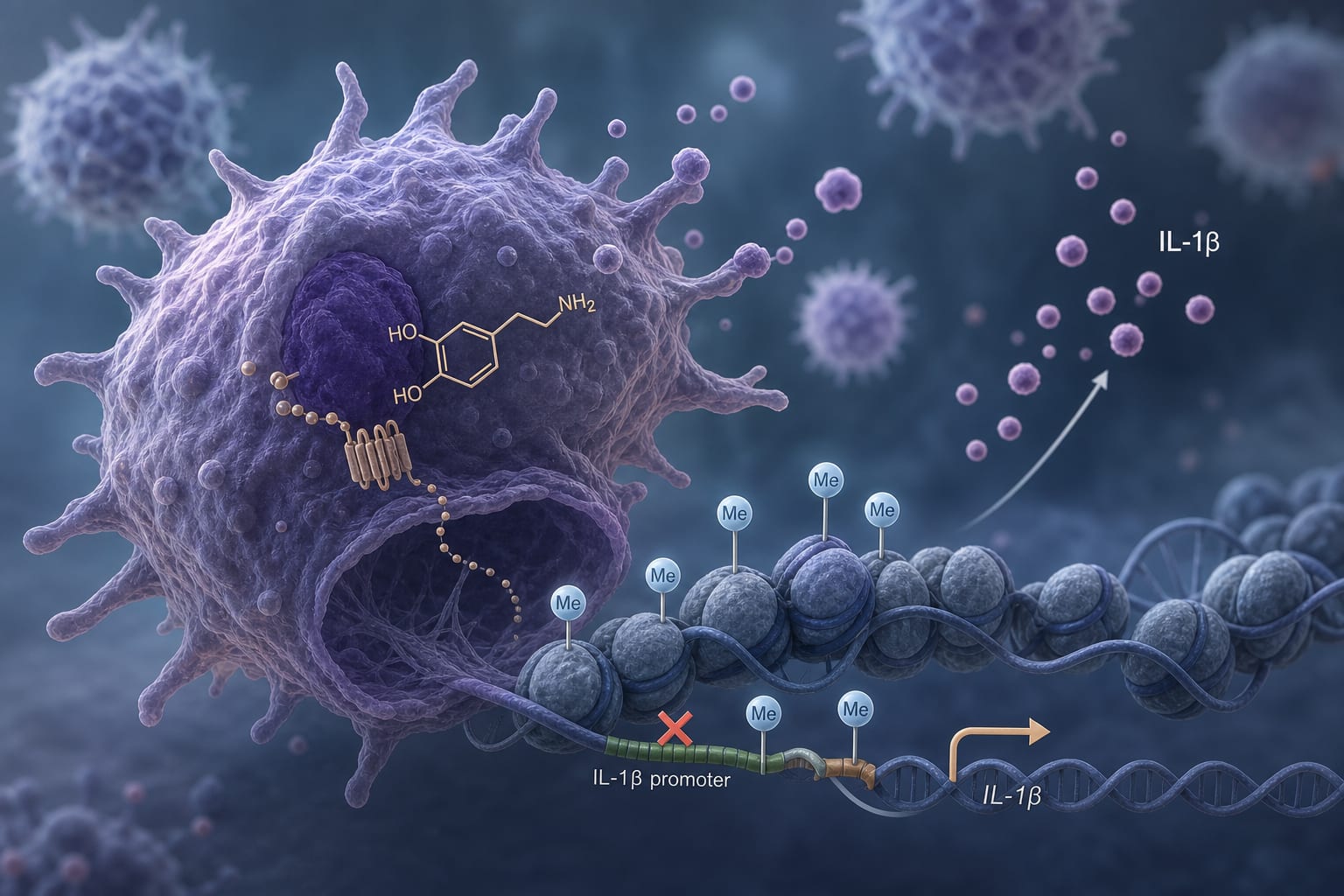
  • Dopamine treatment increased IL-1β gene expression.
  • Dopamine upregulated the expression of key epigenetic regulators, including TET2, HDAC2, and HDAC6.
  • Baseline dopamine receptor expression and donor demographics influenced the magnitude of epigenetic responses.
Interpretation:

Dopamine modulates macrophage inflammation through epigenetic remodeling, linking dopamine signaling and innate immunity.

Limitations:
  • The study primarily focuses on primary human macrophages, which may not fully represent other immune cell types.
  • Inter-individual variability in response to dopamine may complicate generalizations.
Conclusion:

Dopamine influences macrophage inflammation via epigenetic mechanisms.

Original Source(s)

Related Content