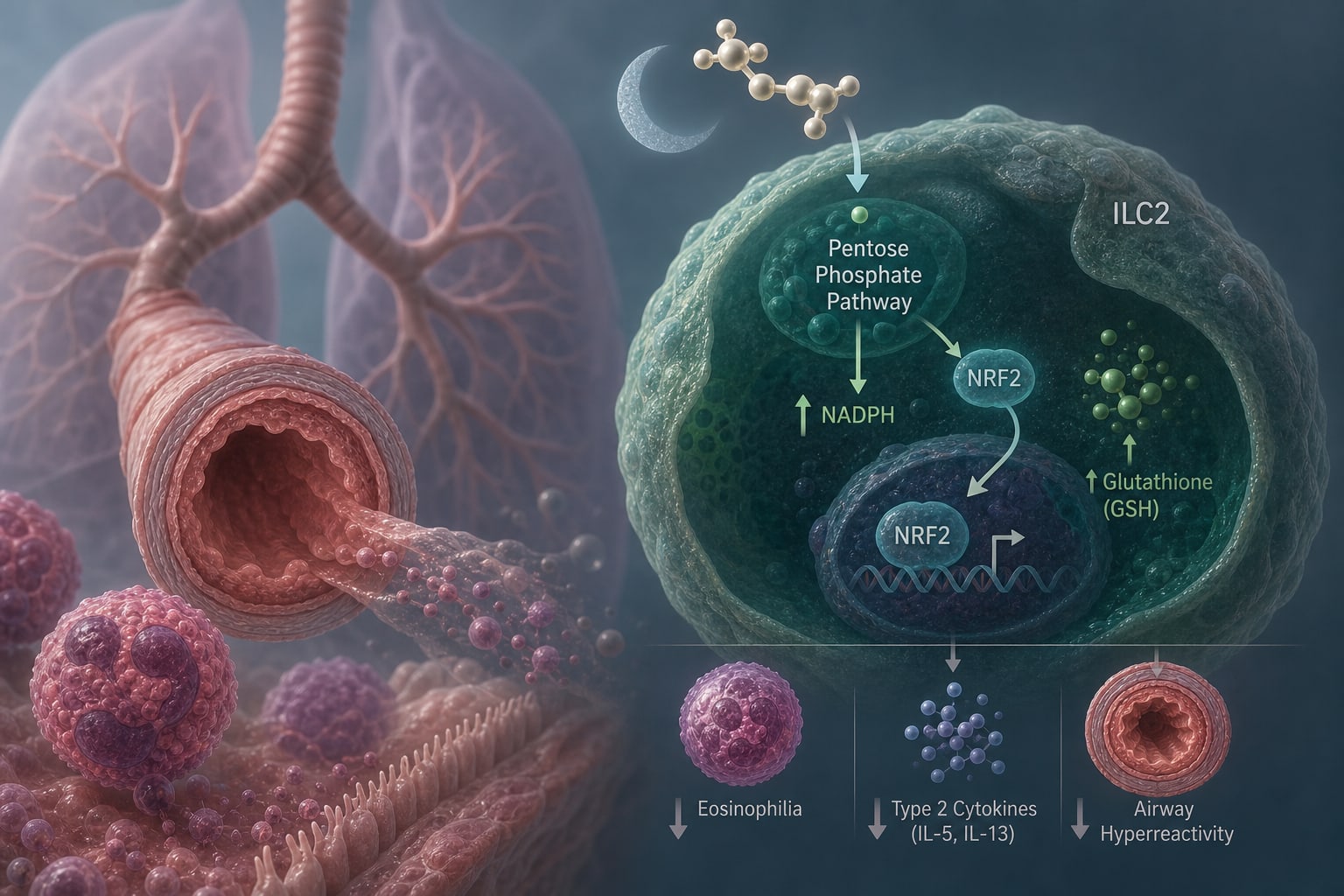
To investigate the role of melatonin in regulating ILC2-dependent allergic airway inflammation and its effects on airway hyperreactivity, focusing on specific metabolic pathways.
Key Findings:
Melatonin reduced eosinophilia, type 2 cytokine production, and airway hyperreactivity without altering ILC2 abundance, underscoring its potential as a therapeutic agent.
Melatonin reprogrammed ILC2 metabolism toward pentose phosphate pathway activity, enhancing NADPH generation and NRF2-dependent glutathione accumulation, crucial for redox balance.
NRF2 activation was necessary and sufficient to restrain ILC2 effector function, indicating its central role in allergic inflammation.
Primary human ILC2s exhibited similar responses to melatonin, indicating clinical relevance and potential for therapeutic targeting.
Interpretation:
The findings suggest that melatonin acts as a metabolic regulator of ILC2s, influencing airway inflammation through the NRF2-glutathione axis, which may be targeted therapeutically in allergic asthma, highlighting the need for further clinical exploration.
Limitations:
The study primarily utilized murine models, which may not fully replicate human asthma pathology, necessitating caution in extrapolating results.
Further research is needed to explore the long-term effects of melatonin on ILC2 function and airway inflammation, particularly in human subjects.
Conclusion:
Melatonin's modulation of ILC2 metabolism presents a novel therapeutic target for managing airway inflammation in allergic asthma.