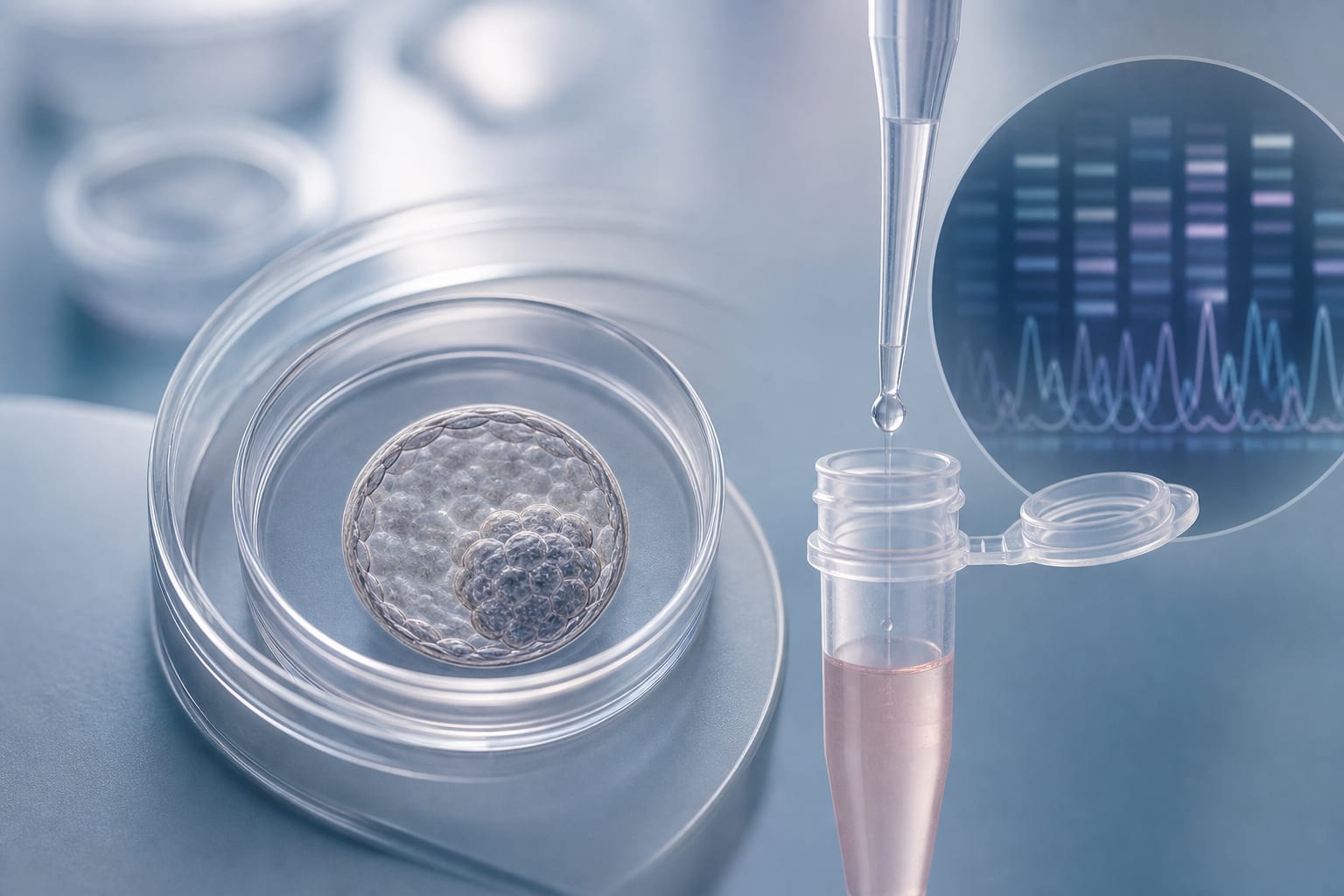
To systematically evaluate and compare the detection performance of noninvasive chromosomal screening (NICS) using spent embryo culture medium (SECM) in fresh and frozen–thawed embryos, highlighting the clinical implications of these comparisons.
Key Findings:
Overall detection success rate of NICS was 98.08%.
Sensitivity, specificity, and clinical consistency of NICS were 88.46%, 50%, and 79.41%, respectively, with statistical significance noted.
Frozen–thawed embryos showed higher DNA library concentrations, sensitivity (97.30% vs 78.05%, p < 0.01), positive predictive value (PPV; 100% vs 72.73%, p < 0.01), and clinical consistency (97.37% vs 68.75%, p < 0.01) compared to fresh embryos.
Frozen–thawed SECM group had a significantly lower rate of complete chromosomal inconsistency (4.35% vs 33.33%, p < 0.01) than the fresh group.
Interpretation:
NICS based on frozen–thawed SECM demonstrated superior sensitivity, PPV, and consistency with actual chromosomal status compared to fresh embryos, indicating its potential for genetic assessment of cryopreserved embryos and its implications for reducing the need for invasive procedures.
Limitations:
The study was limited to a small sample size of 27 couples, which may affect the robustness of the findings.
The results may not be generalizable to all populations or clinical settings, and potential biases in sample selection should be considered.
Conclusion:
The findings suggest that NICS using frozen–thawed SECM could potentially avoid the need for secondary invasive biopsies in genetic assessment, enhancing patient care in reproductive technology.