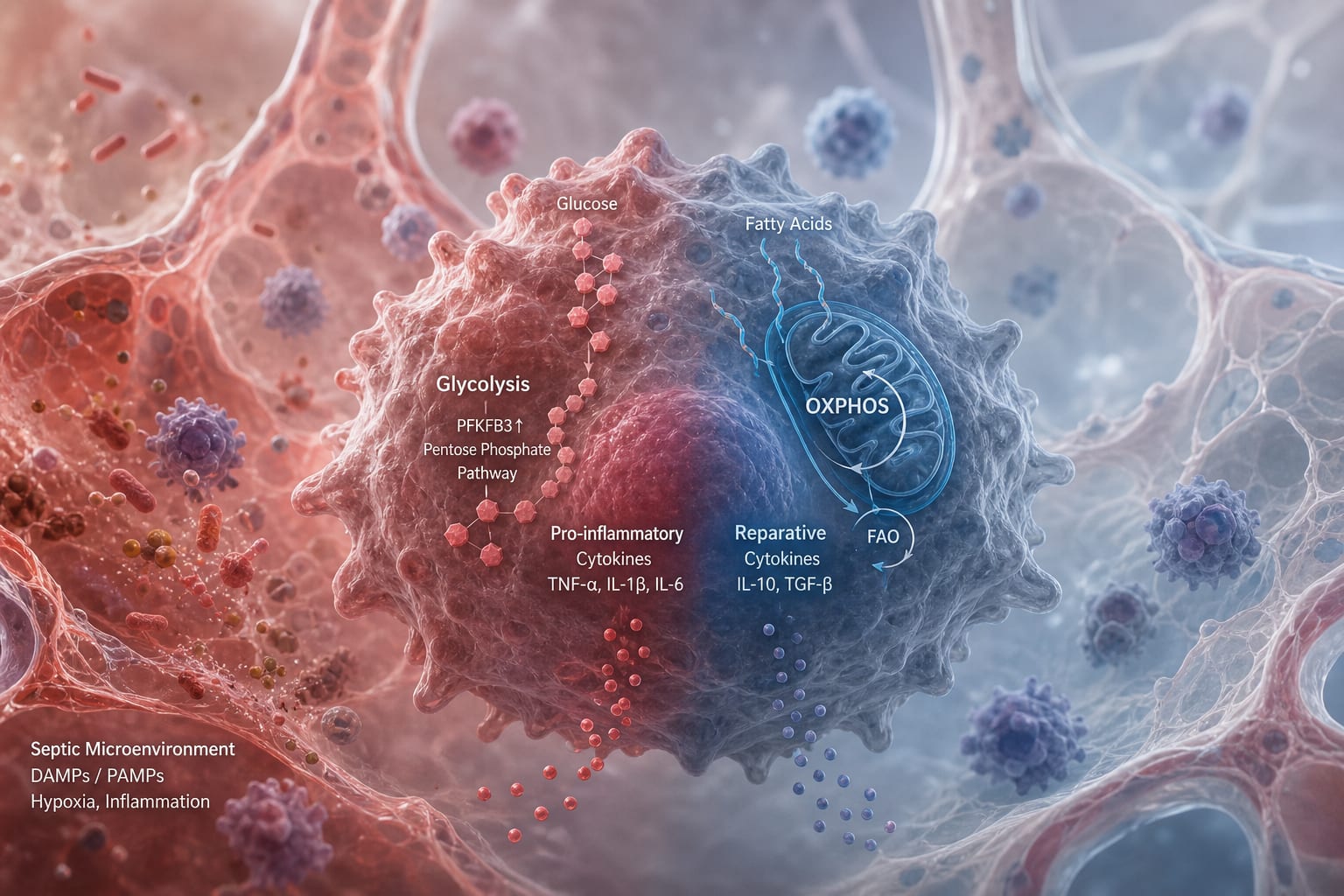
To explore the role of metabolic reprogramming in macrophage polarization during sepsis-associated acute lung injury (S-ALI) and to identify potential therapeutic approaches, emphasizing its significance in improving patient outcomes.
Key Findings:
Pro-inflammatory macrophages utilize aerobic glycolysis and the pentose phosphate pathway, while reparative macrophages rely on oxidative phosphorylation and fatty acid oxidation, with specific metabolic checkpoints identified.
The metabolic landscape in S-ALI shifts from a hyperinflammatory phase dominated by glycolysis to an immunosuppressive phase with impaired oxidative phosphorylation, highlighting the need for timely interventions.
Natural compounds and novel delivery platforms, such as aerosolized CRISPR/Cas9 nanotherapeutics, show promise in reprogramming macrophage metabolism to restore immune homeostasis.
Interpretation:
Understanding the metabolic reprogramming of macrophages provides insights into their functional plasticity and potential therapeutic targets for S-ALI, with implications for future research and clinical applications.
Limitations:
Challenges include broad cytotoxicity of treatments, limited macrophage selectivity, and incomplete pharmacokinetic characterization, with ongoing research exploring targeted solutions.
The timing of interventions in the evolving septic environment remains a critical concern, necessitating further investigation into optimal treatment windows.
Conclusion:
Future strategies should focus on developing targeted delivery systems and validating therapeutic approaches in human-relevant models, such as patient-derived organoids, to address the metabolic trajectory of S-ALI.
A VHA study across 11 vendors finds AI-generated primary care notes score lower than clinician-written notes, with the largest deficits in thoroughness, organization, and usefulness