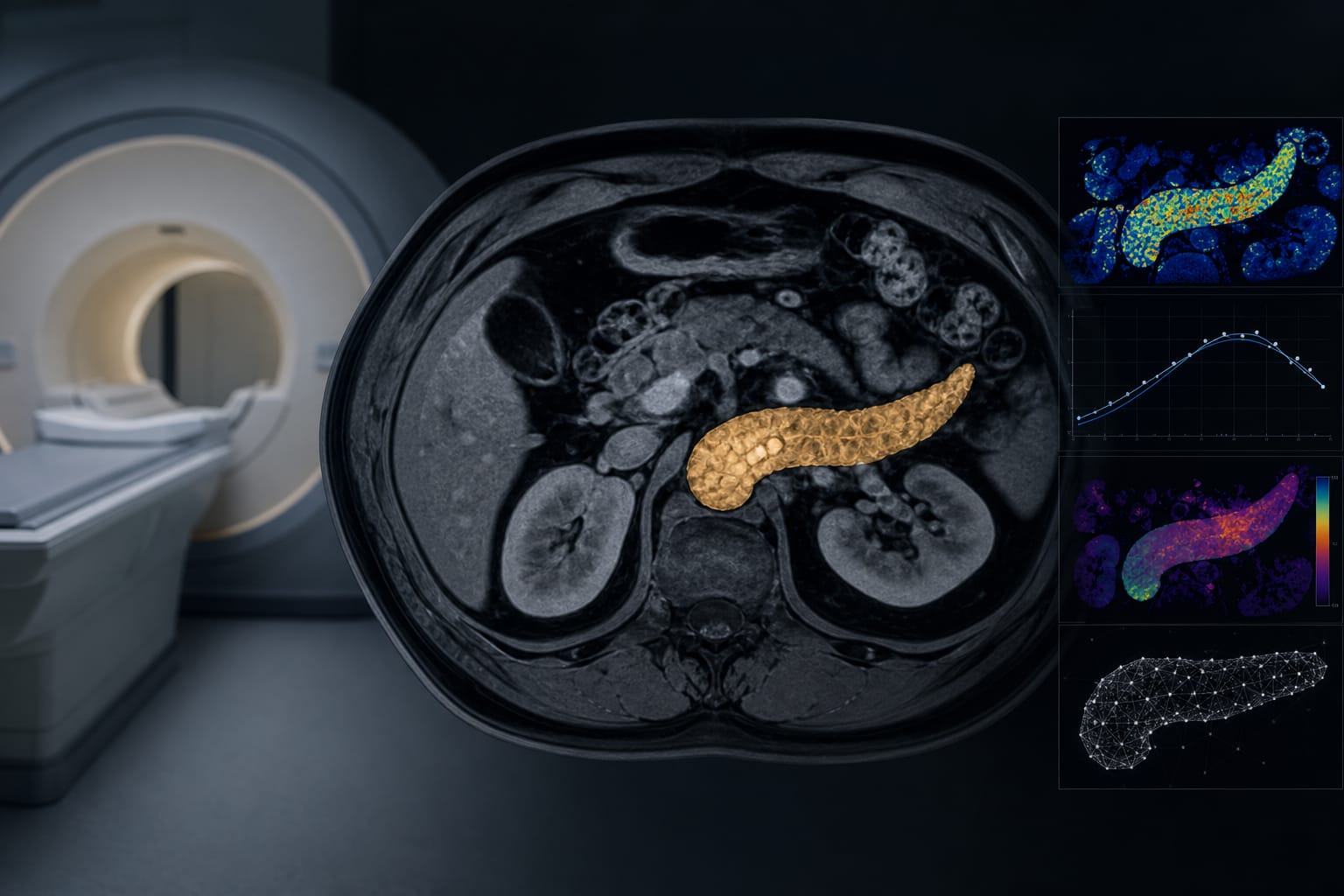
To review the role of quantitative MRI techniques, including chemical shift imaging, diffusion-weighted imaging, and magnetic resonance elastography, in assessing diabetes mellitus and its complications, highlighting their potential as non-invasive biomarkers.
Approach:
Literature Review: A systematic synthesis of recent peer-reviewed literature (2015–2026) focusing on the application of quantitative MRI in diabetes.
Key Findings:
Quantitative MRI provides structural and pathophysiological insights into the pancreas in diabetes.
Techniques such as chemical shift imaging, diffusion-weighted imaging, and magnetic resonance elastography enhance the understanding of pancreatic alterations.
Pancreatic volume decline is significant in type 1 diabetes, potentially linked to exocrine pancreatic insufficiency.
The relationship between pancreatic volume and type 2 diabetes is less understood, with ongoing research needed.
Interpretation:
Quantitative MRI holds promise as a non-invasive tool for early diagnosis and monitoring of diabetes, but clinical translation requires further validation.
Limitations:
Need for multi-center external validation of quantitative MRI techniques.
Lack of standardized models for clinical application.
Conclusion:
Quantitative MRI techniques may serve as valuable biomarkers in diabetes assessment, but further research is essential for clinical implementation.