Efficacy of Tuina combined with core stability training on lumbar stability and clinical outcomes in patients with lumbar disc herniation: a randomized controlled trial protocol - Summary - MDSpire
Advertisement
Efficacy of Tuina combined with core stability training on lumbar stability and clinical outcomes in patients with lumbar disc herniation: a randomized controlled trial protocol
To evaluate the efficacy and safety of combining Tuina therapy with core stability training in improving lumbar stability and clinical outcomes in patients with lumbar disc herniation (LDH).
Approach:
Study Design: A single-center, outcome assessor- and data analyst-blinded, randomized controlled trial.
Participants: 96 patients with LDH will be randomly allocated to Tuina, core stability training, or combined intervention groups.
Intervention Duration: 8-week intervention with three sessions per week, followed by a 1-month follow-up.
Outcomes: Primary outcome: muscle activation ratio of the transversus abdominis. Secondary outcomes: imaging parameters, pressure biofeedback unit (PBU), Visual Analog Scale (VAS), Oswestry Disability Index (ODI), Japanese Orthopedic Association (JOA) score, and 36-Item…
Blinding: Objective outcomes assessed by researchers blinded to group allocation; patient-reported outcomes are inherently unblinded.
Key Findings:
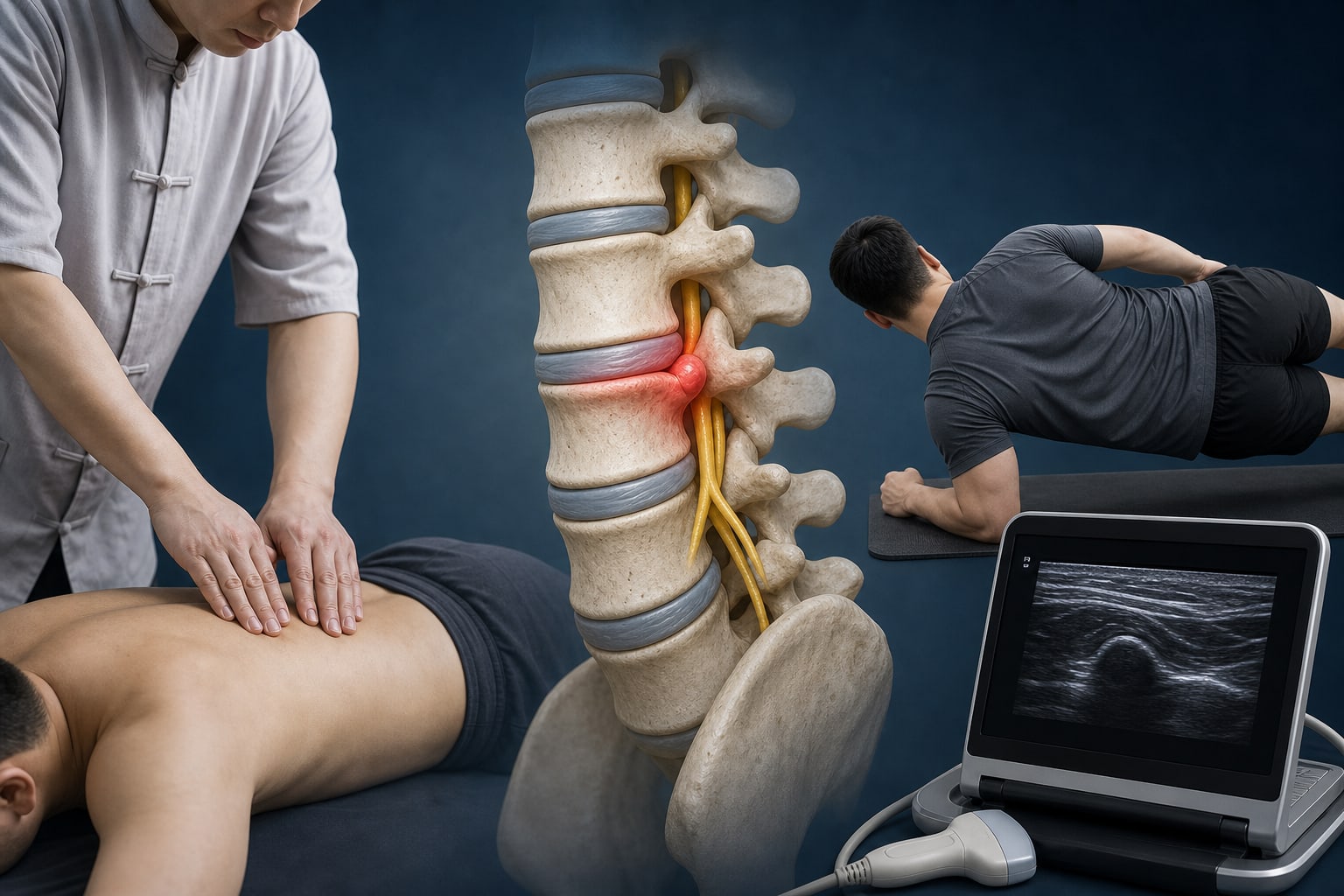
Tuina therapy and core stability training are common conservative interventions for LDH.
Current evidence on the combined intervention's superiority is limited due to small sample sizes and methodological weaknesses.
Tuina primarily alleviates pain and improves soft tissue condition, while core stability training enhances neuromuscular function.
Interpretation:
The study aims to evaluate the efficacy and safety of combining Tuina therapy with core stability training in improving lumbar stability and clinical outcomes in patients with lumbar disc herniation.
Limitations:
Existing studies on Tuina and core stability training have methodological weaknesses.
Patient-reported outcomes are unblinded, which may introduce bias.
Conclusion:
This study aims to provide evidence on the effectiveness of the combined intervention for patients with LDH.