Idiotypic-susceptible Alzheimer’s disease: a clinically relevant, neurofibrillary tangle subtype - Summary - MDSpire

Idiotypic-susceptible Alzheimer’s disease: a clinically relevant, neurofibrillary tangle subtype

  • By

  • John L. Robinson

  • Helen Cai

  • Nicholas J. Loh

  • Omar Vazquez

  • Zahra Khodakaramimaghsoud

  • EunRan Suh

  • Vivianna M. Van Deerlin

  • Paul A. Yushkevich

  • Dawn Mechanic-Hamilton

  • Sharon X. Xie

  • Daniel T. Ohm

  • David A. Wolk

  • David J. Irwin

  • Jeffrey S. Phillips

  • Edward B. Lee

  • May 2, 2026

  • 0 min

Share

Objective:

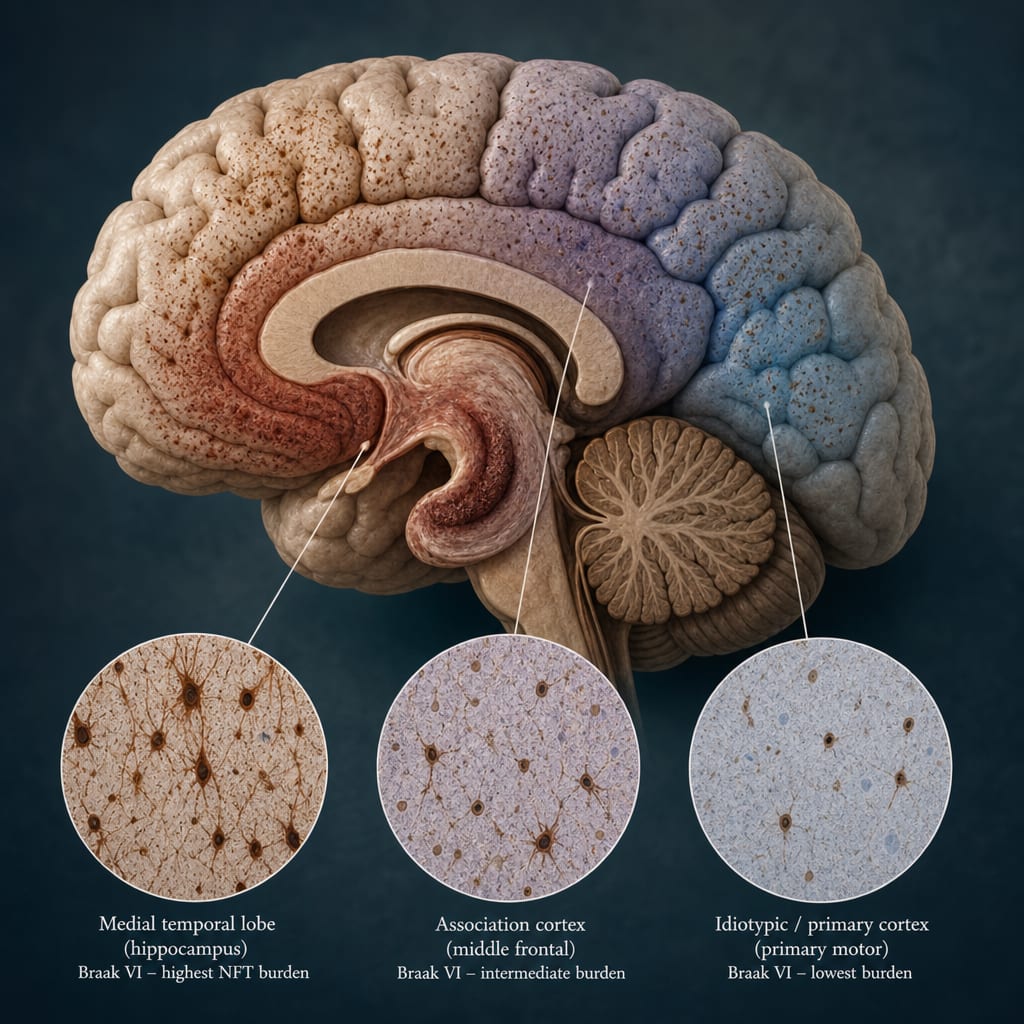
To investigate the distribution of tau subtypes in various clinical syndromes of Alzheimer's disease (AD), including early-onset AD (EOAD), late-onset AD (LOAD), and non-amnestic variants, and their association with neurofibrillary tangles (NFTs).

Key Findings:
  • Distinct tau subtypes correlate with different clinical characteristics and cognitive declines, suggesting tailored approaches to treatment.
  • Hippocampal-sparing subtype prevalence is higher in non-amnestic AD compared to amnestic AD, indicating a need for differential diagnosis.
  • The typical Braak subtype is prevalent in most AD cases, but variability exists in tau PET imaging studies, highlighting the complexity of AD pathology.
Interpretation:

The study suggests that Alzheimer's disease is heterogeneous, with varying tau distributions influencing clinical presentations and cognitive decline, which may inform personalized treatment strategies.

Limitations:
  • The study is based on a specific cohort from a single brain bank, which may limit generalizability to broader populations.
  • Potential biases in clinical diagnosis and referral patterns could affect results, necessitating caution in interpretation.
Conclusion:

Understanding the heterogeneity of tau subtypes in Alzheimer's disease may enhance diagnostic accuracy and inform treatment strategies.

Original Source(s)

Related Content